Mastering Multi-Digit Subtraction
Understanding Place Value
Position is Power
The digit 7 is just a symbol. Its true value depends on where you put it. In the number 7, it means seven. In the number 72, it means seventy. And in 751, it means seven hundred. Same digit, very different values.
This idea is called place value. It’s the system that gives each digit in a number its specific value based on its position. Understanding this is the key to working with numbers bigger than 9, especially when you need to subtract them.
Let's break down the number 347. It's made of three digits: 3, 4, and 7. Each one sits in a different place.
- 7 is in the ones place. Its value is just 7 ().
- 4 is in the tens place. Its value is 40 ().
- 3 is in the hundreds place. Its value is 300 ().
When you add these values together——you get 347. Every multi-digit number works this way. Each place is 10 times more powerful than the place to its right.
We observe that the value of each place increases 10 times as we move one place from right to left, i.e., ones to tens, tens to hundreds, hundreds to thousands, etc.
Why It Matters for Subtraction
So, why is this so important for subtraction? Because when you subtract multi-digit numbers, you're not just subtracting digits. You're subtracting values.
Consider the problem $52 - 31$. It’s easy to think of this as two separate problems: $5 - 3$ and $2 - 1$. In this case, that works. But what about $52 - 38$? You can't just subtract 8 from 2.
Understanding place value helps you see that the '5' in 52 is really '50' (five tens) and the '2' is '2' (two ones). To subtract 8 ones, you'll need to break up one of those tens. Without a solid grasp of place value, this process, called regrouping, doesn't make much sense.
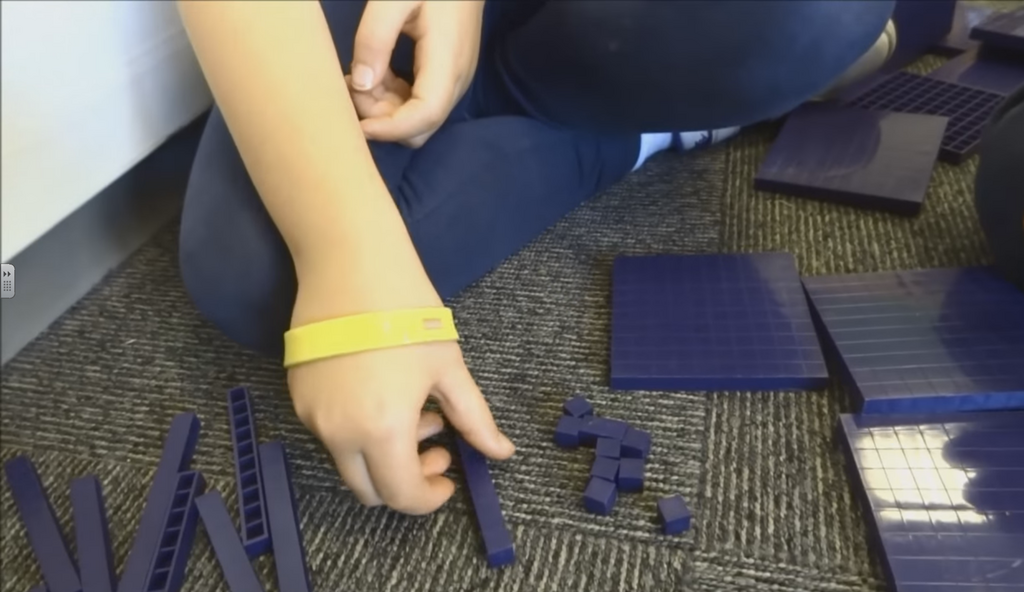
Here’s a quick way to check your understanding of place value for a few different numbers.
| Number | Thousands (1000s) | Hundreds (100s) | Tens (10s) | Ones (1s) |
|---|---|---|---|---|
| 8 | 8 | |||
| 62 | 6 | 2 | ||
| 904 | 9 | 0 | 4 | |
| 1,357 | 1 | 3 | 5 | 7 |
Seeing numbers broken down this way prepares you for the next step. It shows that numbers aren't just single items; they are bundles of ones, tens, hundreds, and so on, which can be rearranged when you need to subtract.
In the number 751, what is the value of the digit 7?
Which expression correctly breaks down the number 347 using place value?
Once you can confidently identify the value of any digit in any number, you're ready to tackle subtraction.