Mastering Movement and Style
Dynamic Alignment Mastery
Beyond Posture: The Plumb Line
You already know how to stand up straight. But in dance, alignment isn't static; it's the launching pad for every movement. Think of an invisible dropping from your earlobe, through your shoulder, hip, knee, and just in front of your ankle. This is your axis, your center of gravity. It’s not about holding a rigid pose, but about organizing your body along this vertical line to move with maximum efficiency and power.
This verticality is achieved by 'stacking' your joints. Imagine your major joints—ankles, knees, hips, shoulders—as building blocks. When they are balanced one on top of the other, your skeleton supports your weight, freeing your muscles for movement rather than just holding you upright. This skeletal support is the secret to appearing effortless, whether you're holding a balance or preparing for a leap.
A Dynamic Spine
Forget the idea of a board-straight back. A dancer’s spine is a supple, active structure. In jazz and contemporary dance, your spine needs to curve, spiral, and undulate. The goal is a 'neutral spine,' which maintains its natural curves in the lower back (lumbar), upper back (thoracic), and neck (cervical). This isn't a fixed position but a dynamic state of readiness.
Underlying all these techniques is a philosophy of dynamic alignment.
This dynamic alignment allows you to move with fluidity and control. A rigid spine can’t absorb shock from jumps effectively, nor can it create the expressive, full-bodied movements that define contemporary styles. By learning to articulate through each vertebra, you unlock a greater range of motion and protect your back from injury.
Core as the Command Center
Your limbs are only as strong and controlled as the core that supports them. True isn't about having a six-pack; it's about engaging the deep internal muscles that wrap around your torso like a corset. These muscles, including the transverse abdominis and multifidus, stabilize your spine and pelvis. When this center is strong and stable, your arms and legs can extend with greater force and precision, without pulling your body off its axis.
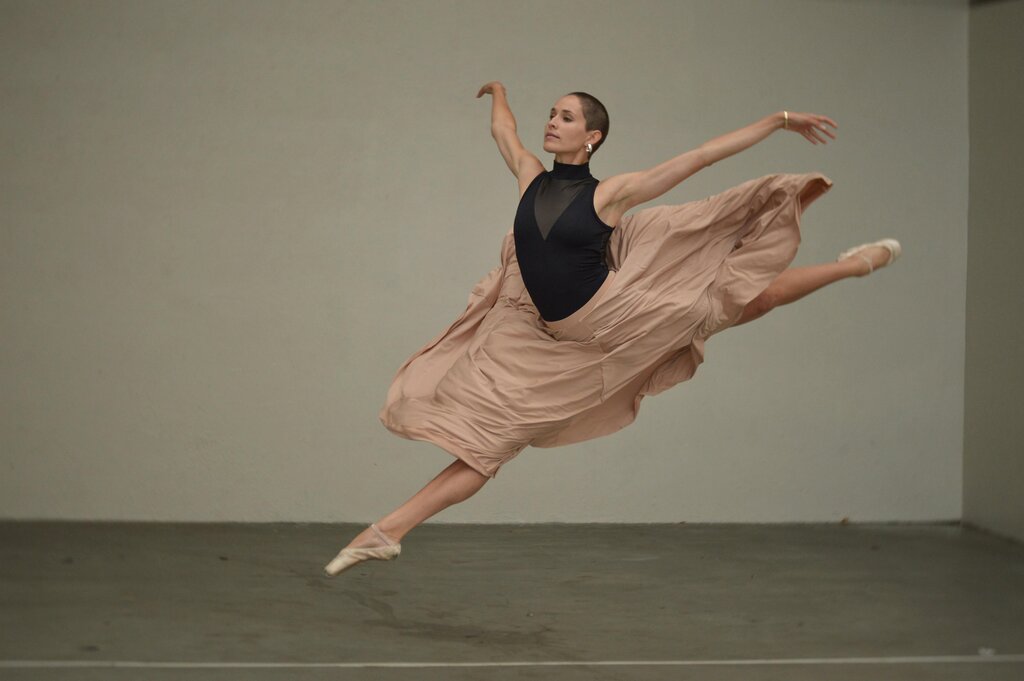
Think of your core as the anchor. When you lift a leg in a développé or extend your arms, a stable core prevents your torso from tilting or your ribs from flaring. It creates a solid foundation, allowing the energy to travel seamlessly from the center of your body out through your limbs. This integration is what transforms a simple step into a powerful, technical execution.
The Neutral Pelvis in Motion
The pelvis is the bridge between your spine and your legs. Maintaining a is essential for balance and efficient movement. This means the hip points in the front are level with the pubic bone, and the pelvis isn't tipping forward (anterior tilt) or tucking under (posterior tilt).
This becomes especially critical during off-balance movements. When you lean into a tilt or hinge at the hips, a neutral pelvis ensures your lower back is supported and that the movement is initiated correctly from the hip joint, not by straining the spine. It's the key to maintaining your center even when your body is in an extreme position, giving your movements stability and a clean, professional line.
Ready to test your knowledge? Let's see what you've learned about professional alignment.
What is the primary purpose of maintaining a 'neutral spine' in dance?
According to the text, true 'core stability' for a dancer comes from...
Understanding these principles of dynamic alignment moves you beyond just executing steps. It empowers you to control your body with intelligence, efficiency, and artistry.