Mastering Motorcycle Engine Mechanics
Motorcycle Engine Architecture
One Case to Rule Them All
A car engine and a motorcycle engine both burn fuel to create power, but that's where the similarities often end. The biggest structural difference is how they're assembled. Most cars use a non-unitary design: the engine is one block, the transmission is a separate unit, and the clutch sits between them. They are bolted together, but they are distinct components.
Motorcycles, on the other hand, almost universally use [{
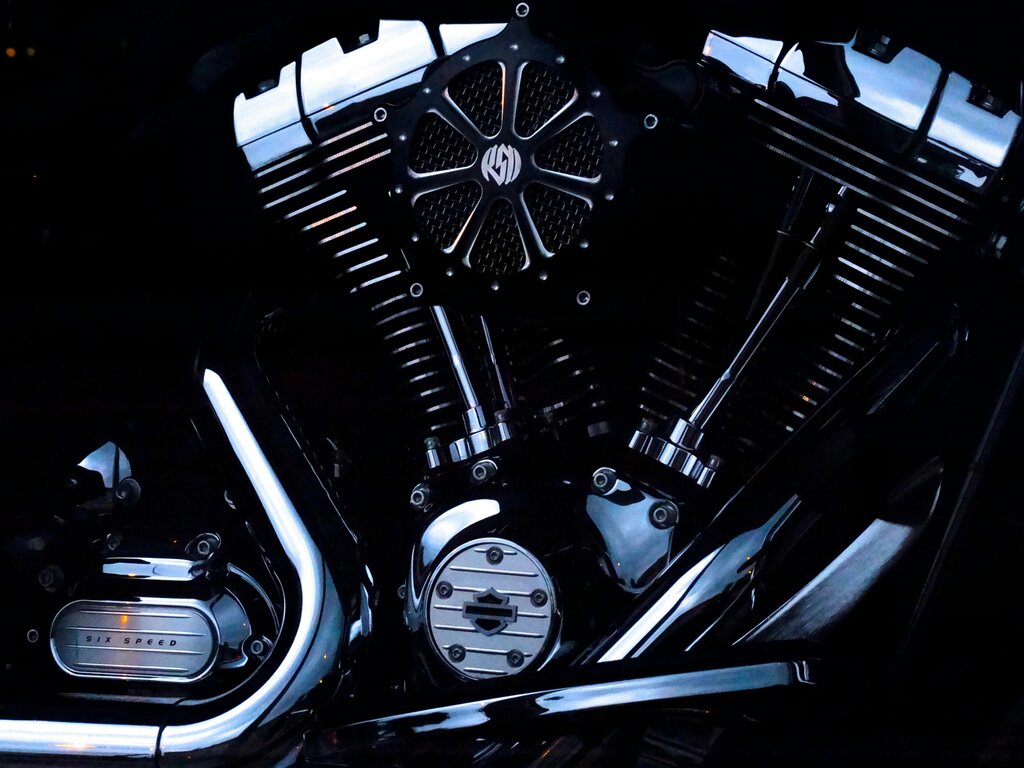
This unified design directly serves the primary goal of motorcycle engineering: maximizing the power-to-weight ratio. Every component has to justify its existence and its mass. Sharing a casing and lubricating oil saves a significant amount of weight and space, which is critical on a vehicle where the rider is a huge part of the total mass.
The Need for Speed
A motorcycle needs to be responsive. When the rider twists the throttle, the engine must rev up almost instantly. This requires minimizing rotational inertia. In a car, a heavy flywheel is used to smooth out the engine's power pulses and make pulling away from a stop easier. This mass, however, makes the engine slow to change speed.
Motorcycles do the opposite. They use lightweight crankshafts, smaller clutches, and minimal (or no) flywheel mass. This low-inertia design allows the engine's RPM to skyrocket and fall with incredible speed, giving the bike its characteristic agile feel. The trade-off is a less forgiving clutch engagement and a tendency to stall if revs drop too low.
This high-RPM nature puts immense stress on all internal components. While a typical car engine might redline at 6,000 RPM, many sportbike engines can exceed 14,000 RPM. Every part, from the pistons to the valve springs, must be engineered from high-strength, lightweight materials to withstand these incredible forces without flying apart.
Integrated and Stressed
Putting everything in one box creates unique challenges. The single engine casing has to handle the explosive forces of combustion, the rotational forces of the crankshaft, and the immense torque loads from the transmission, all at once. The design must be incredibly rigid to prevent flexing, which could cause gears to misalign or bearings to fail. This is why motorcycle engine casings often feature extensive external ribbing and complex internal webbing for strength.
Furthermore, the transmission itself is designed differently. Instead of a linear shift pattern, most motorcycles use a sequential gearbox, where gears are selected one after another by a rotating drum. Many high-performance bikes feature a cassette-style gearbox that can be removed from the engine without having to split the entire crankcase. This is a design born from racing, where mechanics need to change gear ratios quickly to suit different tracks.
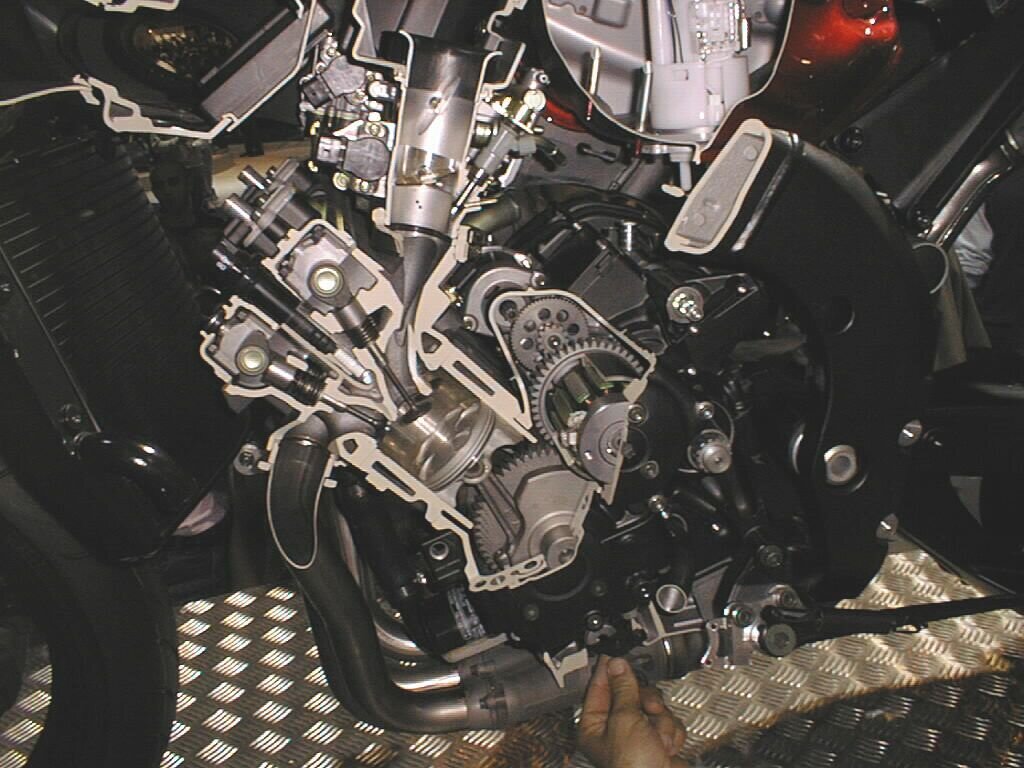
This integration of engine and transmission is the defining feature of modern motorcycle architecture. It's a marvel of packaging that balances the competing demands of power, weight, and durability in a way that is fundamentally different from automotive design.
Let's test your understanding of these key architectural differences.
What is the primary engineering reason for using "unit construction" in most motorcycle engines?
Compared to a typical car engine, a motorcycle engine is designed with low rotational inertia. What is the main effect of this design choice?
Understanding these core design principles explains why motorcycles feel so different from cars. It's not just about size; it's a completely different philosophy of engineering.