Mastering Modern Nutrition and Mindful Eating
Metabolic Health Foundations
The Body's Fuel Switch
Your body is an incredibly efficient engine. Like a hybrid car that seamlessly switches between gas and electricity, a healthy body can switch between its two main fuel sources: carbohydrates (glucose) and fats. This ability is called metabolic flexibility.
When you eat carbs, your body burns them for immediate energy. When carbs aren't available, it shifts to burning stored fat. A metabolically flexible person makes this switch easily. Their energy levels are stable, and their system runs smoothly.
But what happens when this switching mechanism gets rusty? Constant exposure to one type of fuel, particularly fast-acting carbohydrates, can impair this flexibility. The body 'forgets' how to burn fat efficiently, leading to energy crashes, cravings, and a host of metabolic issues down the line.
Metabolic Flexibility
noun
The capacity for an organism to adapt fuel oxidation to fuel availability. It's the ability to efficiently switch between burning carbohydrates and fats for energy.
Beyond the Carb Count
To understand how food affects our metabolic machinery, we need to look beyond a simple carbohydrate count. Not all carbs are created equal. Some hit your bloodstream like a tidal wave, while others create a gentle ripple. This is where the Glycemic Index (GI) and Glycemic Load (GL) come in.
The Glycemic Index (GI) is a scale from 0 to 100 that ranks carbohydrate-containing foods by how much they raise blood glucose levels. Pure glucose is the benchmark at 100.
Foods with a high GI (70 or more), like white bread and sugary cereals, cause a rapid spike in blood sugar. Foods with a low GI (55 or less), like lentils and non-starchy vegetables, are digested more slowly, leading to a gradual rise.
However, GI only tells part of the story. It doesn't account for the amount of carbohydrates in a typical serving. Watermelon, for instance, has a high GI, but it's mostly water with few carbs per serving. That's why the Glycemic Load (GL) is a more practical tool.
A GL of 20 or more is considered high, 11-19 is medium, and 10 or less is low. Let's compare two foods:
| Food | GI | Carbs per Serving | Glycemic Load |
|---|---|---|---|
| Watermelon (1 cup) | 76 (High) | 11g | (76 * 11) / 100 = 8 (Low) |
| Glazed Donut (1) | 76 (High) | 31g | (76 * 31) / 100 = 24 (High) |
As you can see, even with the same high GI, the donut's dense carbohydrate content gives it a much higher glycemic load, meaning it will have a far greater impact on your blood sugar than the watermelon.
The Insulin Story
When you eat carbohydrates, your body breaks them down into glucose, which enters your bloodstream. This rise in blood glucose is called the postprandial glucose response. In response, your pancreas releases a hormone called insulin. Insulin's job is to act like a key, unlocking your cells to let glucose in for energy or storage, thereby bringing blood sugar levels back to normal.
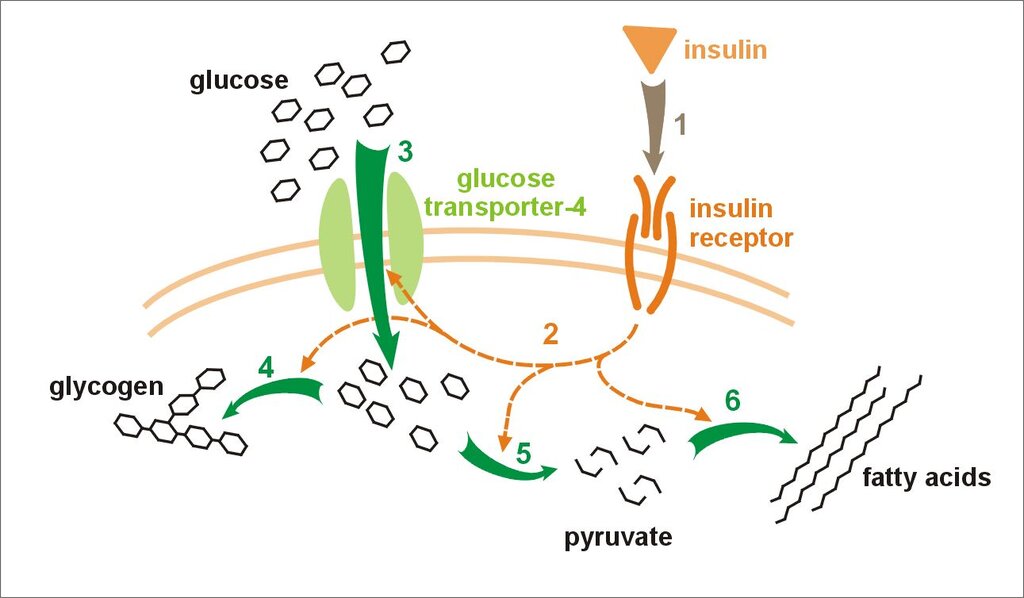
When you eat a high-GL meal, you get a massive, rapid surge of glucose into your blood. Your pancreas scrambles to release a large amount of insulin to handle it. This huge insulin wave often overcompensates, causing your blood sugar to crash below baseline. This is the 'sugar crash' that leaves you feeling tired, hungry, and craving more carbs.
Conversely, a low-GL meal results in a slow, gentle rise in blood glucose. The pancreas releases a measured amount of insulin, your cells get the energy they need, and your blood sugar returns to normal without the dramatic peak and valley.
Repeatedly subjecting your body to high-GL meals can lead to a dangerous condition: insulin resistance. Imagine constantly shouting at someone. Eventually, they start to tune you out. Similarly, if your cells are constantly bombarded with high levels of insulin, they become less responsive to its signal. They become 'resistant'.
When this happens, your pancreas has to work even harder, pumping out more and more insulin to get the job done. This puts immense strain on the insulin-producing beta cells in the pancreas. Over time, these vital cells can become exhausted and damaged, a process known as beta-cell dysfunction. This is a critical step on the path toward metabolic syndrome and type 2 diabetes.
Although GI can be a good starting point, Rand and Jones recommend focusing more on eating well-balanced meals to keep your blood sugar in check.
Understanding your body's response to different foods is the first step toward true nutritional optimization. By choosing foods that support stable blood sugar, you enhance your metabolic flexibility, maintain insulin sensitivity, and protect your long-term health. It's not about fearing carbs; it's about making them work for you, not against you.
What is the best definition of "metabolic flexibility"?
What is the key difference between the Glycemic Index (GI) and the Glycemic Load (GL)?