Mastering Modern Electrical Installation
Service Load Calculations
Sizing Your Electrical Service
Calculating the total electrical load for a building is one of the most critical steps in designing an electrical system. It's a process that ensures safety and efficiency. Undersize your service, and you risk overloaded circuits and fire hazards. Oversize it, and you're wasting money on equipment and copper you don't need.
The National Electrical Code (NEC), specifically Article 220, provides the roadmap for these calculations. It's not just about adding up the wattage of every light and appliance. The code provides a standardized method to determine a realistic electrical demand for a home or commercial building.
Mastering electrical load calculations ensures safe, efficient, and code-compliant building designs.
Continuous vs. Non-Continuous Loads
The first step is to distinguish between different types of loads. A continuous load is one that is expected to run for three hours or more at its maximum current. Think of the lighting in an office building, a water heater, or an electric vehicle (EV) charger.
A non-continuous load runs for shorter periods. This includes things like a microwave, a garbage disposal, or a vacuum cleaner.
This distinction is crucial because continuous loads generate more heat in conductors and equipment over time. To account for this, the NEC requires that branch circuits and feeders serving continuous loads be sized to handle 125% of the load.
This rule ensures that wires and circuit breakers don't overheat under sustained use, providing a critical safety margin.
The Standard Method for Dwellings
For residential buildings, the NEC provides a 'Standard Method' for calculating the total service load. It starts with general lighting and receptacle loads. Instead of counting every single light bulb and outlet, the code simplifies things.
We calculate the general lighting and receptacle load at 3 volt-amperes (VA) per square foot of living space. This value covers all general-use receptacles and lighting outlets throughout the home. Additionally, we must add specific loads for small appliance and laundry circuits required in a modern home:
- Small Appliance Circuits: Two or more 20-amp circuits are required for the kitchen, pantry, and dining areas. For load calculation, we add 1,500 VA for each circuit (e.g., 3,000 VA for two circuits).
- Laundry Circuit: At least one 20-amp circuit is needed for the laundry area. We add 1,500 VA for this circuit.
These values form the baseline for our calculation before we even consider major appliances.
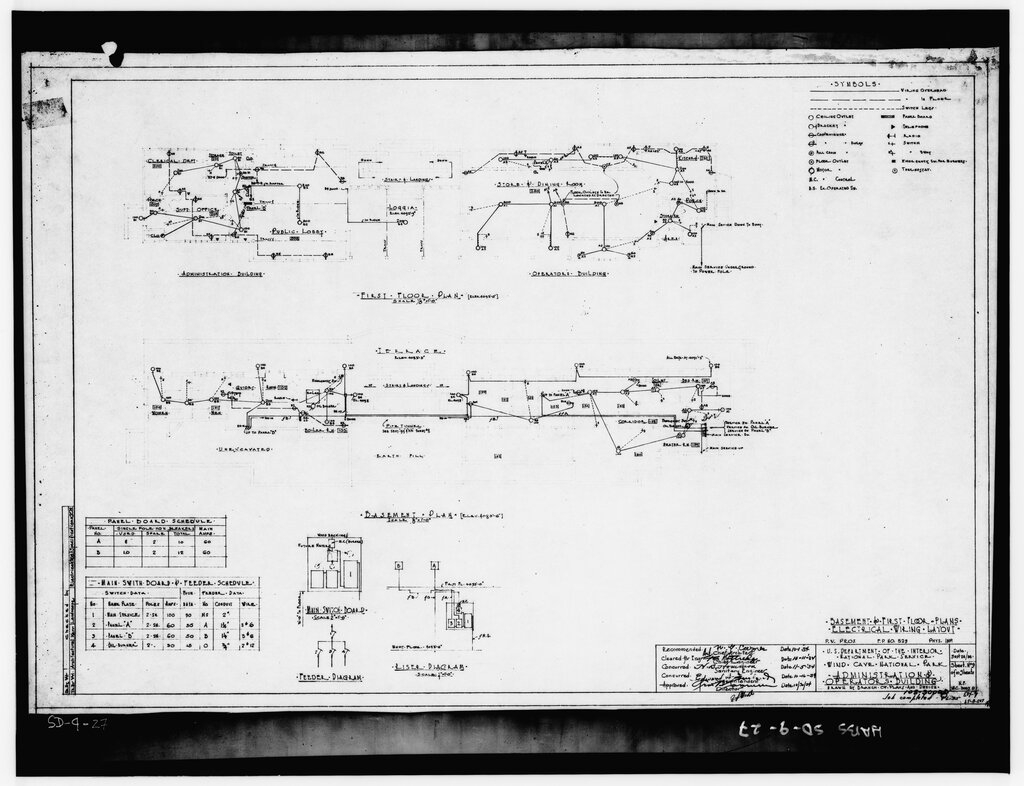
But a house will never have every light and outlet running at maximum capacity all at once. The NEC recognizes this and allows us to apply demand factors. These factors reduce the total calculated load to a more realistic estimate of actual usage.
| Portion of General Lighting Load | Demand Factor |
|---|---|
| First 3,000 VA | 100% |
| Next 117,000 VA (from 3,001 to 120,000) | 35% |
| Remainder over 120,000 VA | 25% |
So, for a 2,000 sq. ft. home, the initial general load would be 6,000 VA (2,000 x 3). Add 3,000 VA for small appliances and 1,500 VA for laundry, and you have a total of 10,500 VA. Applying the demand factor, you'd take 100% of the first 3,000 VA and 35% of the remaining 7,500 VA (which is 2,625 VA). The final demand load for general use is 3,000 + 2,625 = 5,625 VA.
Handling Major and Non-Coincident Loads
After calculating the general load, we add in the specific loads for major appliances like ranges, dryers, and water heaters. But what about heating and air conditioning?
A building's furnace and its central air conditioner are almost never running at the same time. These are called non-coincident loads. The NEC allows us to account for only the larger of the two loads in our calculation. If your electric furnace is a 10,000 VA load and your AC is an 8,000 VA load, you only need to add 10,000 VA to the service calculation, not both.
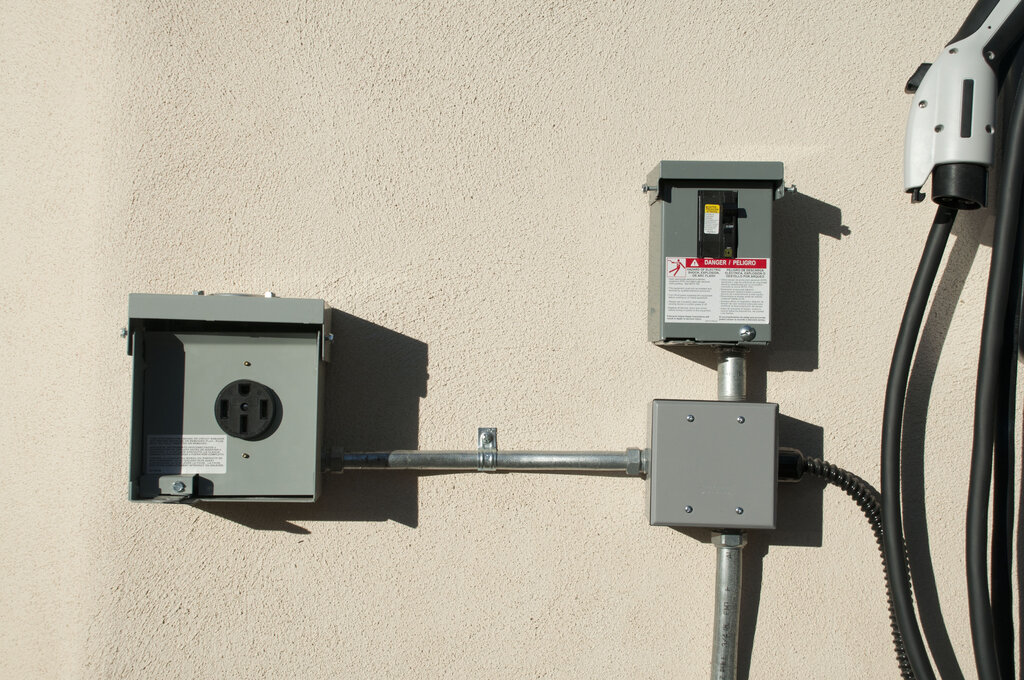
Other high-demand equipment, like EV chargers or large motors, also need careful consideration. These are almost always treated as continuous loads, so their contribution to the calculation must be multiplied by 125%. For example, a 40-amp EV charger (9,600 VA at 240V) would be calculated as a 12,000 VA load (9,600 x 1.25) when sizing the feeder and service.
The NEC also provides an 'Optional Method' for dwellings, which simplifies the process by applying a single large demand factor to the entire connected load. It's often used for homes with large electrical loads and can sometimes result in a smaller service size than the Standard Method.
Commercial Calculations
Load calculations for commercial buildings follow similar principles but use different values. Instead of a flat 3 VA per square foot, NEC Table 220.12 provides specific unit loads for different types of occupancies. A school will have a different lighting and receptacle demand than a bank or a hospital.
| Type of Occupancy | Unit Load (VA per Sq. Ft.) |
|---|---|
| Banks | 2.5** |
| Hospitals | 2.0 |
| Office Buildings | 3.0** |
| Restaurants | 2.0 |
| Schools | 3.0 |
| Retail Stores | 3.0** |
**Plus an additional 1 VA per sq. ft. for general-purpose receptacles.
Demand factors for commercial lighting are also different, as outlined in NEC Table 220.42. The process remains the same: calculate the total connected load based on area and occupancy type, then apply the appropriate demand factors to find the final service size.
By carefully applying the rules in Article 220, you can design an electrical service that is both safe for the occupants and economically sized for the project.
According to the National Electrical Code (NEC), a branch circuit feeding a continuous load must be sized to carry what percentage of the load?
A continuous load is defined by the NEC as a load that is expected to run for three hours or more at its maximum current.