Mastering Modern Computer Networks
Physical Layer Transmission
The Physical World of Data
At the very bottom of the networking stack is the Physical Layer, or Layer 1. This is where the digital world of ones and zeros meets the physical world of electricity, light, or radio waves. Its job is simple but critical: take a stream of bits from the layer above and convert it into a signal that can travel across a wire, through the air, or down a glass fiber.
This conversion process is called signal encoding. A computer can't just send a '1' or a '0'. Instead, it has to represent them physically. On a copper Ethernet cable, this might be a change in voltage. A positive voltage could represent a 1, and a negative voltage could represent a 0. For Wi-Fi, it's a change in a radio wave. For fiber optics, it's a pulse of light for a 1 and no pulse for a 0.
More advanced schemes exist, like , where the transition from high-to-low or low-to-high voltage in the middle of a bit's time slot defines whether it's a 0 or a 1. This method cleverly embeds timing information directly into the signal itself.
Keeping Time
Imagine trying to read a sentence where all the letters are blurred together. That's what happens if the sender and receiver aren't perfectly synchronized. The receiver needs to know exactly when to 'look' at the signal to read each bit. This is called bit synchronization.
If a sender transmits a long string of identical bits, like 11111111, the receiver's internal clock might drift slightly. After a few bits, it could be sampling the signal at the wrong time, potentially misreading the entire rest of the message. That's why encoding schemes that force a signal change, even for repeated bits, are so important. They help the receiver constantly re-align its clock with the incoming data stream.
Speed and Reality
When we talk about network speed, two terms often get confused: bandwidth and throughput.
Think of a highway. Bandwidth is the number of lanes, representing the theoretical maximum number of cars that can travel at once. Throughput is the actual number of cars that make it from point A to point B in an hour, accounting for traffic, accidents, and speed limits.
Throughput is almost always lower than bandwidth because of real-world physics. One major factor is —the tendency for a signal to lose strength as it travels over a distance. A weak signal is harder to distinguish from background noise, leading to errors that require data to be re-sent, thus lowering throughput.
Another enemy of clean signals, especially on copper wires, is electromagnetic interference (EMI). A nearby power line, a microwave oven, or even an adjacent data cable can induce electrical noise, corrupting the signal and forcing retransmissions.
Choosing the Path
The physical medium chosen has a massive impact on performance. The two most common wired options are copper and fiber optics.
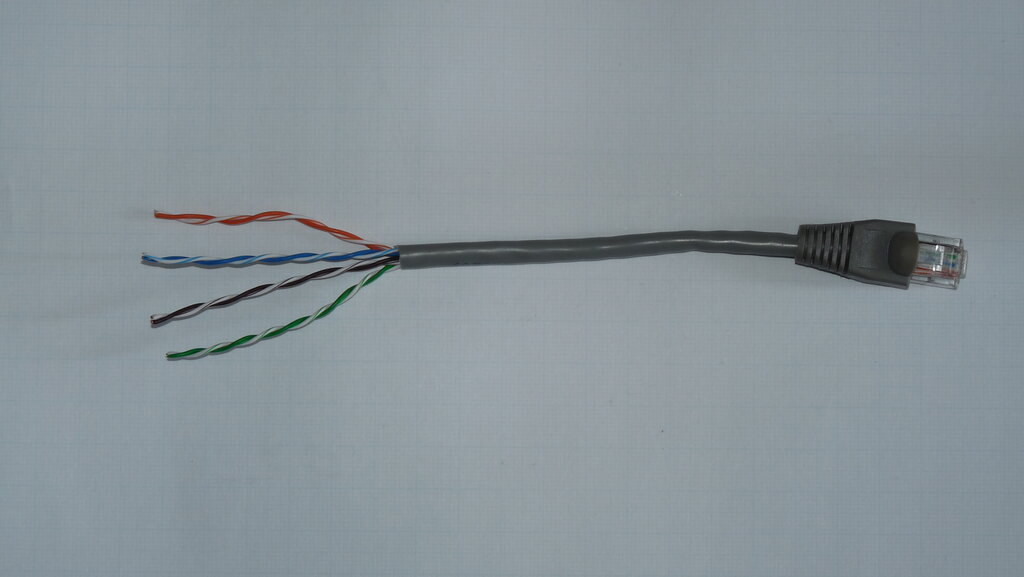
Copper cables, like the ones used for Ethernet, send data as electrical pulses. They're inexpensive and widely used, but they are susceptible to both signal attenuation over relatively short distances (around 100 meters for standard Ethernet) and EMI.
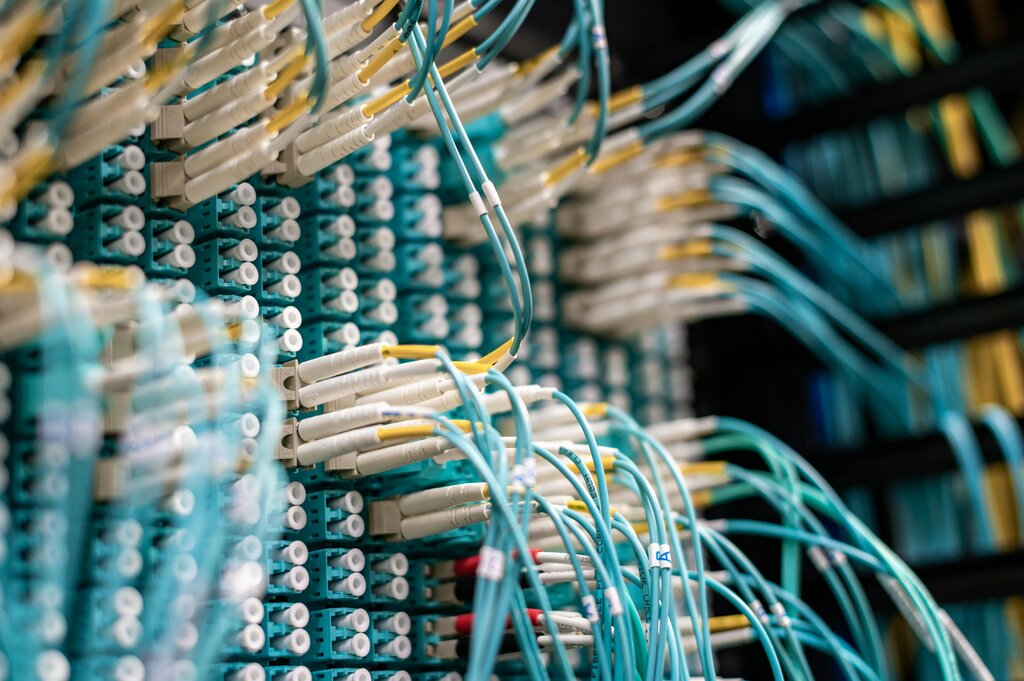
Fiber optic cables transmit data as pulses of light down incredibly thin strands of glass. Light is immune to EMI, and it can travel for kilometers with very little attenuation. This makes fiber the choice for high-speed, long-distance connections that form the backbone of the internet.
Finally, the physical layout of a network, its topology, also plays a role in signal integrity. In an old bus topology, all devices shared a single cable, and a break anywhere could take down the whole network. Modern networks almost exclusively use a star topology, where each device connects to a central switch. This isolates failures and ensures a cleaner signal path for each device.
What is the primary function of the Physical Layer (Layer 1) in networking?
Why are encoding schemes like Manchester encoding, which force signal transitions, important for data transmission?