Mastering Mobile IC Level Repair
Introduction to Mobile Phone Hardware
Inside Your Phone
If you were to open up your smartphone, you'd find a miniature city of components. The main hub of this city is the printed circuit board (PCB), often called the motherboard. It’s the green or blue board that acts as the foundation, connecting everything with a complex network of copper pathways called traces.
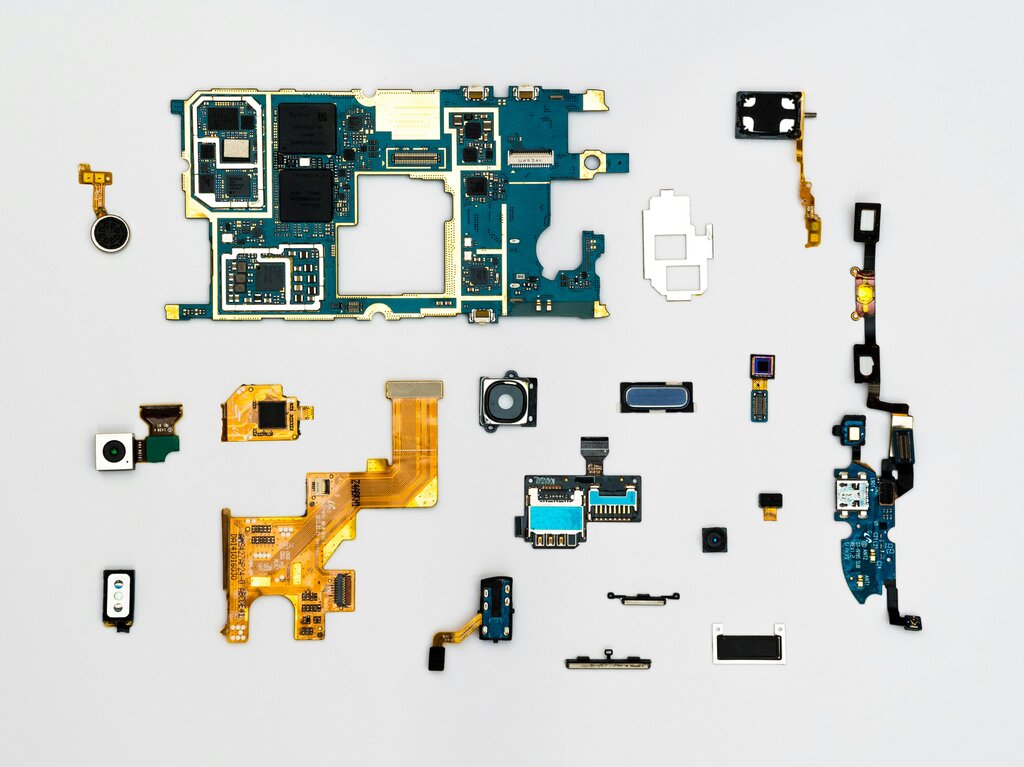
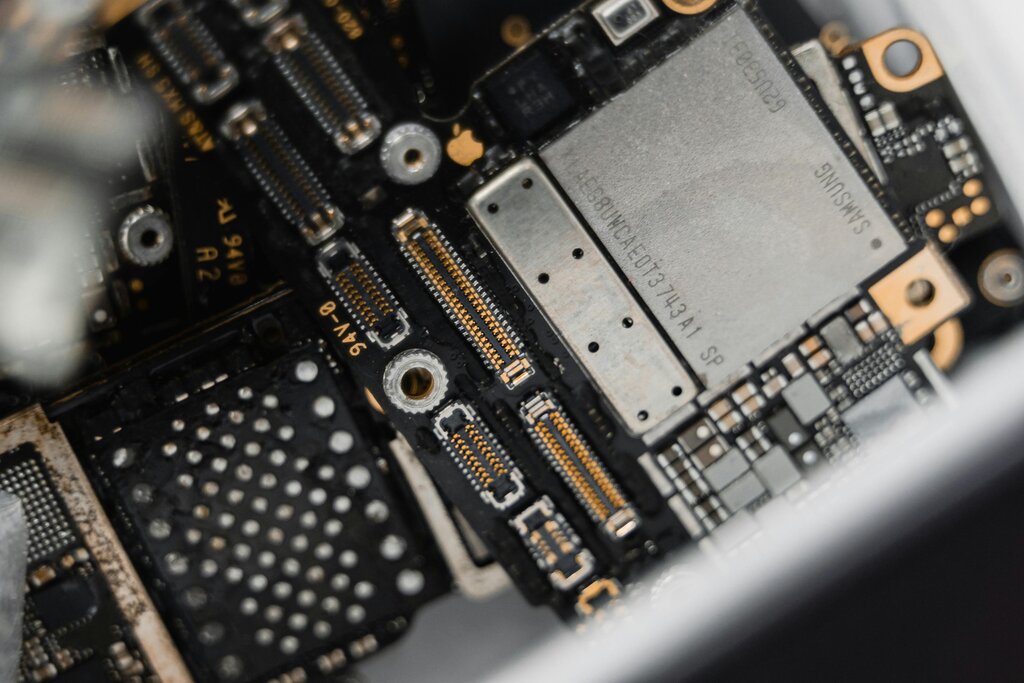
While components like the camera, battery, and screen are easy to identify, the real magic happens in the tiny black squares soldered onto the board. These are the integrated circuits, or ICs. Each one is a specialized powerhouse designed for a specific job, and together they make your phone work.
Integrated Circuit
noun
A set of electronic circuits on one small flat piece (or "chip") of semiconductor material, usually silicon. It performs a specific function within a larger electronic system.
The Key Players
Think of the motherboard as a busy office building. Each IC is like an employee with a unique role. While dozens of ICs are at work in your phone, a few key players handle the most critical tasks.
A Power Management IC (PMIC) is the building's facility manager. It controls the flow of electricity from the battery, manages charging, and ensures every other component gets the exact voltage it needs to operate safely and efficiently. Without a working PMIC, the phone is just a lifeless brick.
Next is the Audio IC, the sound engineer of the device. This chip translates digital audio files into the analog signals your headphones and speakers use to produce sound. It also does the reverse, converting your voice from the microphone into digital data that can be sent during a call or recorded.
Finally, there's the Display Driver IC. This is the artist that paints every image on your screen. It takes commands from the main processor and meticulously controls each individual pixel to create the vibrant, sharp display you see every time you unlock your phone. It manages brightness, color, and everything else related to the visual output.
Tools for the Job
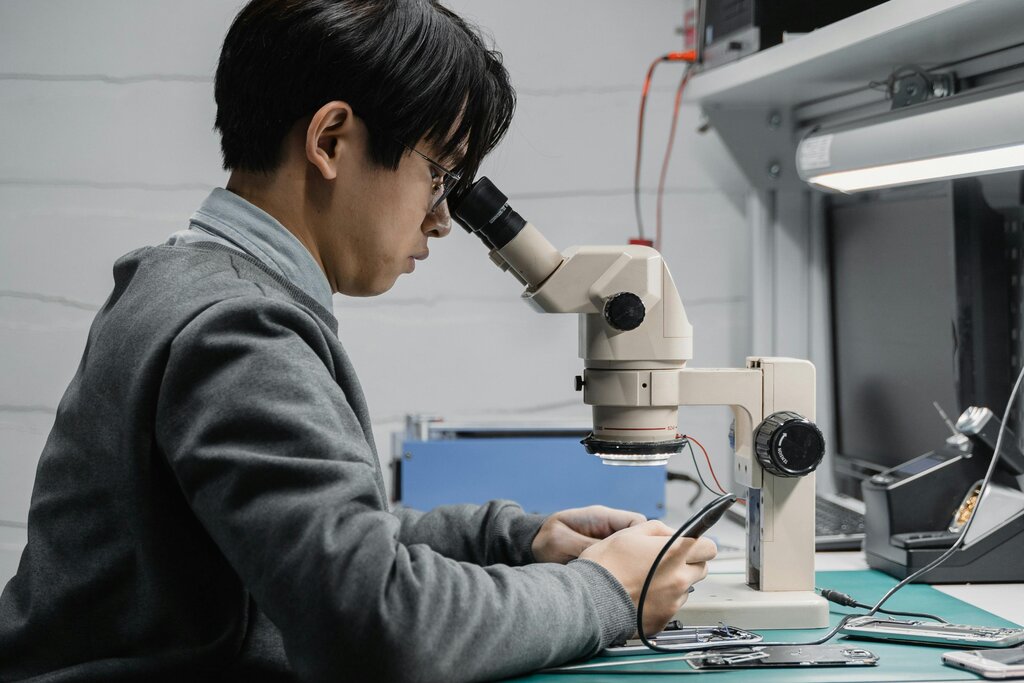
Working on components this small requires specialized equipment. Repairing or replacing ICs isn't a task for a standard toolbox. Technicians who perform these delicate operations, known as microsoldering, rely on a specific set of tools.
| Tool | Purpose |
|---|---|
| Hot Air Rework Station | Uses focused hot air to melt solder, allowing ICs to be removed or replaced without damaging the board. |
| Microscope | Magnifies the work area, making it possible to see the tiny pins and solder points on and around an IC. |
| Multimeter | A diagnostic tool used to measure voltage, current, and resistance to check if a component is working correctly. |
| Fine-Tipped Soldering Iron | For precise soldering work on individual pins or small components near an IC. |
| Precision Tweezers | Essential for handling tiny chips and other components without causing damage. |
Beyond the tools, safety is paramount. The components inside your phone are extremely sensitive to static electricity. A small shock that you might not even feel can permanently destroy an IC.
Technicians must always use electrostatic discharge (ESD) protection, such as a grounded wrist strap and mat, to safely neutralize any static buildup before it can damage a component.
Proper ventilation is also crucial. Melting solder releases fumes that are harmful to breathe, so working in a well-ventilated area with a fume extractor is a must for any professional repair.
Time to review what you've learned.
Let's see how well you grasped these concepts.
What is the primary function of the printed circuit board (PCB) in a smartphone?
Which integrated circuit is responsible for converting your voice from the microphone into digital data during a phone call?
Understanding these core components is the first step in diagnosing and repairing complex issues on a mobile device's motherboard.