Mastering Mindful Perception
Neural Judgment Circuitry
Your Brain’s Judgment Engine
When you meet someone new, your brain forms a first impression in a fraction of a second. This isn’t a conscious choice; it’s a deeply ingrained neurological reflex. This process begins in the limbic system, the ancient, emotional part of your brain responsible for survival instincts. At its core is a small, almond-shaped structure that acts as a rapid-fire threat detector.
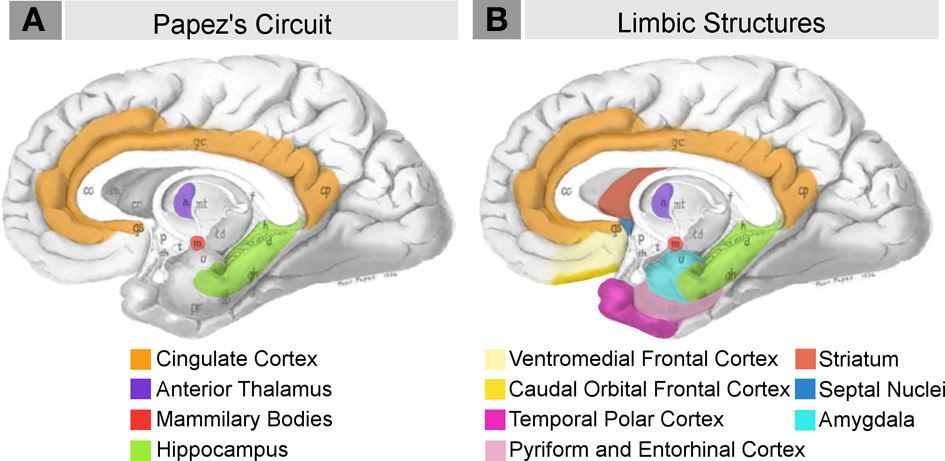
This structure, the , is your brain's alarm system. It doesn’t waste time on nuance. It quickly scans social cues—body language, tone of voice, facial expressions—and categorizes them into simple, binary terms: safe or unsafe, friend or foe. This initial assessment is the source of many automatic negative thoughts (ANTs) about others. The amygdala fires off its signal long before your conscious mind has had a chance to process the situation logically.
The Brain's Brakes
If the amygdala were the only part of the brain involved, we'd be slaves to our initial impulses. Fortunately, it works in partnership with a more evolved region: the prefrontal cortex (PFC). Located right behind your forehead, the PFC is the brain’s executive control center. It’s responsible for reasoning, planning, and social moderation.
After the amygdala sends its initial, high-alert signal, the message travels to the PFC for a more detailed analysis. The PFC considers context, draws on past experiences, and applies social rules to decide whether the initial alarm is justified. It can effectively hit the brakes on the amygdala’s knee-jerk reaction, allowing for a more measured and appropriate response.
This dual-system processing was a lifesaver for our ancestors. A quick, biased judgment could mean the difference between life and death when encountering a stranger from another tribe. In the modern world, however, this survival mechanism often creates social friction. Our brains are hardwired for snap judgments that are frequently inaccurate and harmful in a complex, interconnected society.
Rewiring the judgmental brain
The good news is that brains are not fixed. The principle of means that our experiences, thoughts, and actions can physically change our brain's structure and function. Every time you indulge a snap negative judgment, you strengthen the neural pathway between the stimulus and the amygdala's alarm-bell response. This makes the reaction faster and more automatic in the future, like carving a deeper groove in a path.
Conversely, every time you pause, question your initial reaction, and consciously engage your prefrontal cortex to find a more charitable or logical explanation, you weaken that old pathway. You begin to build and reinforce a new, more thoughtful neural circuit. This is the biological basis of cognitive-behavioral techniques. By repeatedly practicing self-awareness and reappraisal, you are physically remodeling your brain to be less reactive and more reflective.
Changing your judgmental habits isn't just about willpower; it's about systematically training your prefrontal cortex to override the amygdala's outdated survival instincts.
Now, let's test your understanding of how these neural circuits shape our social judgments.
What is the primary role of the amygdala when you first meet someone?
The principle that allows you to weaken old reactive neural pathways and build new, more thoughtful ones is called:
Understanding this interplay between instinct and reason is the first step toward gaining control over reflexive judgments.