Mastering Microservice Backend Systems
Introduction to Microservices
What Are Microservices?
Imagine a restaurant. In one kitchen, a single chef does everything: chops vegetables, grills the steak, bakes the dessert, and plates the final dish. If the chef gets overwhelmed or makes a mistake, the whole operation grinds to a halt. This is a monolithic approach—one big unit handling all the work.
Now, picture a different kitchen. It's organized into stations. One chef is solely focused on grilling, another on salads, and a third on desserts. Each station works independently but communicates with the others to assemble a complete meal. If the dessert station runs out of flour, the grill and salad stations can keep operating. This is the core idea behind microservices.
Microservices are an architectural style that structures an application as a collection of small, autonomous services, modeled around a business domain.
Each service in a microservices architecture has a specific job. It's built, deployed, and scaled on its own. One service might handle user authentication, another might manage product inventory, and a third could process payments. They talk to each other over a network, typically using lightweight APIs, but they don't need to know about each other's inner workings. This independence is their superpower.
The Monolith vs. Microservices
For a long time, the standard way to build software was the monolithic architecture. A monolith is a single, large application where all the code for every feature is in one place. Think of it as a tightly-woven fabric. If you pull on one thread, the whole piece puckers. Making a small change in one part of the application requires testing and redeploying the entire system.
As monolithic applications grow, they often become difficult to change and slow to deploy. Microservices offer a different path by breaking the application into smaller pieces. Here's a quick breakdown of the differences:
| Feature | Monolithic Architecture | Microservices Architecture |
|---|---|---|
| Deployment | The entire application is deployed as a single unit. | Services are deployed independently. |
| Scalability | Scale the whole application, even if only one part is busy. | Scale individual services based on their specific needs. |
| Technology | Locked into a single technology stack. | Teams can choose the best stack for their service (polyglot). |
| Fault Isolation | A failure in one module can crash the entire application. | A failure in one service can be isolated, and the rest of the app can remain functional. |
| Development | Becomes slower and more complex as the codebase grows. | Teams work in parallel on smaller codebases, leading to faster development cycles. |
The Upside of Microservices
Breaking up a monolith isn't just for organizational neatness. This architectural style provides tangible benefits for building complex, modern applications.
Microservices allow for the development of applications as a collection of loosely coupled, independently deployable services.
One of the biggest advantages is improved scalability. In an e-commerce platform, the product browsing service might get a steady stream of traffic, but the checkout service sees huge spikes during a flash sale. With microservices, you can allocate more computing resources just to the checkout service to handle the load, without touching the others. This is far more efficient than scaling the entire application.
Microservices also offer flexibility and technology freedom. A team building a search feature might find that a language like Python with a specific search library is the best tool for the job. Meanwhile, the team handling real-time notifications might prefer Node.js. Microservices allow each team to pick the right tool for their specific problem.
This leads to faster development and deployment. Small, focused teams can work on their individual services without stepping on each other's toes. They can build, test, and deploy their service on their own schedule. This autonomy dramatically speeds up the delivery of new features and bug fixes.
Finally, microservices build more resilient systems. If the service that generates recommendations goes down, users can still search for products and check out. The failure is contained, and the core functionality of the application remains available.
Not So Fast: The Challenges
While the benefits are compelling, microservices are not a silver bullet. They introduce their own set of challenges, and the biggest one is complexity.
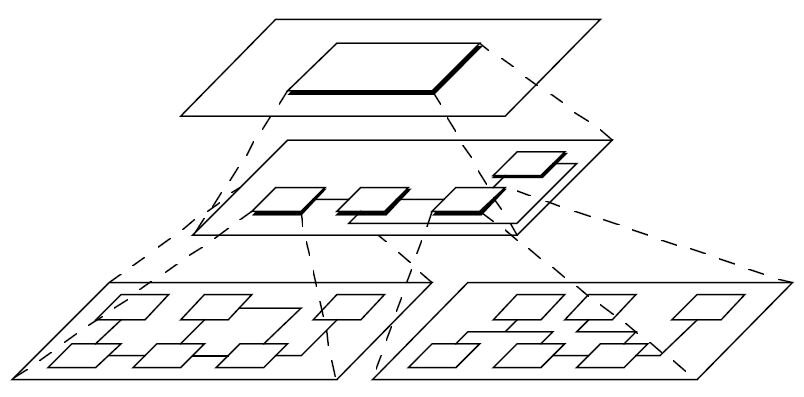
Despite its advantages, migrating from a monolithic to a microservices architecture is often costly and complex, with the decomposition step being a significant challenge.
Instead of one application, you now have a distributed system of many small applications. This means you have to worry about things that weren't an issue before. How do services find and talk to each other over a network? What happens when the network is slow or a service is unavailable? Managing data consistency across multiple databases can also be a major hurdle.
There's also a significant operational overhead. You need robust automation for deploying, monitoring, and managing dozens or even hundreds of services. This requires a mature DevOps culture and sophisticated tooling for things like service discovery, load balancing, and centralized logging.
Each service needs to be designed carefully. If the boundaries between services are drawn incorrectly, you can end up with a system where a simple change requires updating multiple services at once, defeating the purpose of the architecture.
Which statement best describes a monolithic architecture?
An e-commerce site is running a flash sale, and only the payment processing part of the application is experiencing extremely high traffic. Why is a microservices architecture particularly beneficial in this scenario?
Microservices offer a powerful way to build scalable and flexible applications, but they require a deliberate approach to manage their inherent complexity. Understanding these trade-offs is the first step in deciding if this architecture is right for your project.