Mastering Micro App Prompts
Introduction to LLMs
What Are Large Language Models?
Large Language Models, or LLMs, are a type of artificial intelligence designed to understand and generate human-like text. Think of them as incredibly advanced prediction machines. At their core, they work by calculating the most probable next word in a sequence, based on the words that came before it.
This simple-sounding task, when performed on a massive scale, allows LLMs to write emails, answer complex questions, translate languages, and even generate computer code. They don't "understand" text in the way a human does, but they are exceptionally good at recognizing and reproducing the patterns of human language.

Large Language Model
noun
A type of artificial intelligence model trained on vast amounts of text data to understand, generate, and interact in human language.
How LLMs Learn
An LLM's journey begins with its training, which is a bit like sending a student to the world's largest library with instructions to read everything. These models are fed enormous datasets containing text from websites, books, articles, and more. The goal isn't to memorize the information but to learn the statistical relationships between words, phrases, and concepts.
The training process involves billions or even trillions of words, allowing the model to internalize the rules of grammar, context, and style.
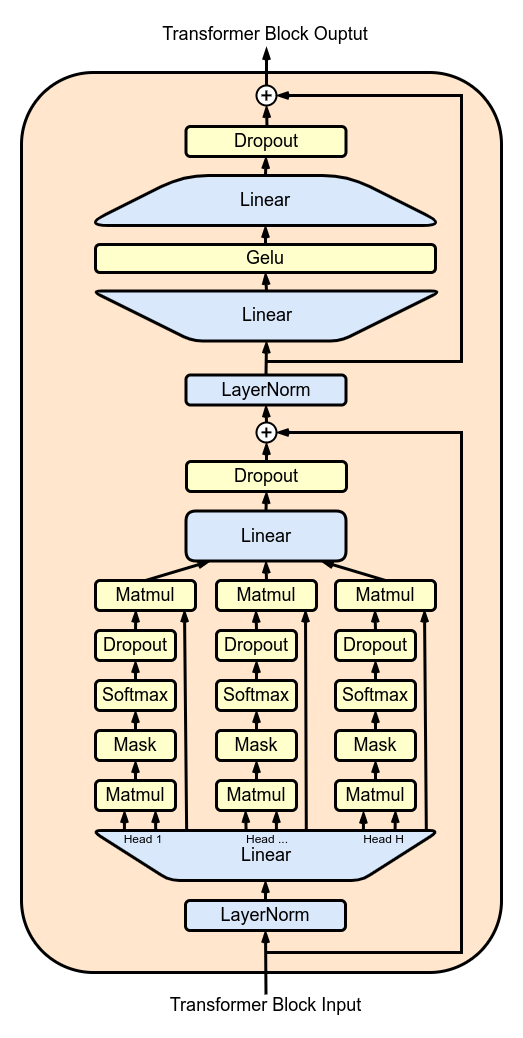
Most modern LLMs are built on an architecture called the Transformer. A key innovation within this architecture is the "self-attention" mechanism. This allows the model to weigh the importance of different words in the input text when generating a response. For example, when processing the sentence, "The cat sat on the mat, and it was fluffy," the self-attention mechanism helps the model determine that "it" refers to the "cat" and not the "mat."
What Can LLMs Do?
The pattern-matching abilities of LLMs translate into a wide range of practical applications. They are the engines behind many of the AI tools we interact with daily. From simple tasks to complex problem-solving, their versatility is a key reason for their rapid adoption.
Large language models (LLMs) are AI systems that understand and create human language, doing tasks like summarizing articles, answering questions, writing code, and more.
| Application | Example |
|---|---|
| Summarization | Condensing a long research paper into a short abstract. |
| Translation | Translating an email from Spanish to Japanese. |
| Question Answering | Finding the answer to "What is the capital of Nepal?" |
| Content Creation | Drafting a marketing email for a new product. |
| Code Generation | Writing a Python function to sort a list of numbers. |
The Art of the Prompt
Interacting with an LLM is a conversation. The input you provide is called a "prompt," and the model's output is its response. The quality and clarity of your prompt directly influence the quality and relevance of the response you receive.
This is where prompt engineering comes in. It's the practice of designing effective prompts to guide the LLM toward a desired outcome. Think of it like giving instructions to a brilliant but very literal assistant. Vague instructions will lead to generic or unhelpful results, while specific, well-structured prompts will produce precise and useful outputs.
A good prompt provides context, specifies the desired format, and clearly defines the task for the model.
Learning to craft good prompts is essential for unlocking the full potential of these powerful tools. It turns a simple query into a targeted instruction, allowing you to tailor the LLM's vast knowledge to your specific needs.
Now that you have a foundational understanding of LLMs, let's test your knowledge.
What is the core function of a Large Language Model at its most fundamental level?
The key mechanism within the Transformer architecture that helps the model determine which words in a sentence are most important for context is called the _______ mechanism.
Understanding these core concepts is the first step toward effectively using LLMs for any task, from simple queries to building sophisticated applications.