Mastering Medical Science and Healthcare Systems
Clinical Reasoning Foundations
From Symptoms to Diagnosis
Clinical diagnosis is a detective story. You start with clues—a patient's symptoms and history—and work toward a conclusion. But this isn't just about memorizing diseases. It's about learning how to think. A strong clinical reasoner doesn't just know facts; they know how to organize them, see patterns, and build a logical case. The first step is to transform a patient's narrative into a structured clinical problem.
The Two Minds of a Doctor
Expert clinicians operate with two distinct modes of thinking, a concept known as dual-process theory. Think of it as having a fast, intuitive autopilot and a slow, deliberate pilot.
System 1 is the autopilot. It's fast, automatic, and relies on pattern recognition. When a doctor sees a child with a fever, runny nose, and cough in the middle of winter, System 1 instantly suggests a common cold. This is based on experience and recognizing a familiar "illness script."
System 2 is the pilot. It's slow, analytical, and requires conscious effort. This system engages when symptoms are confusing, don't fit a known pattern, or when the stakes are high. It's the methodical process of building a list of possibilities, weighing evidence, and ruling out alternatives. A patient presenting with vague, multi-system complaints requires System 2 thinking.
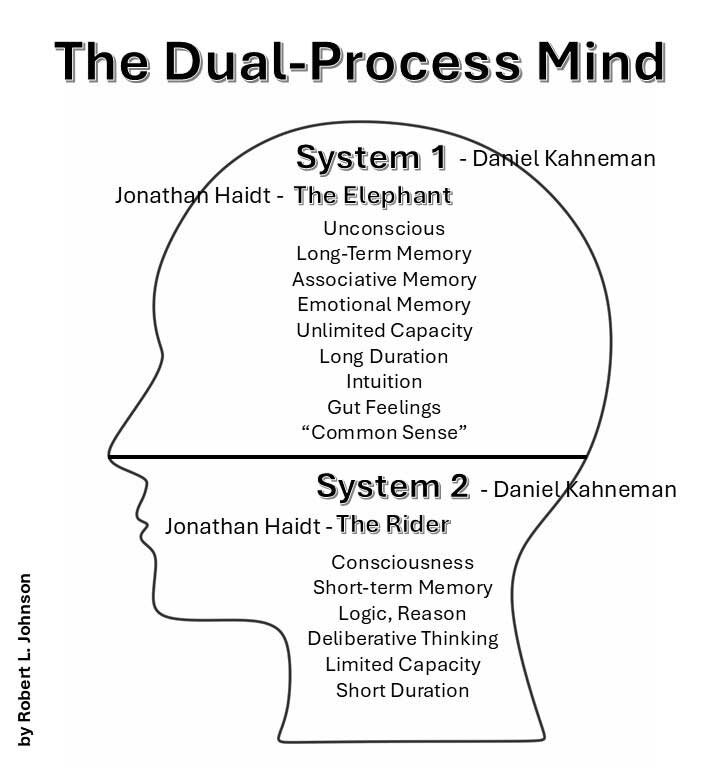
Neither system is inherently better; they're designed for different tasks. The art of medicine is knowing when to trust your gut (System 1) and when to slow down and think it through (System 2). Over-reliance on System 1 can lead to jumping to conclusions, while over-reliance on System 2 can be inefficient and paralyzing.
Building Your Mental Case Files
To make System 1 effective, you need a well-stocked mental library of illness scripts. An illness script is a clinician's organized knowledge about a specific disease. It's more than a list of facts; it's a story that includes:
- Epidemiology: Who gets this disease? (e.g., age, risk factors)
- Time Course: How does it progress? (e.g., acute, chronic, progressive)
- Pathophysiology: What is the underlying biological mechanism?
- Syndrome: What are the key signs and symptoms?
As you see more patients and study more cases, these scripts become richer and more detailed, making your pattern recognition faster and more accurate.
To activate the right illness script, you first need a problem representation. This is a concise, one-sentence summary of the patient's case that highlights the most critical features. It's the bridge between the patient's story and your medical knowledge.
A key technique for crafting a strong problem representation is using semantic qualifiers. These are pairs of opposing descriptors that add precision.
Examples of Semantic Qualifiers:
- Acute vs. Chronic
- Sharp vs. Dull
- Diffuse vs. Localized
- Unilateral vs. Bilateral
- Constant vs. Intermittent
Consider a patient who says, "I've had this bad chest pain since yesterday." A novice might represent this as "chest pain." An expert uses semantic qualifiers to create a much more powerful summary: "A 65-year-old male with a history of hypertension presents with acute-onset, substernal, non-pleuritic, radiating chest pain." This specific representation immediately triggers a much narrower and more relevant set of illness scripts (like myocardial infarction) than the generic "chest pain."
A Framework for Possibilities
Once you have a problem representation, your next task is to build a differential diagnosis—a list of all plausible explanations. To avoid missing possibilities, it's helpful to use a structured framework. One of the most classic is the VINDICATE mnemonic.
| Mnemonic | Category | Example (for Headache) |
|---|---|---|
| V | Vascular | Migraine, Subarachnoid hemorrhage, Giant cell arteritis |
| I | Inflammatory / Infectious | Meningitis, Sinusitis |
| N | Neoplastic | Brain tumor (primary or metastatic) |
| D | Degenerative / Drug | Cervical spondylosis, Medication overuse headache |
| I | Iatrogenic / Idiopathic | Post-lumbar puncture headache |
| C | Congenital | Chiari malformation |
| A | Autoimmune / Allergic | Vasculitis |
| T | Traumatic | Post-concussive syndrome |
| E | Endocrine / Metabolic | Hypoglycemia, Pheochromocytoma |
VINDICATE forces you to think beyond the most obvious causes. It's a System 2 tool that widens your perspective, acting as a safety net against cognitive errors. After generating a broad list, you begin the process of ruling diagnoses in or out based on further history, physical exam findings, and diagnostic tests.
A strong grasp of the basics supports accurate clinical reasoning, communication and examination skills.
The Traps of Thinking
System 1 thinking is powerful, but it relies on mental shortcuts, or heuristics. While often effective, these shortcuts can lead to predictable errors known as cognitive biases.
For example, availability heuristic is the tendency to overestimate the likelihood of diseases you've seen recently or that are particularly memorable. If you just treated a patient with a rare disease, you might be more likely to consider it in your next patient, even if it's statistically improbable.
Anchoring
noun
A cognitive bias where an individual depends too heavily on an initial piece of information offered (considered to be the "anchor") when making decisions.
Premature closure is another common trap. This occurs when you latch onto a diagnosis early on and stop considering other possibilities. It's like finding a good-enough answer and stopping the search, potentially missing the correct one.
Recognizing these biases is the first step to countering them. Using System 2 tools like the VINDICATE mnemonic is a deliberate strategy to force a pause and ensure a more thorough, analytical approach.
Mastering clinical reasoning involves building rich illness scripts, crafting precise problem representations, and balancing the speed of System 1 with the rigor of System 2. By being aware of cognitive pitfalls and using structured tools, you can navigate the path from symptom to diagnosis with greater accuracy and confidence.
A clinician sees a patient with a set of vague, multi-system complaints that don't fit any familiar pattern. The clinician decides to slow down, create a broad list of potential causes, and systematically gather evidence to rule each one out. Which mode of thinking is being predominantly used?
What is the primary purpose of using semantic qualifiers (e.g., 'acute vs. chronic', 'diffuse vs. localized') when creating a patient's problem representation?