Mastering Media Buying Strategies
Introduction to Media Buying
What Is Media Buying?
At its core, media buying is the process of purchasing advertising space. Think of it as booking a stage for a performance. You could have the most amazing show prepared, but without a stage, no one will see it. Similarly, an advertiser can have the perfect ad, but without media buying, it has nowhere to be displayed.
The goal is to place an ad in the right place, at the right time, to reach the right audience. This space could be a 30-second spot during a popular TV show, a banner ad on a news website, a full-page spread in a magazine, or a promoted post in a social media feed. Effective media buying ensures that an advertising budget is spent efficiently to maximize an ad's impact and reach.
Media buying turns an advertising strategy into a reality by securing the ad placements that connect a message with potential customers.
The People Behind the Purchase
Two key roles drive the media buying process: the media planner and the media buyer. While their jobs are closely related and sometimes performed by the same person, they handle distinct parts of the process.
Media Planners are the strategists. They research the target audience, identify the best media channels to reach them, and determine when and how often ads should run. They create the blueprint for the entire advertising campaign, outlining which TV shows, websites, or social media platforms will be most effective. Their work is about answering the big questions: who, where, and when.
Media Buyers are the executors. They take the planner's blueprint and make it happen. Their job involves negotiating with publishers and media owners to purchase the ad space at the best possible price. They build relationships, manage contracts, and ensure the ads are delivered as planned. They are focused on the practicalities of securing the placement.
| Role | Primary Focus |
|---|---|
| Media Planner | Strategy: Researching and selecting channels |
| Media Buyer | Execution: Negotiating and purchasing space |
From Print to Pixels
Media buying has changed dramatically over the years, largely due to technology. The process used to be entirely manual and relationship-driven.
In the era of traditional media, buying an ad on TV, radio, or in a newspaper involved phone calls, meetings, and direct negotiations with sales representatives. It was a slower process based on established relationships and fixed rate cards. Placements were often booked weeks or months in advance.
The internet changed everything. The rise of digital platforms created a vast new inventory of ad space on websites, search engines, and social media. This shift led to the development of programmatic advertising, which uses software and algorithms to automate the buying and selling of digital ads in real-time. This automated approach is faster, more efficient, and allows for precise targeting based on user data.
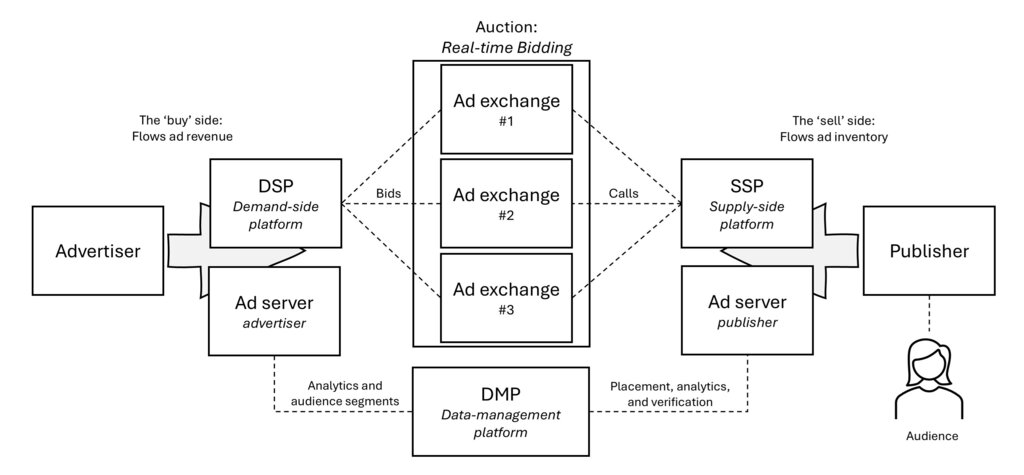
While traditional media buying still exists and is valuable for certain campaigns, digital media buying now dominates the industry. The modern media buyer needs to be skilled in both negotiation and data analysis to navigate this complex landscape.
The Media Buying Process
Regardless of whether the platform is traditional or digital, the media buying process generally follows a few core stages.
This cycle is foundational to any advertising campaign. The first step involves the media planner's strategic work. The media buyer then steps in for negotiation and purchase. Once the campaign is live, both roles are involved in monitoring and analysis to see what worked, what didn't, and how to improve next time.
What is the primary goal of media buying?
An advertising professional is researching which websites and TV shows their target audience consumes most frequently to decide where to run ads. This person is acting as a...
This overview provides the foundation for understanding media buying. As you can see, it's a critical function that bridges the gap between creating an ad and getting it in front of the people who matter most.