Mastering Mechanical Watchmaking
Movement Architecture
The Movement's Foundation
The architecture of a mechanical movement begins with its foundation: the mainplate. Think of it as the chassis of a car or the foundation of a building. It's the primary structural component, a metal disc (usually brass) meticulously machined with recesses, holes, and posts that will locate every other part of the watch. The mainplate dictates the fundamental layout of the entire calibre.
Secured to the mainplate are the bridges, which are separate plates that hold the upper pivots of the gear train, barrel, and balance assembly. Together, the mainplate and bridges form a rigid, multi-layered sandwich, creating the precise three-dimensional space where the intricate dance of gears takes place. The posts on the mainplate, known as pillars, ensure the correct distance is maintained between the mainplate and the bridges, while screws provide the clamping force to hold it all together.
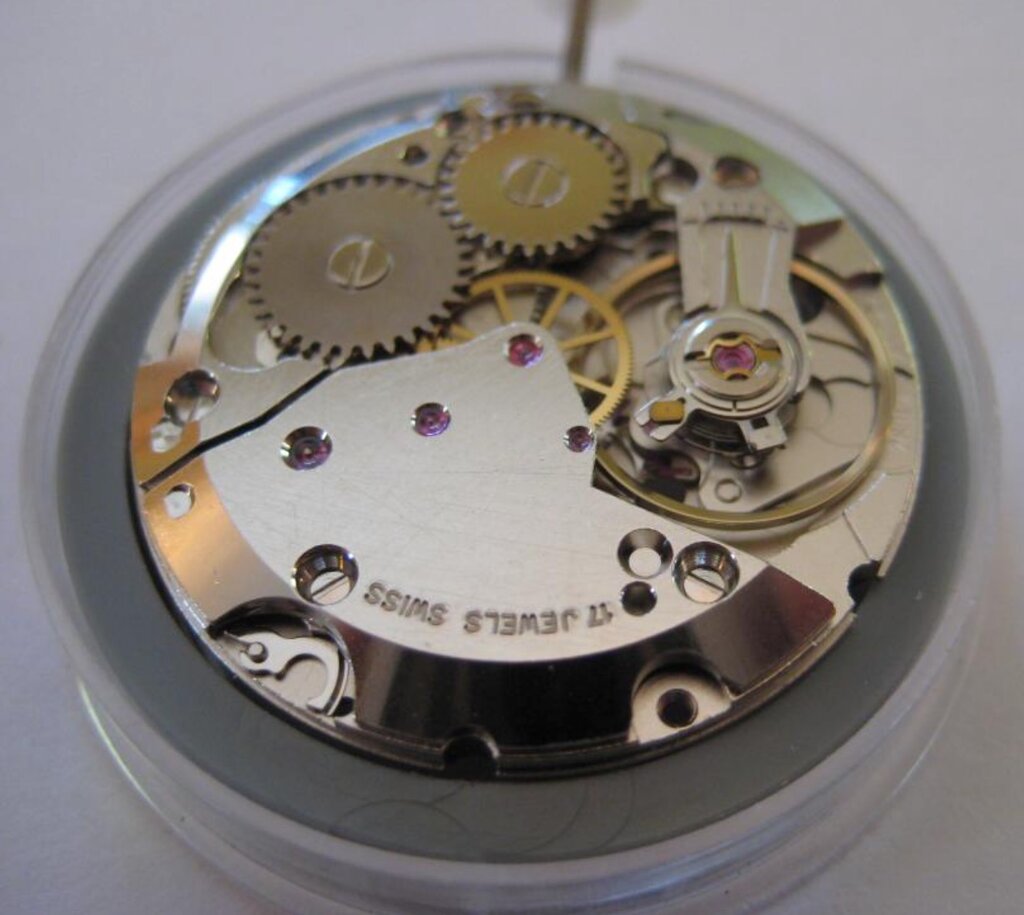
The torque applied to each screw is critical. Insufficient torque can lead to loose components and poor gear alignment, affecting timekeeping. Excessive torque can strip threads or, more subtly, deform the plates and bridges. This distortion, even at a microscopic level, can alter the precise alignment of jewel bearings, introducing friction that robs the movement of energy.
Architectural Styles
Not all movements are constructed with a series of small, individual bridges. The design philosophy behind how the upper pivots are supported leads to distinct architectural styles, each with its own set of trade-offs.
The most common style in Swiss watchmaking uses multiple, separate bridges—often called a bridge-style or finger-bridge construction. There might be a bridge for the barrel, another for the gear train (or 'wheel train'), and another for the pallet fork. This design offers excellent serviceability. A watchmaker can remove a single bridge to access a specific part of the gear train without having to disassemble the entire movement. This modularity simplifies cleaning, oiling, and part replacement.
In contrast, the German or Glashütte style often employs a three-quarter plate. Instead of multiple small bridges, a single large plate covers roughly three-quarters of the movement, securing the barrel and the entire gear train. Only the balance assembly is left with its own separate bridge, called a balance cock.
The three-quarter plate offers superior stability. By anchoring multiple pivots in a single, large plate, it creates a more rigid structure that is less susceptible to flexion, ensuring the gear train remains perfectly parallel. However, this robustness comes at the cost of serviceability. To access a single wheel in the middle of the train, the entire plate must be removed. This requires the watchmaker to carefully realign all the pivots simultaneously during reassembly, a significantly more challenging task.
Mapping the Power Flow
Regardless of the architectural style, the flow of power in a manual-wind calibre follows a consistent path. The journey begins at the mainspring, which is coiled inside the barrel.
-
Barrel Assembly: Winding the crown transfers energy into the mainspring. The barrel itself is ringed with gear teeth and acts as the first wheel in the train.
-
Centre Wheel: The barrel drives the centre wheel, which typically rotates once per hour. The cannon pinion, which holds the minute hand, is mounted on this wheel's arbor.
-
Third Wheel: The centre wheel meshes with and drives the third wheel, which acts as an intermediary, transferring power and increasing the rotational speed.
-
Fourth Wheel: The third wheel drives the fourth wheel. In most configurations, the fourth wheel rotates once per minute, and its arbor is where the seconds hand is attached.
-
Escape Wheel: The fourth wheel drives the escape wheel. This is the final wheel in the gear train and the one that interacts directly with the escapement (the pallet fork and balance wheel) to release the power in controlled, tiny impulses.
This sequence of gears is called the gear train or going train. Its job is to step up the slow, high-torque rotation of the barrel into the fast, low-torque rotation needed by the escape wheel.
Jewels and Their Function
At each point where a gear's pivot (the tip of its axle, or arbor) rests in the mainplate or a bridge, friction is the enemy. To combat this, watchmakers use jewel bearings, typically made of synthetic ruby. These jewels provide an extremely hard, smooth, and durable surface for the steel pivots to rotate against, minimising friction and wear.
Jewels are not simply dropped into holes. They are set in specific ways to handle different forces. A simple, flat hole jewel is pressed into a recess in the plate. This handles the radial load (the side-to-side force) on the pivot.
For high-speed components like the balance wheel, a more complex system is used. This often involves a hole jewel paired with a cap jewel. The cap jewel is a flat disc that sits on top of the hole jewel, preventing the pivot from moving up or down. This system controls both radial and axial (end-to-end) forces, and the tiny space between the pivot tip and the cap jewel holds a minuscule drop of oil through capillary action.
The way jewels are set also impacts serviceability. Friction-fit jewels are pressed directly into the plate. This is simple and effective. Higher-end movements may use screwed-in chatons, which are small gold or brass settings that hold the jewel. While visually appealing, they also allow for easier replacement of a single jewel without the risk of damaging the plate. This is another architectural trade-off, balancing manufacturing complexity against ease of future maintenance.
What is the primary structural component of a watch movement, acting as the foundation for all other parts?
A watchmaker is reassembling a movement and overtightens the screws holding a bridge in place. What is the most likely subtle consequence of this action?
Understanding these structural principles is the first step in diagnosing and servicing a mechanical movement. The choice between bridges and plates, the type of jewel settings, and the layout of the gear train all tell a story about the calibre's design priorities: robustness, ease of service, or pure aesthetic tradition.