Mastering Mechanical Watchmaking
Movement Dismantling and Organisation
Preparing for Disassembly
Before any screws are turned, the movement must be removed from its case. This process, known as uncasing, begins with releasing the stem. On an ETA 6497 or ST36, this is done by gently depressing the detent button while pulling the crown and stem out. Once the stem is free, the movement can be carefully lifted from the case.
Work on a clean, organised surface. A simple parts tray with multiple compartments is essential. As each component is removed, it should be placed in its own designated spot. This isn't just about tidiness; it's about creating a logical map for reassembly. Grouping related screws with their bridges or plates is a standard professional practice.
Securing the Most Delicate Parts
The first components to be removed are the most fragile: the balance assembly and the pallet fork. These parts form the escapement, the beating heart of the watch. Mishandling them is the quickest way to turn a routine service into a complex repair.
Begin with the balance assembly. It is held in place by the balance cock, a bridge secured by a single screw. Before loosening this screw, ensure the balance wheel is stationary. Carefully loosen the screw and lift the entire assembly straight up using brass tweezers, gripping it by the balance cock itself, never the delicate wheel or hairspring. Place it securely in your parts tray, ideally under a protective cover.
With the balance removed, the pallet fork is next. It's held under its own bridge, typically secured by two smaller screws. After removing the pallet bridge, the fork can be gently lifted out. Note its delicate pivots and the fragile jewel pallets. Any damage here will stop the watch from running.
Treat the balance and pallet fork like they're made of glass. One slip can mean a costly replacement.
Releasing the Power
Before proceeding to the gear train, you must release the power stored in the mainspring. This is called 'letting down' the mainspring. Failing to do this is a classic beginner's mistake. If you remove the pallet fork while the spring is wound, the gear train will spin uncontrollably, potentially snapping pivots and damaging teeth.
The process is straightforward but requires a steady hand. Grip the crown firmly. Then, using a fine pair of tweezers, gently push the click away from the teeth of the ratchet wheel. As you hold the click away, allow the crown to slowly and carefully turn backwards between your thumb and forefinger. You will feel the tension release. Continue until all power is dissipated and the crown spins freely.
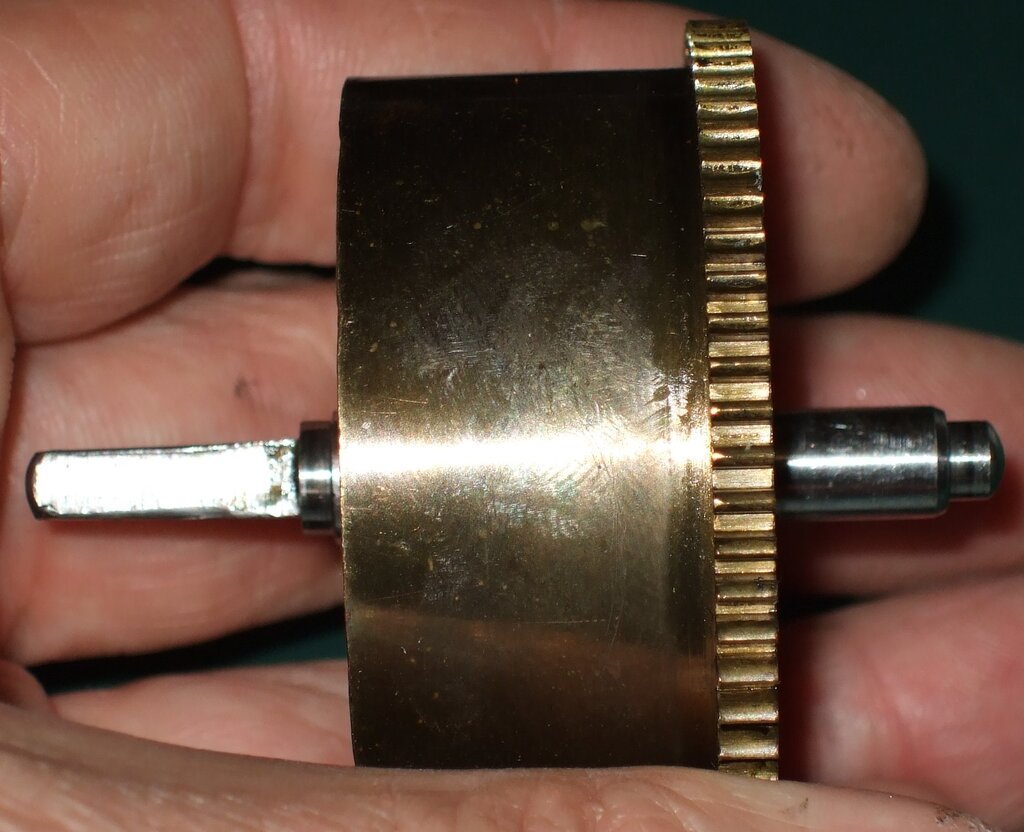
With the mainspring let down, the rest of the disassembly can proceed safely. Begin by removing the ratchet wheel and the crown wheel from the barrel bridge. Next, remove the barrel bridge itself to expose the mainspring barrel and the gear train (also called the wheel train).
Remove each wheel one by one: the centre wheel, third wheel, fourth wheel, and escape wheel. As you lift each component, perform an immediate visual inspection. Check the pivots at each end of the wheel's arbor. Look for any signs of wear, such as scoring, bending, or excessive thinning. A worn pivot will affect the watch's performance and must be addressed during servicing.
Finally, turn the movement over to disassemble the keyless works (the mechanism for winding and setting) and the motion works (the gears that drive the hands). Keep these components grouped together in your parts tray. Once every part is removed, cleaned, and inspected, the movement is ready for the careful process of reassembly and lubrication.
Now, let's test your understanding of the disassembly process.
What is the very first step in the process of uncasing the movement from the watch case?
After the movement is uncased, which two components should be removed first, and why?
A systematic approach to disassembly not only prevents lost parts but also lays the groundwork for a successful reassembly.