Mastering Measurement for Class 4
Metric Prefixes and Conversions
The Power of Ten
The metric system is built on a simple and powerful idea: the number 10. Think of our number system, where each place value is ten times bigger than the one to its right. The metric system works the same way.
At the heart of the system are for different kinds of measurements. For length, it's the meter (m). For mass, it's the gram (g). And for capacity or volume, it's the liter (L). All other units are just these base units multiplied or divided by powers of ten.
This base-10 structure means you can convert between units just by moving a decimal point, without any tricky calculations.
Meet the Prefixes
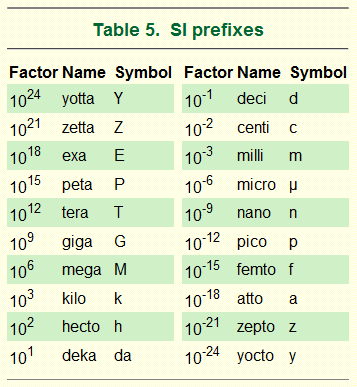
To change the size of a base unit, we add a prefix to its name. Each prefix has a specific meaning. The ones you'll use most often create units that are bigger or smaller than the base unit by factors of 10, 100, or 1000.
Here are the most common prefixes, from largest to smallest:
| Prefix | Symbol | Meaning | Example (with meter) |
|---|---|---|---|
| kilo- | k | 1,000 | 1 kilometer (km) = 1,000 meters |
| hecto- | h | 100 | 1 hectometer (hm) = 100 meters |
| deca- | da | 10 | 1 decameter (dam) = 10 meters |
| (base) | m, g, L | 1 | meter, gram, liter |
| deci- | d | 0.1 (one-tenth) | 1 decimeter (dm) = 0.1 meters |
| centi- | c | 0.01 (one-hundredth) | 1 centimeter (cm) = 0.01 meters |
| milli- | m | 0.001 (one-thousandth) | 1 millimeter (mm) = 0.001 meters |
Notice how "kilo-" makes the unit much larger, while "milli-" makes it tiny. A kilometer is a long distance for a walk, while a millimeter is about the thickness of a credit card.
The Conversion Staircase
An easy way to visualize conversions is to imagine a staircase. The largest units are at the top, and the smallest are at the bottom. To convert, you just count the number of steps you move and in which direction.
Here are the two simple rules:
- Larger to Smaller Unit: If you're going down the stairs (like from kilometers to meters), you multiply. Each step down is one multiplication by 10.
- Smaller to Larger Unit: If you're going up the stairs (like from millimeters to centimeters), you divide. Each step up is one division by 10.
Putting It into Practice
Let's try converting a few common measurements.
How many meters are in 3 kilometers?
- Find your starting point (kilo) and ending point (base unit, meter).
- On the staircase, that's 3 steps down (kilo → hecto → deca → meter).
- So, we multiply by 10 three times. That's the same as multiplying by 1000.
Now let's go the other way.
How many grams are in 500 milligrams?
- Find your starting point (milli) and ending point (base unit, gram).
- On the staircase, that's 3 steps up (milli → centi → deci → gram).
- So, we divide by 10 three times. That's the same as dividing by 1000.
The same logic applies to volume.
How many milliliters are in 2 liters?
- Find your starting point (base unit, liter) and ending point (milli).
- On the staircase, that's 3 steps down (liter → deci → centi → milli).
- So, we multiply by 10 three times, which is multiplying by 1000.
Once you get the hang of the staircase, converting between any two metric units becomes quick and easy.
Now, let's check your understanding.
The entire metric system is based on powers of what number?
Which of these units is the base unit for measuring volume or capacity?
The metric system's simple, base-10 structure makes it a powerful tool for measurement in science and everyday life around the world.