Mastering Mathematical Strategy
Polya's Strategic Framework
Thinking Before Calculating
Solving a math problem is like being a detective. You don't just guess who the culprit is; you gather clues, understand the situation, and form a plan before you act. Many people think math is just about crunching numbers, but the real work happens before any calculation begins. It's about strategy.
The mathematician George Polya created a simple, four-step framework for this process. It’s a reliable guide for tackling any problem, from simple algebra to complex proofs.
George Polya's 'How to Solve It' is a classic guide to problem-solving, offering a four-step approach: understand the problem, devise a plan, carry out the plan, and look back.
Let's break down these four steps. While we'll touch on all of them, our focus will be on the first two, which are the most critical for building a solid strategy.
| Step | Name | Goal |
|---|---|---|
| 1 | Understand the Problem | Know exactly what is being asked. |
| 2 | Devise a Plan | Find the connection between the data and the unknown. |
| 3 | Carry Out the Plan | Execute your strategy and perform the calculations. |
| 4 | Look Back | Check your answer and reflect on your method. |
Step 1: Understand the Problem
This first step sounds obvious, but it's where most mistakes are made. Before you can solve something, you must know what you're trying to solve. The goal here is to translate the words of the problem into a clear set of facts and questions.
Start by asking yourself:
- What is the unknown? What am I actually trying to find?
- What are the data? What information am I given?
- What are the conditions? What are the rules or constraints that connect the data to the unknown?
A powerful technique is to restate the problem in your own words. If you can explain it to someone else, you probably understand it.
Is the information you have sufficient to find the unknown? Is it insufficient? Or is there redundant or contradictory information? These are the questions you must answer first.
Let's consider a simple scenario. A farmer wants to build a rectangular fence. He has 100 meters of fencing material and wants to enclose the largest possible area. What are the dimensions of the fence?
Here's how we break it down:
- Unknown: The length and width of the rectangle.
- Data: The perimeter is 100 meters.
- Condition: The shape must be a rectangle, and the area must be maximized.
Step 2: Devise a Plan
Once you understand the problem, you need a plan of attack. This is where you connect what you know (the data) to what you need to find (the unknown). A great way to do this is by visualizing the problem.
Drawing a diagram is one of the most effective strategies in a problem-solver's toolkit. It turns abstract information into a concrete image you can work with.
With the diagram, the problem becomes clearer. We're looking for the values of and that make the area, , as large as possible, given the constraint that .
Other planning strategies include:
- Looking for a pattern.
- Solving a simpler, related problem first.
- Working backward from the goal.
- Writing an equation that links the data to the unknown.
Steps 3 and 4: Execution and Reflection
The third step, Carry Out the Plan, is where you execute your strategy. For our farmer problem, this would involve using the perimeter equation to express one variable in terms of the other, substituting it into the area formula, and using calculus or algebraic methods to find the maximum.
This step requires care and precision. It's important to check each part of your calculation as you go.
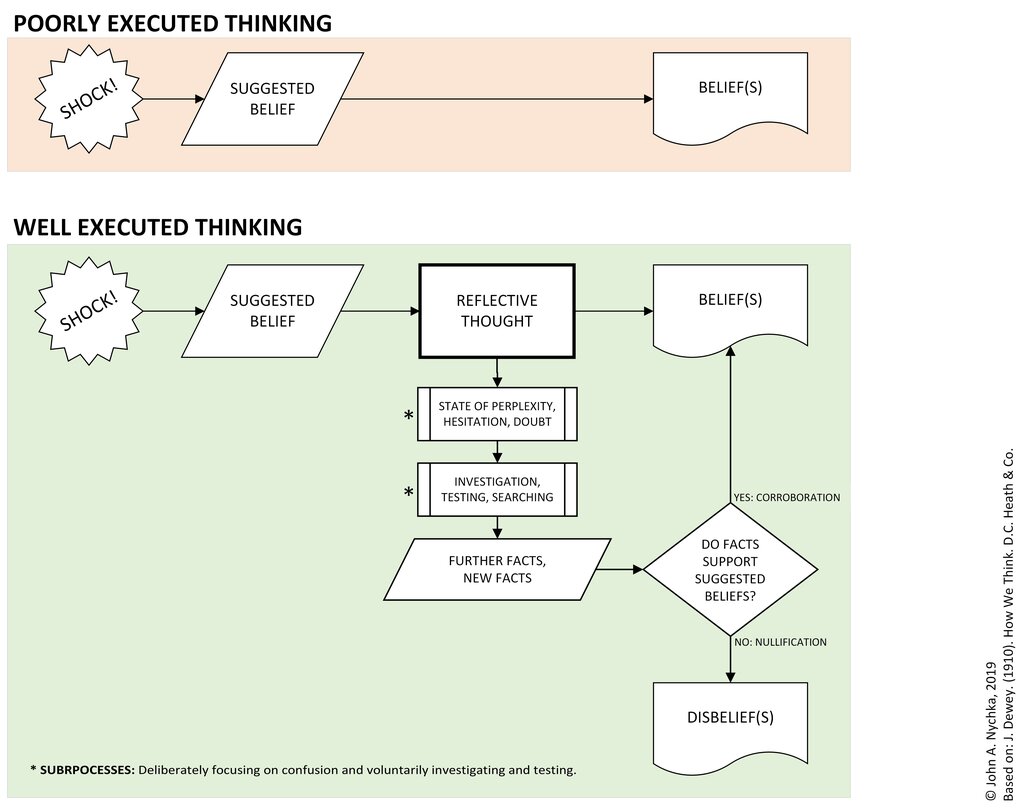
Finally, the fourth step is to Look Back. This is not just about checking if your calculation is correct. It's about reflection. Does your answer make sense in the context of the problem? Could you have solved it a different, more efficient way? What did you learn from this problem that you can apply to others?
For the fence problem, we'd find that the maximum area is achieved with a square (length = width = 25 meters). Looking back, we confirm that a 25x25 square has a perimeter of 100m and an area of 625 square meters, and we might notice a general principle: for a fixed perimeter, a square encloses the most area of any rectangle.
Now, let's test your understanding of this strategic framework.
What is the correct order of George Polya's four-step problem-solving framework?
According to the text, which step is the source of most mistakes in problem-solving?
By consistently applying these four steps, you move from simply doing calculations to becoming a true problem solver. The emphasis is on understanding and planning, which builds a foundation for tackling any challenge you encounter.