Mastering Math Additions
Addition Basics Review
Combining Quantities
Addition is the process of combining two or more quantities into a single, larger quantity. Think of it as putting groups of items together to find out how many you have in total. If you have three apples and someone gives you four more, you use addition to find the new total.
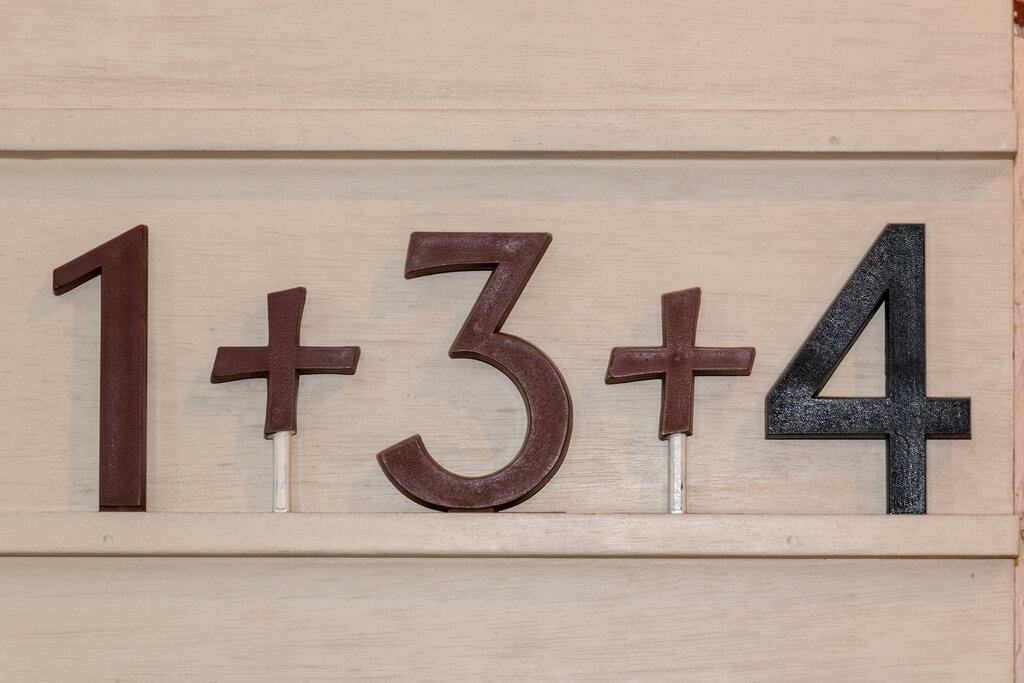
This operation is fundamental in mathematics. It's the first step in understanding how numbers interact. The result of this combination is always a single number that represents the whole group.
The Language of Addition
Like any field, math has its own vocabulary. When we add numbers, the numbers being added together are called addends. The final result is called the sum.
Addend
noun
A number which is added to another.
The symbol for addition is the (+). When you see this sign between two numbers, it's an instruction to combine them. The equals sign (=) tells us that the expression on the left has the same value as the number on the right, which is the sum.
Visualizing Addition
One of the most effective ways to visualize addition is by using a A number line is a straight line with numbers placed at equal intervals along its length. It gives us a spatial understanding of how numbers relate to each other.
To add using a number line, you start at the first addend. Then, you move to the right by a number of steps equal to the second addend. The number you land on is the sum.
For example, to calculate $2 + 5$, you would start at 2 on the number line and move 5 steps to the right, landing on 7.
This visual method reinforces that addition is about increasing a value, or moving forward along the numerical landscape.
Ready to check your understanding?
What is the primary purpose of addition?
In the equation , what are the numbers 5 and 9 called?
Understanding these core components of addition sets the stage for everything that follows in arithmetic.