Mastering Martial Arts Systems
Striking Mechanical Differences
Stance, Balance, and Power
How a fighter stands is not just about comfort; it's the foundation for every attack and defense. Stance dictates balance, power generation, and which tools are most readily available. The geometry of a fighter's base reveals their core strategy.
In Muay Thai, fighters adopt a relatively square, upright stance. Their weight is distributed evenly, often with a slight pulse or rhythm. This isn't for show. A squared base allows for quick, powerful kicks from either leg without much telegraphing. It also makes it easier to lift a leg to "check" an incoming low kick, a crucial defensive move in the art. The upright posture keeps the hips ready to rotate, which is the primary engine for their devastating roundhouse kicks and knee strikes.
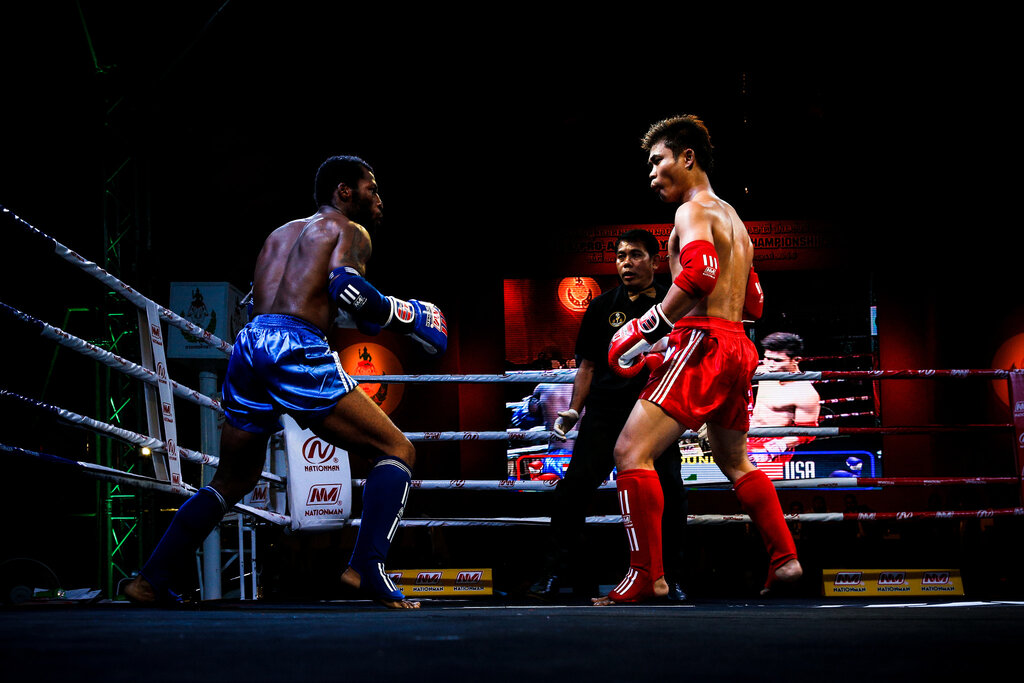
Boxing takes a completely different approach. A boxer stands bladed, with their lead shoulder pointing toward the opponent. This presents a smaller target, making the torso and head more difficult to hit cleanly. Weight is often biased toward the back foot, allowing the lead foot to be light for quick pivots and angling. Power for punches comes from explosive weight transfer and rotation through the hips and torso, all originating from this angled stance. The entire system is optimized for hand-based striking and head movement.
Karate's approach is often more linear and explosive. While there are many stances, a common theme is the ability to generate immense forward pressure. Techniques like Sun-dome emphasize stopping an opponent with a powerful, linear strike just before or at the moment of impact. The power is generated by driving from a stable, often lower, base and channeling it directly forward. Unlike the rhythmic pressure of kickboxing, traditional Karate focuses on ending the confrontation with a single, decisive blow.
The Flow of Force
A strike's power isn't just about muscle; it's about physics. The way force travels from the ground, through the body, and into the target is called the kinetic chain—and each art uses it differently.
A Muay Thai roundhouse kick is a perfect example of a rotational kinetic chain. The movement starts with the pivot of the supporting foot, followed by the powerful rotation of the hips and torso, which whips the kicking leg into the target. The arm on the kicking side swings down to act as a counterweight, adding even more velocity. It's a full-body, circular motion designed for maximum impact.
In contrast, a classic Karate reverse punch (gyaku-zuki) is a study in linear force. From a stable stance, the practitioner drives off the rear foot, rotating the hips sharply over a short distance. This rotation snaps the arm forward, with energy flowing in a straight line from the floor to the fist. The goal is focus, or kime—the total concentration of body and mind into the instant of impact.
Our data indicates that the typical Karate and Taekwondo snap-like kick is based heavily on rapid knee extension, while Muay Thai uses a technique that places greater emphasise on COM movements to develop high impact forces.
Boxing's kinetic chains are highly varied, but let's look at the hook. It combines linear weight shift with rotation. A boxer shifts their weight onto their lead foot while rotating their hips and shoulders, creating a circular strike path. Unlike the long, arcing path of a Thai kick, the hook's power is generated in a compact, tight rotation, making it brutally effective at close range.
Close-Range Control
The fight inevitably gets close. How each art manages this range is another key mechanical difference.
Muay Thai is famous for the clinch, particularly the double collar tie, or Thai Plum. By controlling the opponent's head and neck, a fighter can break their posture and balance, leaving them vulnerable to powerful knee strikes and elbows. The physics here is about leverage. By pulling the opponent's head down, you disrupt their spinal alignment and ability to generate power, while creating openings for your own short-range weapons. It turns a defensive position into a devastating offensive one.
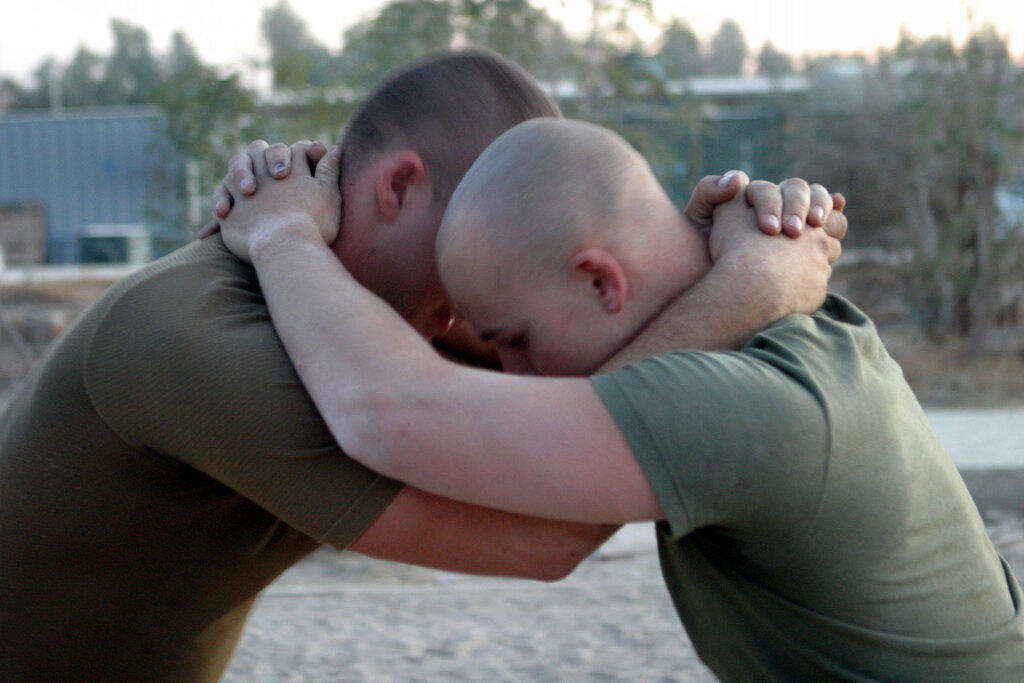
In Boxing, clinching is a temporary, defensive tactic. Boxers use it to smother an opponent's punches and force a referee reset, giving them a moment to breathe. There are no strikes allowed in a boxing clinch. It is purely a tool for neutralization and recovery.
After a strike is thrown, defensive positioning is key. A boxer's bladed stance and constant head movement allow them to slip and roll with punches, often returning fire from an angle. A Muay Thai fighter, having thrown a kick, will quickly return to their balanced, square stance, ready to check a counter-kick or absorb a blow on their raised guard. Karate often emphasizes retracting to a safe distance immediately after a strike, avoiding the exchange altogether.
What is the primary advantage of the square, upright stance commonly used in Muay Thai?
The term for the way force travels from the ground, through the body, and into a target during a strike is known as the __________.
Understanding these mechanical nuances reveals why each art looks and feels so different. It's not just a collection of random techniques, but a cohesive system where every element, from stance to strike, serves a specific strategic purpose.