Mastering Martial Arts Integration and Strategy
Kinetic Linking Systems
Two Engines of Power
At the heart of every powerful strike is a choice between two fundamental ways of generating force: linear and rotational. Think of a Karate reverse punch. It's like a piston, driving forward in a straight, explosive line. All energy is channeled directly toward the target with maximum speed and minimal wasted motion. The power comes from a rapid, linear transfer of weight from back to front.
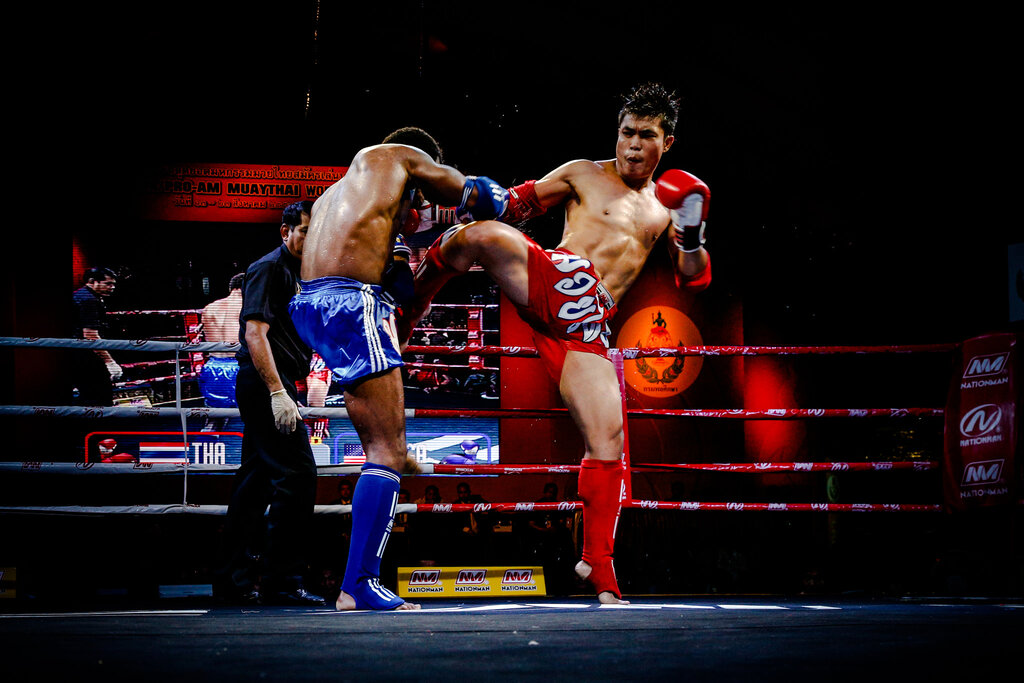
Now, picture a Muay Thai roundhouse kick. This is less like a piston and more like a baseball bat swung with the intent to hit a home run. The power is generated rotationally, using the entire body as a whip. It starts with a pivot on the supporting foot, slingshotting the hips, torso, and finally the kicking leg into the target. While a Karate strike is a direct-line explosion, a Thai kick is a devastating arc of momentum.
The Body as a Whip
Both methods rely on a concept from biomechanics called the —a sequence of body segments linked together. For a strike to be powerful, this chain must be efficient, transferring energy smoothly from one link to the next without any
The Muay Thai roundhouse is all about turning your entire body into a single, cohesive unit. The motion begins by pivoting on the ball of your standing foot, which turns your shin, knee, and hip outwards. This initial turn is crucial because it aligns the joints to handle the massive rotational force that's about to be generated. Your body weight sinks into the supporting leg, creating a stable axis. The power comes from the powerful rotation of the hips and torso, which pulls the kicking leg through the air like a trebuchet arm. The leg itself is kept relatively straight, not snapped at the knee, allowing the full momentum of the body to be delivered through the shin.
In contrast, the Karate reverse punch (gyaku-zuki) minimizes large-scale rotation to maximize forward speed. The power starts from the floor as the practitioner drives off their back foot. This linear drive travels up the leg and causes the hips to snap or vibrate sharply over a very short distance. The rotation is quick and tight, not a wide swing. This impulse continues up the torso and is channeled directly down the arm into the fist. The goal is to have every ounce of energy moving in a straight line toward the target, resulting in a penetrating, focused impact.
Torque and Ground Forces
The engine for both linear and rotational power is torque—a twisting force that causes rotation. It’s generated primarily by the hips. However, the application is completely different in each art. To generate that power, a fighter must first use the ground. Effective striking is a conversation with the floor, using what physicists call (GRF) to initiate movement.
In the Muay Thai kick, the goal is to maximize the lever arm (). By keeping the kicking leg long and swinging it in a wide arc, the fighter creates immense torque, even if the rotation speed is slower than a Karate punch. This results in a massive transfer of momentum upon impact, designed to cause widespread damage.
The Karate punch prioritizes force (). The rotation is incredibly fast over a short distance, creating a high angular velocity. The lever arm is the distance from the spine to the fist, but the key is the explosive speed of the hip snap, which generates a huge perpendicular force for a brief moment. This creates a sharp, penetrating impact designed to pierce defenses.
This difference in mechanics leads to different types of joint stress. The wide, powerful rotation of the Thai kick places significant torque on the knee and hip of the supporting leg. The explosive, snapping motion of a Karate punch can, over time, place stress on the hip joints and lumbar spine if not performed with perfect alignment.
What is the fundamental difference in how a Karate reverse punch and a Muay Thai roundhouse kick generate power?
Both linear and rotational strikes rely on the efficient transfer of energy through a sequence of linked body segments. This concept is known as the ______.