Mastering Martial Arts Dynamics
Historical Combat Evolution
The Cultural DNA of Combat
Every martial art is a product of its time and place. Its techniques, strategies, and philosophies are shaped by the specific problems it was designed to solve, whether on a battlefield, in a back alley, or in a ring. To understand modern combat, we have to look at the cultural DNA of the styles that built it.
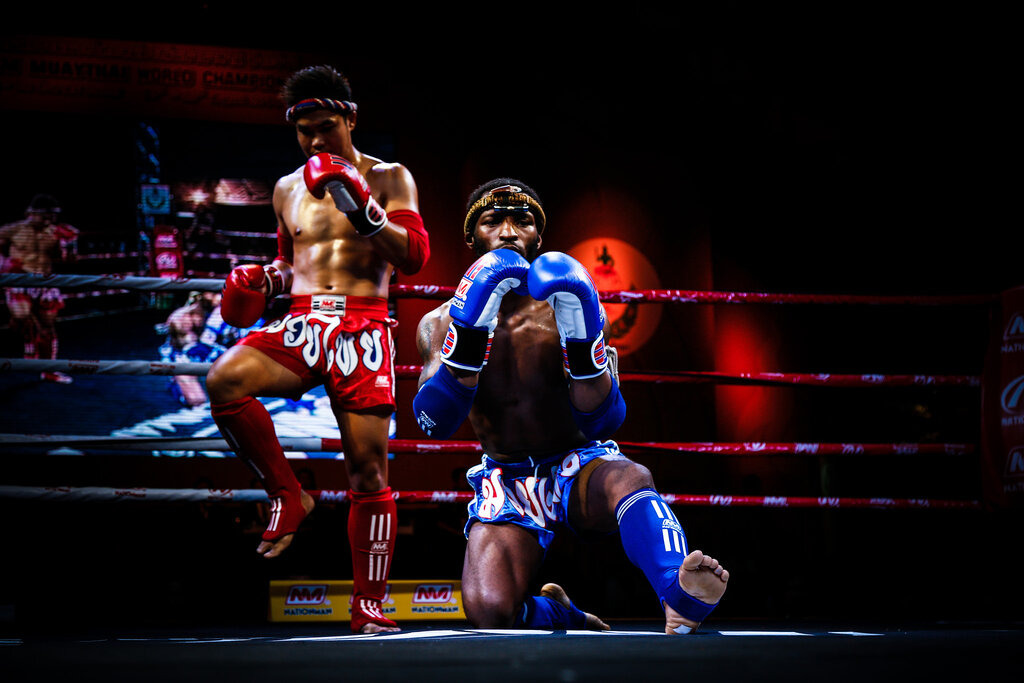
Muay Thai, for instance, didn't begin as a sport. It evolved from (“ancient boxing”), a brutal battlefield system used by Siamese soldiers. This art was designed for survival, incorporating not just punches and kicks, but also headbutts, vicious elbow and knee strikes, and grappling. The goal was to disable an opponent as quickly as possible in life-or-death situations.
As warfare modernized, Muay Boran transitioned into a regulated sport. Rules were introduced, gloves replaced hemp rope bindings, and the most lethal techniques were outlawed. Yet, its core philosophy remained. The famous “Art of Eight Limbs” (punches, kicks, knees, elbows) is a direct descendant of its battlefield origins. Central to its practice are Buddhist principles of composure and detachment, teaching fighters to remain calm and focused amidst the chaos of a fight. This mental stillness is as much a weapon as a perfectly timed elbow.
Helio Gracie was the pioneer who applied the theory of leverage to the techniques of Jiu Jitsu and in the process began a revolution that allows men, women and children of all ages, shapes, size and athletic ability learn techniques to defend themselves with maximum efficiency and minimal effort.
Brazilian Jiu-Jitsu (BJJ) underwent a similar refinement, but with a different focus. Its roots are in Japanese Judo, brought to Brazil in the early 20th century by Mitsuyo Maeda, a student of Judo's founder. The took Maeda's teachings and systemically stripped them down, obsessively testing and refining techniques for one specific scenario: a smaller, weaker person fighting a larger opponent on the ground.
This led to a radical shift in focus from Judo's powerful throws to a sophisticated system of ground-based grappling, joint locks, and chokeholds. The core principle wasn't strength, but leverage. BJJ’s cultural DNA is pure pragmatism, an ethos of efficiency over power that proved revolutionary in the world of martial arts.
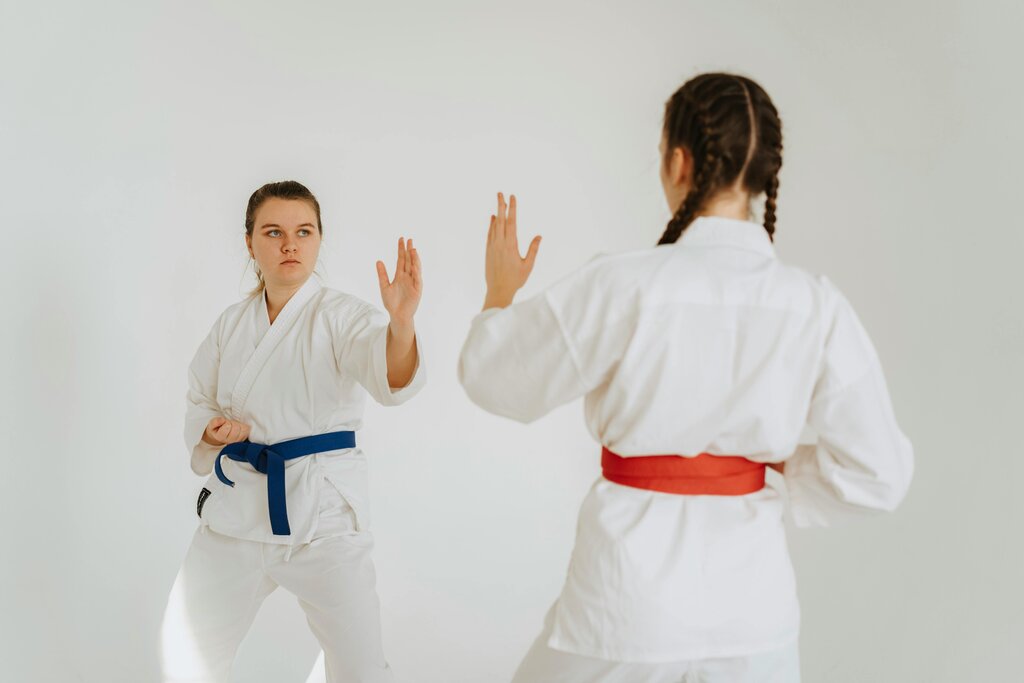
Karate has a different story. It developed on the island of Okinawa as a method of self-defense when weapons were banned by occupying forces. Its philosophy is deeply tied to dō (the way/path), emphasizing self-improvement, discipline, and character development. The practice of kata, or pre-arranged forms, is central to this. To an outsider, kata can look like a dance, but they are actually a library of combat techniques and principles, preserving responses to various attacks.
Each movement in Karate is meant to be precise and powerful, embodying the principle of ikigai, or finding purpose. The goal isn't just to win a fight, but to perfect one's character through rigorous, disciplined training.
The Proving Ground
For decades, these arts evolved in relative isolation. But in the mid-20th century, a series of “style vs. style” challenge matches began to emerge, particularly in Brazil and Japan. These were the raw, unregulated precursors to modern mixed martial arts.
A famous example was the 1951 fight between Hélio Gracie and the legendary judoka in Brazil. These contests were brutal proving grounds. They exposed the strengths and weaknesses inherent in each style. A Karate master might be helpless on his back against a BJJ practitioner. A Judo expert might struggle with the relentless striking of a Muay Thai fighter. These clashes forced martial artists to acknowledge the gaps in their training, planting the seeds for the cross-disciplinary approach that defines modern combat.
The evolution from battlefield art to specialized sport and back to an integrated combat system reveals a central truth: martial arts must adapt or they become obsolete. The philosophies of composure, leverage, and discipline are now pieces of a larger puzzle, assembled by modern fighters to create a complete and effective whole.
What is the battlefield art from which modern Muay Thai evolved?
The development of Brazilian Jiu-Jitsu by the Gracie family was driven by the specific problem of...