Mastering Marketing From Zero to Leadership
Marketing Fundamentals
The Core of Marketing
Marketing is often mistaken for just advertising or selling. But at its heart, marketing is the entire process of connecting a product with the right people. It's about understanding what customers need and delivering it in a way that feels valuable and builds a lasting relationship.
Marketing fundamentals are the essential principles that help businesses connect the right product with the right audience at the right time — and do it in a way that consistently drives growth.
To do this effectively, marketers rely on a core set of principles. These aren't complicated theories, but a practical framework for making smart decisions.
Your Marketing Toolkit: The 4 Ps
The most fundamental concept in marketing is the marketing mix, often called the “4 Ps.” Think of these as four key levers you can adjust to create a desirable offering for your customers. Getting the balance right is the key to a successful strategy.
Product
noun
The item or service you are offering to meet a customer's need or want. This includes its features, design, branding, and packaging.
Your product is the foundation. It has to solve a problem or fulfill a desire. If the product isn't right, no amount of clever marketing will save it.
Price
noun
The amount of money customers must pay to obtain the product. This also includes discounts, payment terms, and any credit options.
Price is more than just a number. It sends a powerful signal about your product's quality and value. Is it a luxury item or a budget-friendly option? Your pricing strategy must align with both your brand and what your target customers are willing to pay.
Place
noun
Where and how customers can access and purchase your product. This refers to distribution channels, like retail stores, online shops, or direct sales.
This is about accessibility. If customers can't find your product easily, they won't buy it. You need to be where your customers are, whether that's a shelf at the local supermarket or a button on a website.
Promotion
noun
The activities that communicate the product's benefits and persuade target customers to buy it. This includes advertising, public relations, and sales promotions.
Once you have the right product at the right price in the right place, you need to tell people about it. Promotion is how you grab your audience's attention and communicate your value.
The 4 Ps work together. A premium product (Product) with a high price (Price) sold only in exclusive boutiques (Place) requires sophisticated advertising (Promotion) to match.
Finding Your People
A common mistake is trying to appeal to everyone. A product designed for everybody often ends up resonating with nobody. The most successful marketing focuses on specific groups of people. This process involves three key steps: segmentation, targeting, and positioning.
Segmentation
noun
The process of dividing a broad market into smaller subgroups of consumers with common needs, interests, or characteristics.
Imagine a giant crowd of people. Segmentation is like organizing that crowd into smaller, more manageable groups. You can segment a market in many ways:
- Demographic: Based on age, gender, income, or occupation.
- Geographic: Based on country, city, or climate.
- Psychographic: Based on lifestyle, values, or personality.
- Behavioral: Based on purchasing habits, brand loyalty, or product usage.
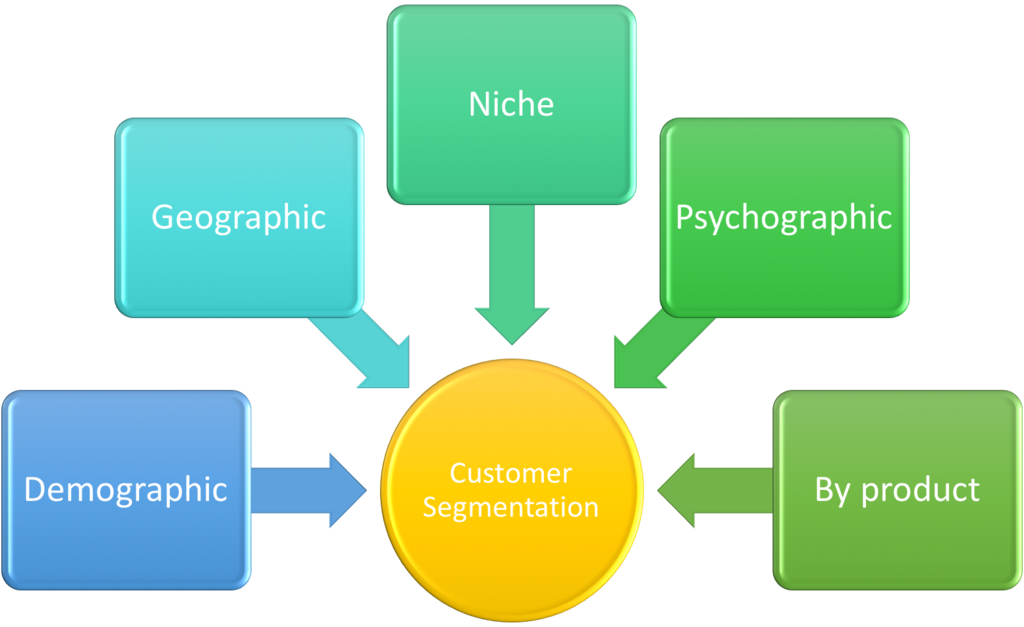
Once you've created these segments, the next step is to choose which one to pursue. This is targeting. You might not have the resources to go after every group, so you focus on the segment that offers the most potential or best aligns with your product. For example, a company selling high-end hiking gear might target affluent consumers who live near mountainous regions and value outdoor adventure.
Finally, there's positioning. This is about creating a clear, distinct, and desirable image of your product in the minds of your target customers. It's how you want them to think of you compared to competitors. Is your car the safest, the fastest, or the most affordable? That's positioning. It's the story you tell your target audience.
Inside the Customer's Mind
All of these concepts—the 4 Ps, segmentation, targeting, and positioning—rely on one thing: understanding consumer behavior. This is the study of how individuals, groups, and organizations select, buy, use, and dispose of goods, services, ideas, or experiences to satisfy their needs and wants.
Why did a customer choose your brand over another? Was it the price? The features? A recommendation from a friend? Or was it an emotional connection to the brand's story?
Understanding consumer behavior helps answer these questions. Marketers look at several factors that influence a buying decision:
- Cultural factors: The broader values and norms of a society.
- Social factors: Influence from family, friends, and social status.
- Personal factors: An individual's age, occupation, and financial situation.
- Psychological factors: Motivation, perception, and beliefs.
By understanding what drives their target customers, businesses can fine-tune their marketing mix to be more effective. They can create products people truly want, set a price that feels fair, choose a place that's convenient, and craft a promotional message that resonates on a deeper level.
Which of the following is NOT considered one of the traditional "4 Ps" of the marketing mix?
A company creates a new line of winter coats and focuses its advertising on customers living in cold climates. What type of market segmentation is this?
These fundamentals are the bedrock of any successful marketing effort. They provide a structured way to think about how to create and deliver value to customers.