Mastering Market Microstructure
Introduction to Market Microstructure
The Market's Inner Workings
When you buy or sell a stock, the price you see is just the tip of the iceberg. Beneath the surface, there's a complex system that determines how that trade happens, how quickly, and at what cost. This system is called market microstructure.
Think of it as the plumbing of financial markets. It’s not about what to buy or sell, but how those transactions are processed. It covers the rules, the players, and the technology that connect buyers with sellers. Understanding this plumbing helps explain how prices are formed and why trades execute the way they do.
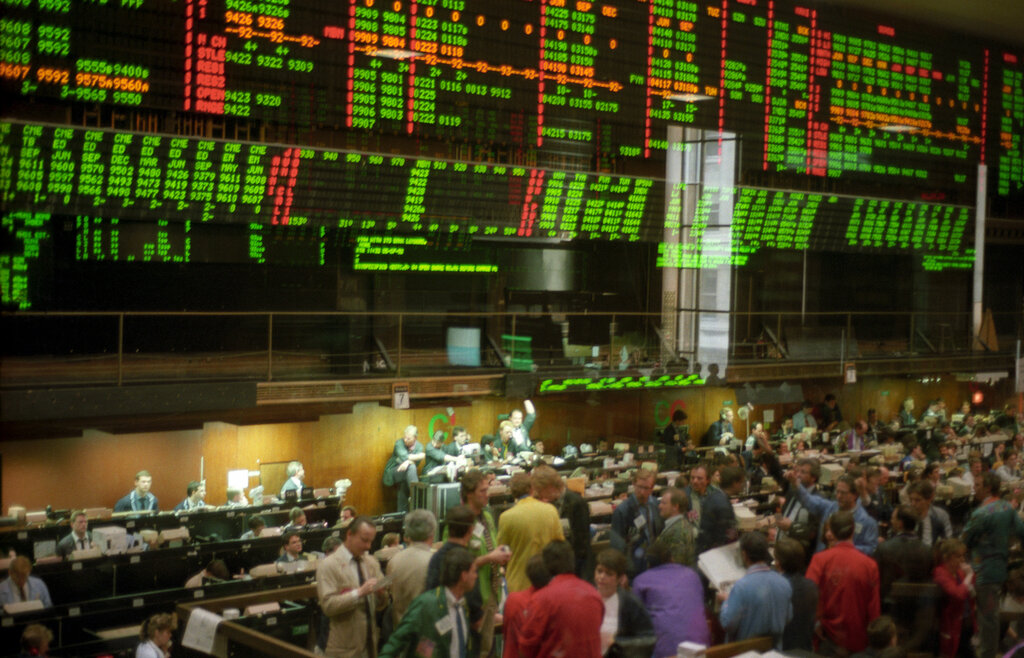
The Key Players
Every financial market is a bustling ecosystem with different participants, each playing a specific role. Let's meet the main characters.
Investors: These are the end-users of the market. They can be individuals saving for retirement or large institutions like pension funds managing billions of dollars. Their goal is to invest capital to meet financial objectives. They are the ones who ultimately want to buy or sell securities.
Brokers: Investors don't usually trade directly on an exchange. Instead, they use a broker, who acts as an agent to execute trades on their behalf. When you place an order through a brokerage app, the app's company is your broker.
Dealers: Unlike brokers, dealers trade for their own accounts. They are often called "market makers" because they stand ready to buy or sell a particular security at any time. By quoting both a buy price (bid) and a sell price (ask), they provide liquidity, making it easier for investors to trade whenever they want.
A dealer's profit comes from the bid-ask spread—the small difference between the price they're willing to pay for a security and the price they're willing to sell it for.
Arbitrageur
noun
A trader who attempts to profit from small price discrepancies of the same asset across different markets. For example, if a stock is trading for $10.00 on one exchange and $10.01 on another, an arbitrageur will simultaneously buy on the first and sell on the second to capture the one-cent difference.
Arbitrageurs are vital for keeping prices consistent across different trading venues. Their actions help ensure the "law of one price" holds, meaning an asset should have the same price everywhere, once you account for transaction costs.
Where Trading Happens
Trades don't just happen in a single, universal location. They occur across a variety of venues, each with its own set of rules.
| Venue Type | Description | Key Feature |
|---|---|---|
| Exchanges | Centralized marketplaces like the New York Stock Exchange (NYSE) where buyers and sellers come together. | Transparent and highly regulated. |
| Dealer Networks | A network where dealers post their bid and ask prices. The NASDAQ is a prime example. | Relies on dealers to provide liquidity. |
| ECNs | Electronic Communication Networks are automated systems that match buy and sell orders directly. | Fast, anonymous, and often lower cost. |
These venues compete with each other for order flow. A broker's job is often to find the best venue to execute a client's order, a process known as smart order routing.
How Orders Meet
Once an order reaches a trading venue, how does it turn into a trade? It depends on the market's mechanism. There are two main types.
1. Order-Driven Markets In these markets, trades happen when two orders match. Buyers submit bids (prices they're willing to pay) and sellers submit asks (prices they're willing to accept). The venue maintains a central list of all these orders, known as the limit order book. A trade occurs when a new order comes in that can be matched with an existing one. Most modern stock exchanges are order-driven.
2. Quote-Driven Markets These markets rely on dealers. Instead of matching public orders, trades are executed against the quotes provided by market makers. An investor wanting to trade will see the dealer's bid and ask prices and can choose to trade at one of those prices. This is common in the bond and currency markets.
The key difference is who provides the liquidity. In order-driven markets, it's other investors. In quote-driven markets, it's the dealers.
Putting it all together, the trade execution process generally follows a simple path. An investor places an order with their broker. The broker routes that order to a trading venue. At the venue, the order is either matched with another order (in an order-driven market) or filled by a dealer (in a quote-driven market). Once executed, the transaction is settled, meaning the ownership of the security and the cash officially change hands.
Ready to test your knowledge?
What is the primary focus of market microstructure?
An entity that provides liquidity by quoting both a buy price (bid) and a sell price (ask) for a security, and is ready to trade for its own account, is best described as a:
These fundamental concepts are the building blocks of all financial markets. By understanding the players, venues, and mechanisms, you can better appreciate the complex dance that happens every time a security is traded.