Mastering Market Dynamics and Strategic Trading
Market Mechanics Dynamics
The Living Order Book
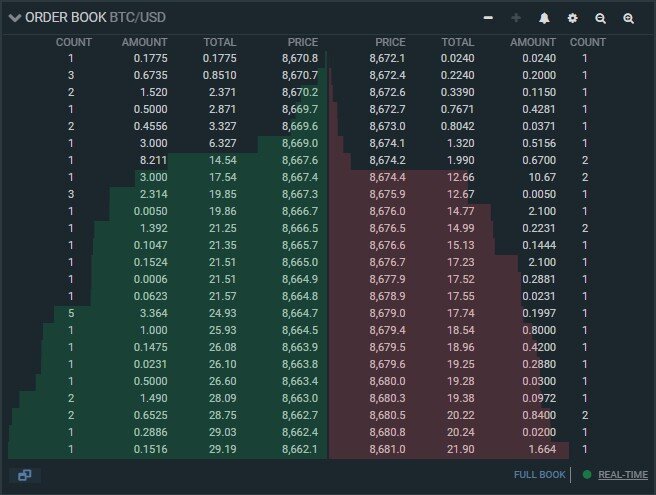
At the heart of any modern market is the Limit Order Book, or LOB. It's not just a list of prices; it's a dynamic, real-time ledger of intent. On one side, you have the bids—all the limit orders from traders willing to buy a specific asset at a specific price or lower. On the other side are the asks (or offers)—all the limit orders from traders willing to sell at a specific price or higher.
The difference between the highest bid and the lowest ask is the bid-ask spread, a concept you're already familiar with. But the real action lies in how this book changes from millisecond to millisecond. Every new limit order adds depth to the book. Every market order, which executes immediately at the best available price, consumes that depth.
This constant dance of adding and removing liquidity is called order flow. By watching the flow—the speed and size of incoming orders—traders get a feel for the market's pulse. Is there a wave of buy orders hitting the book? That's bullish pressure. Are large sell orders appearing and getting filled? That's bearish. This process is the engine of price discovery, where the market collectively decides an asset's current value through the raw mechanics of buying and selling.
Institutions Versus Retail
Not all orders are created equal. The market is a mix of small retail traders and large institutions like pension funds and investment banks. A retail trader buying 100 shares barely makes a ripple. An institution needing to buy 500,000 shares, however, can move the entire market.
If an institution placed a single massive market order, they would exhaust all the liquidity at the best prices, causing the price to spike and resulting in a terrible average cost for their position. To avoid this, they use sophisticated strategies. They might break their large order into many smaller pieces executed over time, or use special order types like iceberg orders to hide the true size of their intent. Understanding the difference between retail and institutional flow is key to interpreting market movements.
Order Types and Slippage
Your choice of order type is a strategic decision about what you want to prioritise: price or speed.
- Market Order: You want to get in or out now. You accept whatever the best available price is. This guarantees execution but not the price.
- Limit Order: You want to execute at a specific price or better. This guarantees your price but not execution. If the market moves away from your price, your order may never be filled.
- Stop Order: This is a risk management tool. It's an order to buy or sell a security when its price moves past a particular point, ensuring you automatically exit a losing trade. A stop order becomes a market order once the stop price is triggered.
| Order Type | Primary Goal | Price Certainty | Execution Certainty |
|---|---|---|---|
| Market Order | Immediate execution | Low | High |
| Limit Order | Control over price | High | Low |
| Stop Order | Risk management | Low (becomes market) | High (once triggered) |
The danger of using market orders in a thin market (one with low liquidity) is slippage—the difference between the price you expected and the price you got. If you send a large market buy order and there aren't enough sellers at the lowest ask price, your order will chew through to the next price level, and the next, filling your order at progressively worse prices. These seemingly small costs add up and can significantly impact profitability. Pockets of deep liquidity, where large orders can be executed with minimal price impact, are what traders constantly seek out.
Let's check your understanding of these market mechanics.
What does a Limit Order Book (LOB) represent in a financial market?
The continuous process of buyers and sellers placing orders, which collectively determines an asset's current value, is known as ______.
By moving beyond simple supply and demand, you can see the market for what it is: a complex system of interacting orders. Understanding this order flow, the participants behind it, and the costs of execution is fundamental to navigating the market effectively.