Mastering Marathi and English Penmanship
Ergonomics and Pen Control
The Foundation of Fluid Writing
Beautiful, professional handwriting isn't just about knowing the shapes of letters. It's a physical skill, rooted in how you hold your pen, how you move your arm, and how you sit at your desk. The goal is to move from drawing letters with your fingers to writing them with your whole arm. This shift is the secret to endurance, speed, and the elegant, consistent script seen in professional work, whether it's the strong vertical lines of Devanagari or the flowing slant of English cursive.
Think of it like an athlete training for a sport. Proper form prevents injury (or in this case, hand cramps) and produces superior results.
Mastering Your Grip
Everything starts with how you hold the pen. Many people grip their pen too tightly, relying on small finger muscles. This leads to fatigue and shaky lines. The professional standard is the Dynamic Tripod Grip, a relaxed yet controlled hold that allows for maximum flexibility and endurance. It's formed by resting the pen on your middle finger, with your thumb and index finger gently pinching it in place.
The pen should feel like an extension of your hand, not something you're strangling. If your knuckles are white, you're gripping too hard.
The Engine of Movement
The biggest leap in penmanship skill comes from changing the source of your movement. Instead of using your fingers to form letters, you should use your arm. Your fingers should remain relatively still, simply guiding the pen. The real work is done by your forearm and shoulder. This technique, often called , allows for smoother, larger, and more consistent strokes. It's the only way to write for long periods without cramping.
To practice this, rest your forearm on the desk, creating a pivot point near your elbow. Try writing large loops and ovals in the air just above your paper, moving your entire arm from the shoulder. Then, bring the pen to the paper and do the same. Notice how the movement is larger and more fluid than when you just use your fingers. This is the core motion that will build both the tall, straight forms of Devanagari and the flowing connections of cursive.
Setting the Stage
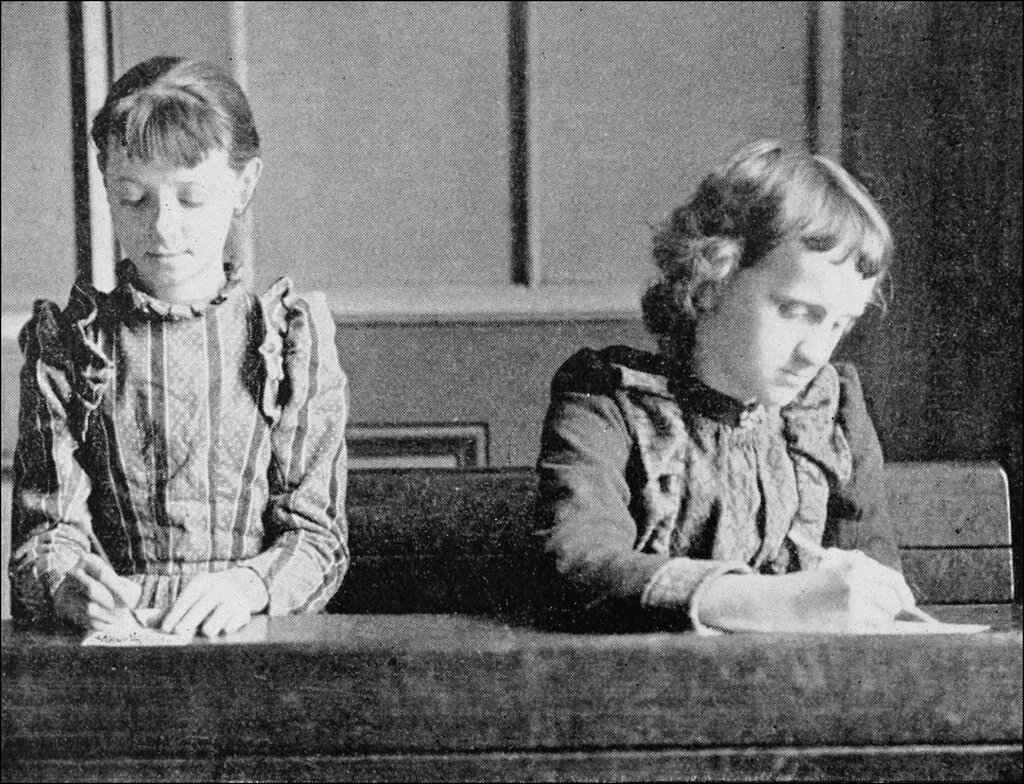
Your environment is just as important as your technique. Proper posture and paper position create the stable foundation needed for controlled writing. Sit up straight with both feet flat on the floor. Your desk should be at a height where your forearm can rest comfortably on it without you needing to hunch over. Use your non-writing hand to hold the paper steady.
posture ~ helps stabilize and support the writing muscles
The angle of your paper is also critical. It should be positioned so that the natural sweeping motion of your arm aligns with the script's intended slant. For right-handed writers, this usually means tilting the top of the paper to the left. For left-handed writers, tilt it to the right. This simple adjustment prevents you from twisting your wrist into uncomfortable positions and makes achieving a consistent slant much easier.
The Art of Pressure
Professional script has life and character, which often comes from subtle changes in line thickness. This is achieved by modulating the pressure you apply with the pen. Downward strokes are typically thicker (more pressure), while upward strokes are thinner (less pressure). This technique, known as creating , adds a sophisticated rhythm and elegance to your writing.
This skill takes practice and is highly dependent on your tools. A fountain pen with a flexible nib will show line variation beautifully, while a standard ballpoint pen will show very little. Start by practicing simple strokes, focusing on applying heavy pressure on the downstroke and almost no pressure on the upstroke. This controlled touch is what gives both Devanagari and Latin scripts a polished, professional look.
Now that we've covered the core physical techniques, let's test your understanding.
To achieve smooth, flowing script and write for long periods without fatigue, which part of your body should initiate the main writing movements?
The professional standard for holding a pen, which allows for maximum flexibility and endurance, is known as what?
Mastering these physical fundamentals is the first and most important step. It creates the foundation upon which all advanced penmanship skills are built.