Mastering Marathi and English Penmanship
Grip and Posture
Refining Your Grip for Endurance
For long-form writing, the way you hold your pen is less about basic control and more about ergonomic efficiency. While many people use a quadrupod grip, where four fingers contact the pen, the preferred method for extended sessions is the Dynamic Tripod grip. This technique, using the thumb, index, and middle fingers, offers a balance of stability and relaxed control that significantly reduces hand fatigue.
The key is to avoid a death grip. Your hold should be firm enough to guide the pen, but light enough that the pen could be pulled from your hand with a gentle tug. This light touch prevents excess pressure on your fingers and wrist, allowing for smoother, more fluid strokes over longer periods. Think of it as steering rather than forcing the ink onto the page.
Grip: Hold your pen or pencil lightly but securely.
Write with Your Arm, Not Your Hand
Most people write by pivoting their wrist and moving their fingers. This leads to cramped, inconsistent letters and quick fatigue. Professional penmanship, however, relies on arm movement. The motion should originate from your shoulder and elbow, with your forearm gliding smoothly across the table. Your wrist and fingers are then used only for the fine details of letter formation, not for powering the entire movement.
This technique is the secret to both the unwavering horizontal lines of Devanagari and the consistent, elegant slant of English cursive.
This method was popularized in the 19th century by figures like , who developed a whole system of cursive based on natural, flowing arm movements. By locking your wrist in a relatively straight position and using your larger arm muscles, you achieve a level of consistency and stamina that finger-writing simply cannot match.
Setting the Stage with Paper
The angle of your paper is not arbitrary; it's a critical tool for achieving the correct script geometry. The ideal orientation depends entirely on the script you're writing.
For Latin cursive, you want to align the paper with the natural path of your forearm. For a right-handed person, this typically means rotating the paper about 30-45 degrees counter-clockwise. This angle allows the natural sweep of your arm to produce a consistent forward slant in your letters.
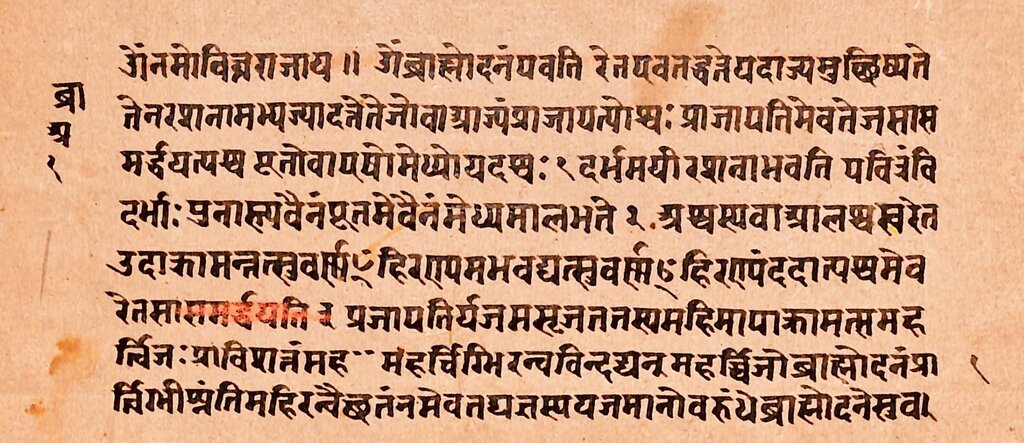
For Devanagari scripts like Marathi, the goal is different. The defining feature is the horizontal header line, or . To keep this line perfectly straight and parallel to the top of the page, you should place the paper squarely in front of you, without any rotation. This orientation ensures that the horizontal movement of your arm translates directly to a straight line on the page, providing a strong, stable foundation for the characters that hang below it.
For extended writing sessions, what is the recommended pen grip for reducing hand fatigue?
To achieve consistency and stamina in professional penmanship, the primary writing motion should originate from the wrist and fingers.
Mastering these physical mechanics provides the foundation for all advanced penmanship. It shifts writing from a tense, finger-driven task to a relaxed, rhythmic activity powered by the larger, more resilient muscles of your arm.