Mastering Managerial Time
Advanced Time Management for Managers
Beyond the To-Do List
As a manager, you've mastered the basics of time management. You know how to make a list, block out your calendar, and power through your inbox. But you also know that managerial work is a different beast. Your success isn't just about your own productivity; it's about amplifying the effectiveness of your entire team.
Advanced time management for leaders is less about ticking off more tasks and more about strategic leverage. It's about making conscious choices about where to invest your time and energy to get the best possible return from your team. This means shifting your focus from doing to delegating, from reacting to prioritizing, and from being busy to being effective.
The Art of Strategic Delegation
Many managers view delegation as simply handing off work they don't have time for. This is a missed opportunity. Strategic delegation is not about offloading tasks; it's about developing your people. When you delegate effectively, you empower your team members, build their skills, and create a more resilient and capable unit.
The key is to give ownership, not just instructions. Instead of prescribing every step, define the desired outcome and grant the authority needed to achieve it. This builds trust and encourages your team to take initiative.
True delegation gives your team member the 'what' and the 'why,' then trusts them with the 'how'.
Of course, not every task is suitable for delegation. Your core responsibilities—like one-on-one meetings, strategic planning, performance reviews, or handling a crisis—should stay on your plate. However, many other tasks can be powerful growth opportunities for your team.
When you delegate, be crystal clear about the desired outcome, provide necessary context and resources, and agree on how you'll both track progress. This prevents misunderstandings and ensures the task holder feels supported, not abandoned.
Prioritization Under Pressure
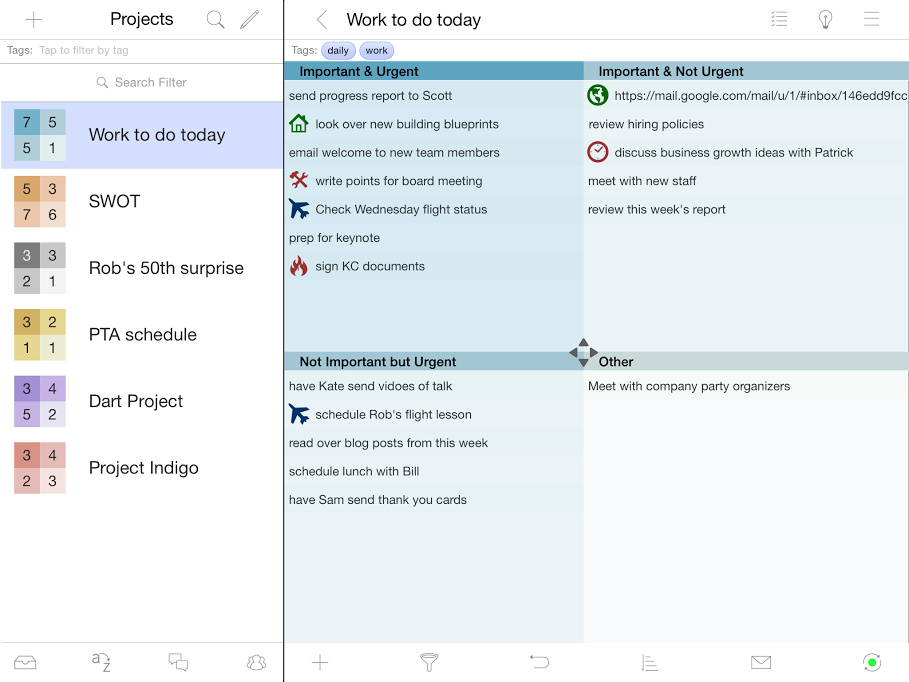
Managers constantly juggle competing priorities. A simple urgent/important matrix is a good start, but it often fails to capture the complexity of team-level decisions. When multiple projects seem important, you need a more robust system for deciding what to tackle next.
The RICE scoring model is a framework used by product managers that can be adapted for any team. It helps you quantify and compare the potential value of different initiatives.
| Factor | Description | How to Score (Example) |
|---|---|---|
| Reach | How many people will this impact in a given period? | Estimate number of customers, users, or team members. |
| Impact | How much will this move the needle on our goals? | 3 = massive, 2 = high, 1 = medium, 0.5 = low. |
| Confidence | How sure are you about your estimates for Reach and Impact? | 100% = high confidence, 80% = medium, 50% = low. |
| Effort | How much time will this take from the team (in person-months)? | Estimate the total work required across all roles. |
You calculate a score for each potential project or task using a simple formula.
This method forces a data-informed conversation about priorities. It moves the discussion from "This feels important" to "This initiative has the highest potential return on our time investment, and here's why."
Eliminating Time Sinks
Every workplace has its own unique ways of wasting time. For managers, these often disguise themselves as productive work. The two biggest culprits are often meetings and notifications.
Ineffective Meetings: A poorly run meeting is a productivity killer multiplied by the number of attendees. As a manager, you have the power to fix this. Every meeting you call should have a clear purpose, a concise agenda with timings, and a defined list of required attendees. If a meeting doesn't have all three, consider cancelling it and using email or a chat message instead.
The Notification Barrage: Constant pings from email, chat apps, and project management tools create a state of continuous partial attention. This makes deep, focused work nearly impossible. Lead by example by turning off non-essential notifications. Block out "focus time" on your calendar and encourage your team to do the same. This signals that uninterrupted work is valued.
To get a handle on your personal time sinks, try a simple time audit for one week. Log your activities in 30-minute blocks. The results are often surprising and provide a clear, objective look at where your time actually goes. You can then identify low-value activities to reduce or eliminate.
Implementing smart time management strategies allows workers to prioritize tasks, set boundaries, and carve out space to recharge.
By actively managing meetings and notifications, you not only reclaim your own time but also create a more productive and less stressful environment for your entire team.
Ready to test your knowledge on these advanced strategies?
What is the primary goal of strategic delegation for a manager?
Which of the following tasks is generally NOT suitable for a manager to delegate?
Mastering these techniques will shift your role from a reactive problem-solver to a proactive, strategic leader who multiplies the impact of their team.