Mastering Lucid Dreaming
Introduction to Lucid Dreaming
Waking Up in a Dream
Have you ever been in the middle of a dream and suddenly realized, "Hey, I'm dreaming!"? If so, you've had a lucid dream. It's a state where you become conscious and aware while you are still asleep and dreaming.
Lucid dreaming is when you’re conscious during a dream.
Unlike a typical dream where you're just a passenger along for the ride, lucid dreaming puts you in the driver's seat. This awareness can range from a fleeting recognition that you're in a dream to having significant control over the dream's narrative and environment. You might be able to change the scene, talk to dream characters, or even fly.
A Dream Through Time
The idea of becoming aware in one's dreams isn't new. The concept has roots in ancient practices, most notably in Tibetan Buddhism's Dream Yoga, a spiritual discipline meant to achieve a state of continuous awareness, even during sleep. Early philosophical writings, including those by Aristotle, also touched on the idea of being self-aware during a dream.
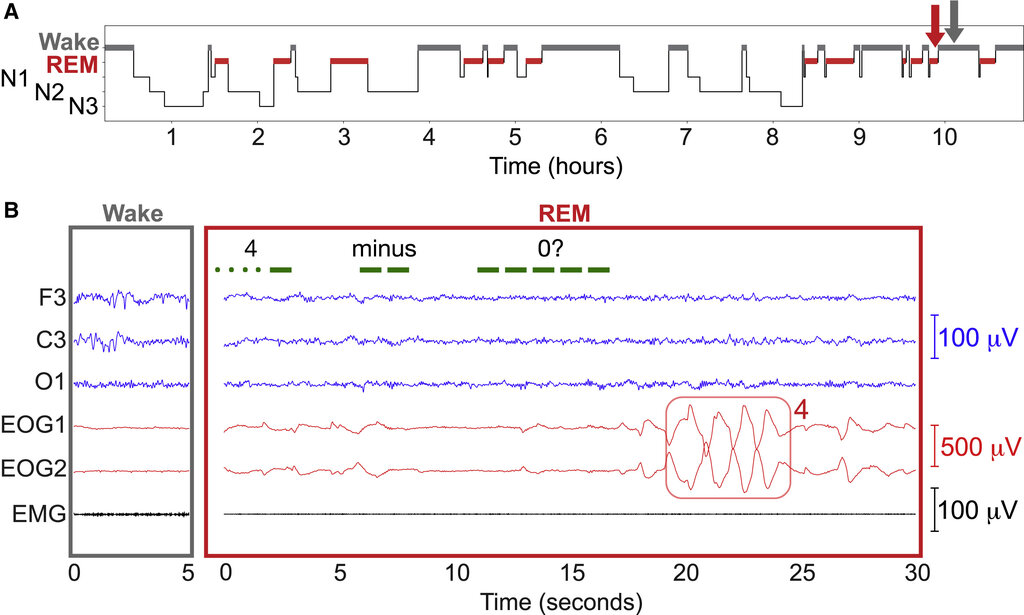
For centuries, lucid dreaming was mostly treated as a mystical or anecdotal phenomenon. That changed in the late 20th century when scientific research began to validate its existence. Researchers devised experiments where sleeping participants would signal their lucidity to the outside world, often using pre-arranged eye movements. This proved that conscious awareness was possible during REM sleep.
Who Lucid Dreams?
Lucid dreaming is a surprisingly common human experience. While some people have them frequently, for others it's a once-in-a-lifetime event. Studies suggest that children and young adults are more likely to have lucid dreams spontaneously.
Here’s a general look at how common it is:
| Experience Level | Prevalence |
|---|---|
| At least one lucid dream | ~55% of adults |
| Lucid dreams monthly | ~23% of adults |
| Frequent lucid dreams | A much smaller percentage |
For most people, these experiences happen without any special effort. They might be triggered by an unusual event in the dream or just a sudden moment of insight.
Unlocking Dream Potential
Beyond being a fascinating experience, lucid dreaming has several potential applications. One of the most studied benefits is in overcoming nightmares. By becoming lucid during a bad dream, a person can recognize it isn't real and change the outcome, confronting the source of their fear in a safe environment.
Artists, writers, and inventors sometimes use lucid dreams as a source of inspiration, exploring new ideas in a world without limits. Others practice skills, from public speaking to athletics. While practicing a physical skill in a dream won't build muscle, it can help reinforce the neural pathways associated with the movement, a form of mental rehearsal.
Lucid dreaming offers a unique window into the nature of consciousness itself. It allows us to explore the inner workings of our own minds in a direct and personal way.
What is the defining characteristic of a lucid dream?
The ancient practice of Dream Yoga, which is a precursor to modern concepts of lucid dreaming, originates from which spiritual tradition?
This state of conscious dreaming is a natural human ability that bridges the gap between our waking and sleeping worlds.