Mastering Long-Range Rifle Accuracy
Rifle and Optics Selection
Choosing Your Tools
Hitting a target at long range isn't just about skill; it's about having the right equipment. Your rifle, scope, and ammunition work together as a system. A mismatch in any one of these components can turn a potential hit into a definite miss. The goal is to build a setup that is precise, repeatable, and tailored to your specific needs.
Caliber Considerations
When shooting past 500 yards, the bullet does all the real work. Choosing the right caliber is critical. You're looking for a cartridge that fires a long, heavy, and aerodynamically efficient bullet. This is measured by its ballistic coefficient (BC). A higher BC means the bullet resists air drag better, maintaining its velocity and being less affected by wind.
Two popular choices for long-range shooting are the 6.5 Creedmoor and the .300 Winchester Magnum. The 6.5 Creedmoor is known for its high BC bullets and mild recoil, making it comfortable to shoot. The .300 Winchester Magnum delivers more energy at long distances, making it suitable for larger game, but it comes with significantly more recoil.
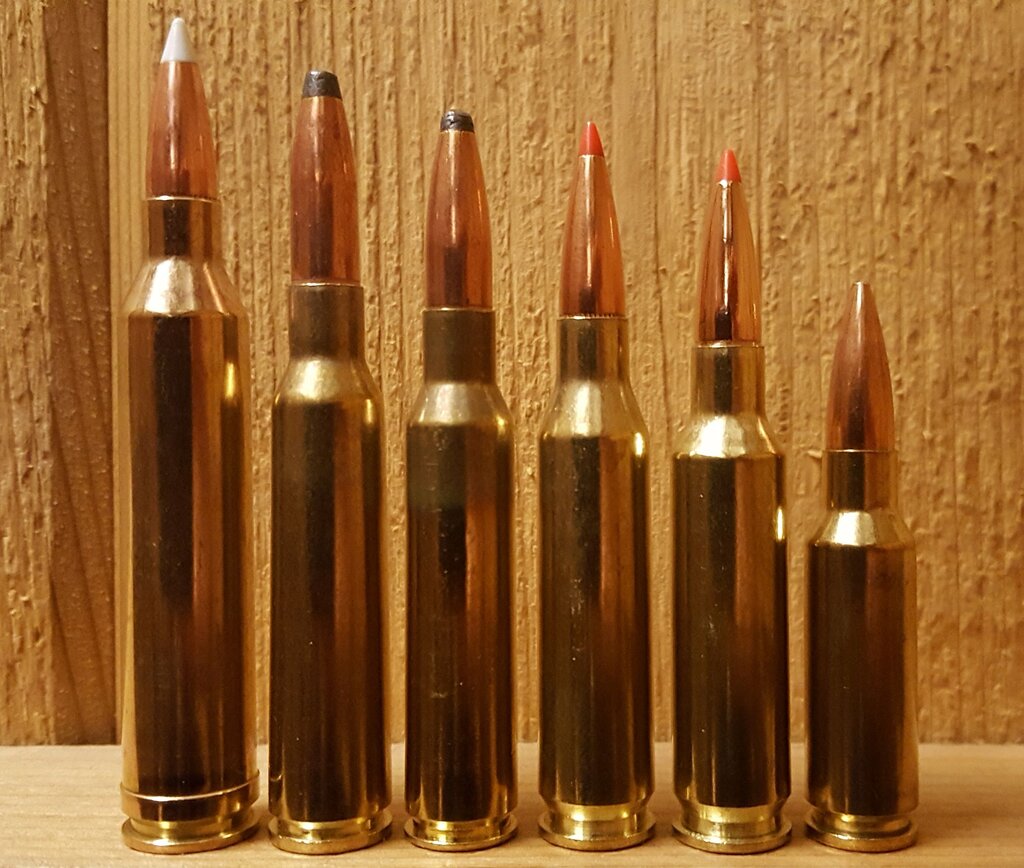
Here’s a quick comparison of how these factors play out in a few common cartridges.
| Caliber | Typical Bullet BC (G1) | Muzzle Velocity (fps) | Best For |
|---|---|---|---|
| 6.5 Creedmoor | .580 - .650 | ~2750 | Target shooting, medium game, low recoil |
| .308 Winchester | .450 - .550 | ~2650 | Versatility, common availability |
| .300 Winchester Mag | .500 - .700 | ~2950 | Large game, extreme long range, high energy |
The Rifle Itself
The rifle is the foundation of your system. For long-range work, you need a platform that is stable and consistent. Look for a heavy-contour barrel, which heats up slower and vibrates less, leading to better accuracy over multiple shots. A barrel length of 22-26 inches is common to get the most velocity out of modern cartridges.
Pay attention to the barrel's twist rate, which is how fast the rifling spins the bullet. A faster twist (e.g., 1:8 or one turn in eight inches) is needed to stabilize the long, heavy bullets used for long-range shooting.
The stock is your interface with the rifle. A good stock should be rigid and offer adjustable features like cheek height and length of pull. This allows you to get a perfect, repeatable sight picture every time. Finally, a crisp, clean-breaking trigger with a light pull weight (around 2-3 pounds) is essential. It lets you fire the rifle without disturbing your aim.
Think of the rifle as a launchpad. Its only job is to send the bullet on its way exactly the same way, every single time.
Optics and Reticles
Your scope is just as important as your rifle. For shooting between 500 and 1000 yards, you'll want a scope with variable magnification, something in the 5-25x or 6-24x range. The 'x' refers to the power of magnification.
A key feature is the focal plane of the reticle. A first focal plane (FFP) reticle appears to grow and shrink as you change magnification, but its subtensions (the measurement marks) remain accurate at any power. This is ideal for long-range shooting where you might need to hold for wind or elevation at various magnifications. A second focal plane (SFP) reticle stays the same size, but its subtensions are only accurate at one specific (usually the highest) magnification.
You'll also need exposed, tactical-style turrets. These are the knobs on top and on the side of the scope that you'll use to dial in adjustments for distance (elevation) and wind (windage). These adjustments are measured in either Minutes of Angle (MOA) or Milliradians (MILs). Neither is inherently better, but it's important that your turret adjustments match your reticle. If you have a MIL-based reticle, you want MIL-based turrets.