Mastering Long Range Ballistics
Ballistic Drag Models
The Shape of Drag
For shooting at moderate distances, a single ballistic coefficient (BC) value works well enough. But when you push out to long range, precision demands a more nuanced approach. A bullet's resistance to air doesn't stay constant; it changes dramatically as the bullet slows down. To predict a trajectory accurately, you need to know how that drag changes over the entire flight path. This is where drag models come in.
A drag model is a standardized reference that describes how a projectile's drag changes with its velocity, specifically as it relates to the speed of sound. Think of it as a template. To create these templates, ballisticians fired standard projectiles and meticulously measured their deceleration. Each drag model is based on a specific physical projectile shape.
The two most important models in modern long-range shooting are the G1 and G7.
The is based on a projectile from the early 20th century. It's a fairly clunky design by modern standards: flat-based, with a simple nose shape. For decades, it was the only standard, so most BC values you see are G1-referenced. The is based on a much more modern, streamlined, 'very-low-drag' bullet with a long nose and a tapered base, known as a design. Its shape is a much better match for today's long-range bullets.
Matching the Model to the Bullet
The key to accuracy is choosing the drag model that most closely resembles your actual bullet. If you use a G1 BC for a modern boat-tail bullet, your ballistic calculator will be working with a mismatched drag curve. The G1 model predicts that drag increases much more sharply in the transonic range (around the speed of sound) than it actually does for a sleek, G7-style bullet. This mismatch leads to errors, especially at long distances where the bullet spends more time in this critical velocity zone.
A better model match means the BC value stays more consistent as the bullet decelerates, resulting in a more accurate trajectory prediction.
To bridge the gap between a standard projectile and a real one, ballisticians use a metric called the (often written as ). The form factor is a number that quantifies how your bullet's shape compares to the standard G1 or G7 projectile. A form factor of 1.0 means your bullet has the exact same drag profile as the standard. A value less than 1.0 means your bullet is more aerodynamic. The relationship is simple:
This is why you'll often see two BCs listed for the same bullet: a G1 BC and a G7 BC. The G7 BC will be lower, but it will provide a much more reliable prediction for a modern long-range bullet.
The Supersonic Transition
A bullet's flight can be divided into three speed regimes: supersonic (faster than sound), transonic (near the speed of sound), and subsonic (slower than sound). The most turbulent and unpredictable part of this journey is the transonic transition. As the bullet slows to Mach 1, the airflow around it becomes chaotic, creating a massive spike in drag and potentially causing instability.
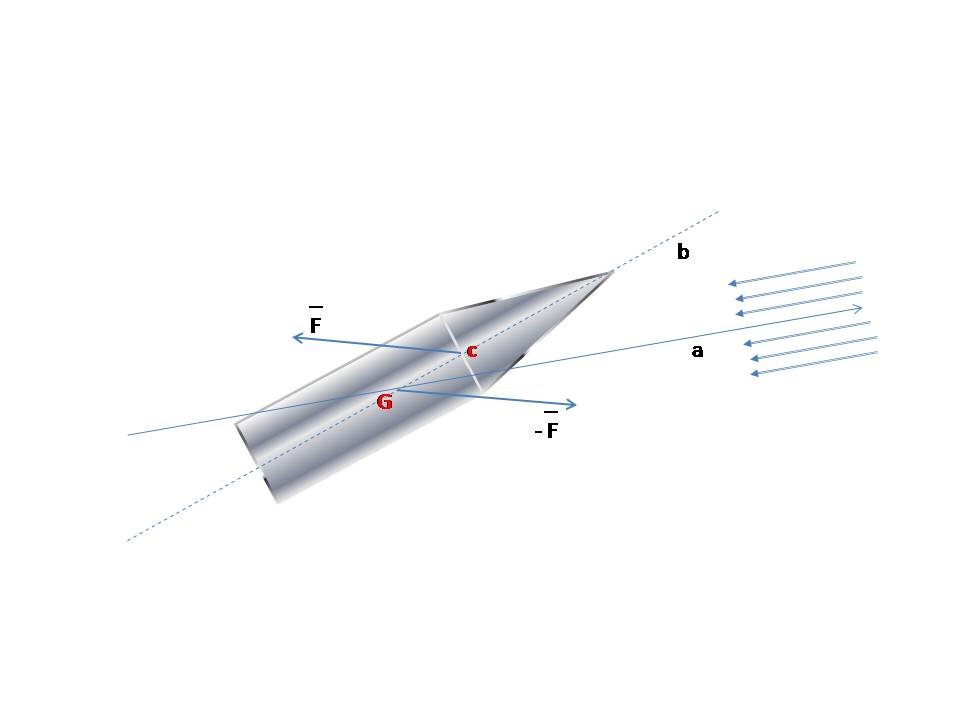
The G1 and G7 drag models represent this drag spike differently because of their shapes. The G1's blunt profile experiences a very abrupt and high drag spike. The G7's sleek, boat-tail design handles this transition much more gracefully, with a lower, less dramatic drag increase. If your bullet is still supersonic when it reaches the target, this difference might not matter much. But for extreme long-range shots where the bullet drops into the subsonic realm, using the correct G7 model is critical for predicting its path through this turbulent phase.
In short, always use the G7 BC for modern boat-tail, very-low-drag bullets if it's provided by the manufacturer. It will give you a truer picture of the bullet's performance and a more accurate prediction of where your shot will land.
What is the primary purpose of a ballistic drag model in long-range shooting?
The G7 drag model is considered more appropriate for modern long-range bullets because its reference projectile has what key design feature?
Understanding these models is a key step from being just a shooter to being a student of ballistics.