Mastering Logical Reasoning
Introduction to Logical Reasoning
What Is Logical Reasoning?
Logical reasoning is the process of using a rational, systematic series of steps to come to a conclusion. It's not a secret code for philosophers or scientists; it’s a fundamental skill we all use, whether we realize it or not. When you decide what to wear based on the weather forecast, or figure out the quickest route to a new restaurant, you're using logic.
At its core, logic is the study of how we connect ideas. It provides a framework for evaluating information, making sense of the world, and communicating our thoughts clearly to others. It’s the difference between a random collection of facts and a well-supported point.
Using logic, a person evaluates arguments and reasoning and strives to distinguish between good and bad reasoning or between truth and falsehood.
Think of it as the grammar of thinking. Just as grammar provides rules for constructing sentences, logic provides rules for constructing sound arguments.
Statements vs. Arguments
To understand logic, we first need to distinguish between statements and arguments. A statement is a sentence that can be judged as either true or false. It asserts a fact, or what someone believes to be a fact.
For example:
- “The Earth revolves around the Sun.” (A true statement)
- “There are 14 months in a year.” (A false statement)
An argument, on the other hand, is more complex. It's a set of statements organized to support a specific point. An argument isn't about disagreeing or fighting; in logic, it's about making a case for something. It combines statements in a way that tries to persuade you that one of them is true.
A statement simply says how things are. An argument gives reasons why things are that way.
If you just say, “We should invest in renewable energy,” you’ve made a statement. If you say, “We should invest in renewable energy because it reduces pollution and creates jobs,” you’ve made an argument.
The Building Blocks of Arguments
Every argument has two basic parts: premises and a conclusion.
- Premises are the statements that provide the reasons or evidence.
- Conclusion is the statement that the premises are meant to support.
Let’s look at a classic example:
| Part | Statement |
|---|---|
| Premise 1 | All humans are mortal. |
| Premise 2 | Socrates is a human. |
| Conclusion | Therefore, Socrates is mortal. |
Here, the first two statements (the premises) give us the reasons we should believe the third statement (the conclusion). If you accept the premises as true, the conclusion logically follows. The words “therefore,” “so,” “because,” and “since” are often clues that signal the relationship between premises and conclusions.
This structure is the foundation of all logical reasoning. Whether you're writing an essay, debating a point, or even just trying to convince a friend to see a movie, you are using premises to support a conclusion.
Why Does Logic Matter?
Logical reasoning is a vital life skill. It helps you become a more effective thinker and communicator. By understanding how arguments are built, you can better analyze the information you encounter every day, from news articles and advertisements to political speeches.
In professional fields, logic is indispensable. Lawyers construct arguments to persuade judges and juries. Doctors use logical reasoning to diagnose illnesses from a set of symptoms. Programmers use logic to write code that works correctly. Scientists form hypotheses and test them using logical steps.
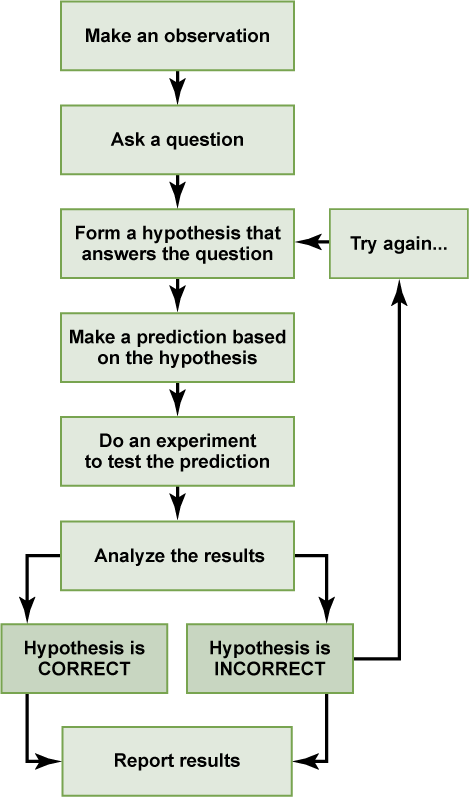
Developing your logical reasoning skills allows you to make better decisions, solve problems more efficiently, and defend your own viewpoints with clarity and confidence.
In the context of logical reasoning, which of the following best defines a "statement"?
Which of the following is an example of an argument, as defined in logic?
Mastering these foundational concepts is the first step toward becoming a more precise and persuasive thinker.