Mastering Learning and Memory
Understanding Memory
The Journey of a Memory
Your memory isn't like a video camera, faithfully recording everything you experience. It's more like a complex filing system, constantly taking in new information, deciding what's important, and storing it for later. This whole process involves three key steps: encoding, storage, and retrieval.
Think of it this way:
- Encoding is like typing up a new document and naming it.
- Storage is saving that document to a folder on your computer's hard drive.
- Retrieval is searching for and opening the document when you need it again.
These three stages work together seamlessly. If any one of them fails, you won't be able to remember the information. A memory is only as strong as its weakest link.
The Three Memory Stores
Information doesn't just go straight into a giant memory bank. It passes through a series of stages, or stores, each with its own purpose and limitations. This is often called the multi-store model of memory.
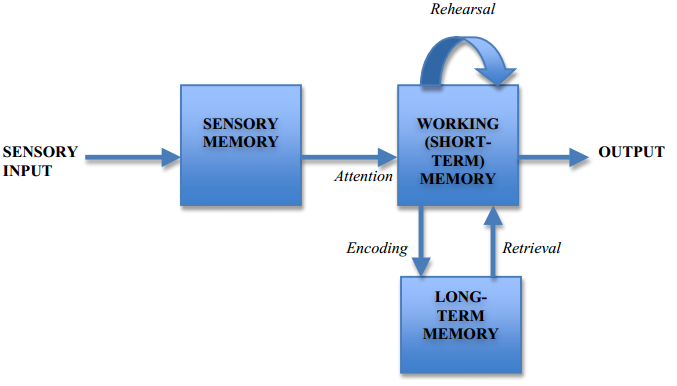
Sensory Memory is the first stop. It's an ultra-short-term buffer that takes in information from your senses. Imagine seeing a lightning strike. The image lingers in your mind's eye for a fraction of a second after it's gone. That's sensory memory. It holds a huge amount of incoming data, but only for a moment. Most of it fades away unless we pay attention to it.
If you focus on a piece of sensory information, it moves into Short-Term Memory (STM), also known as working memory. This is your mental workspace. It's what you use when you're trying to remember a phone number long enough to dial it or hold the beginning of a sentence in your head while you read the end. Short-term memory has a small capacity, typically holding about 5-9 items for only about 15-30 seconds without rehearsal.
Finally, information that is rehearsed or meaningful enough can be transferred to Long-Term Memory (LTM). This is the vast, durable storage system for all your knowledge, skills, and experiences. It's where you keep your memory of your first day of school, the lyrics to your favorite song, and how to ride a bike. The capacity of long-term memory is practically limitless, and memories stored here can last a lifetime.
| Memory Type | Capacity | Duration |
|---|---|---|
| Sensory | Very Large | Less than 1 second |
| Short-Term | 7 +/- 2 items | 15-30 seconds |
| Long-Term | Unlimited | Potentially a lifetime |
Processing the Information
Let's revisit the three processes that move information between these stores.
Encoding
verb
The process of converting sensory information into a form that can be stored and used by the brain.
Encoding is how information gets in. The more deeply you process information, the better it's encoded. For example, simply repeating a word over and over (acoustic encoding) is less effective than thinking about its meaning and connecting it to other things you know (semantic encoding).
Storage
noun
The process of maintaining information in memory over time.
Once encoded, information is stored. As we've seen, this can be a very brief process in sensory and short-term memory, or it can be a lifelong process in long-term memory. The brain strengthens the neural connections associated with a memory each time it's accessed, making it more stable over time.
Retrieval
noun
The process of accessing and bringing stored information into conscious awareness.
Retrieval is how you get information out. Sometimes it's effortless, like remembering your own name. Other times, it's harder, like trying to recall a specific fact for a test. This is the classic "tip of the tongue" feeling. Cues in your environment or related thoughts can often help trigger the retrieval of a specific memory, much like a librarian using a keyword to find a book in a massive library.
Now, let's see how well you've encoded these concepts.