Mastering Lean Six Sigma
Introduction to Lean Six Sigma
The Best of Both Worlds
Picture two different approaches to making a business better. One is obsessed with speed and efficiency. It's called Lean, and its main goal is to trim the fat, cutting out any step in a process that doesn't add value for the customer. Think of it as clearing a cluttered path so you can get from point A to point B as quickly as possible.
The other approach is obsessed with quality and consistency. It's called Six Sigma, and its mission is to eliminate defects. It uses data to find the root causes of errors and ensures the final product or service is nearly perfect every time. It's about making sure the path, once cleared, is smooth and reliable for every single journey.
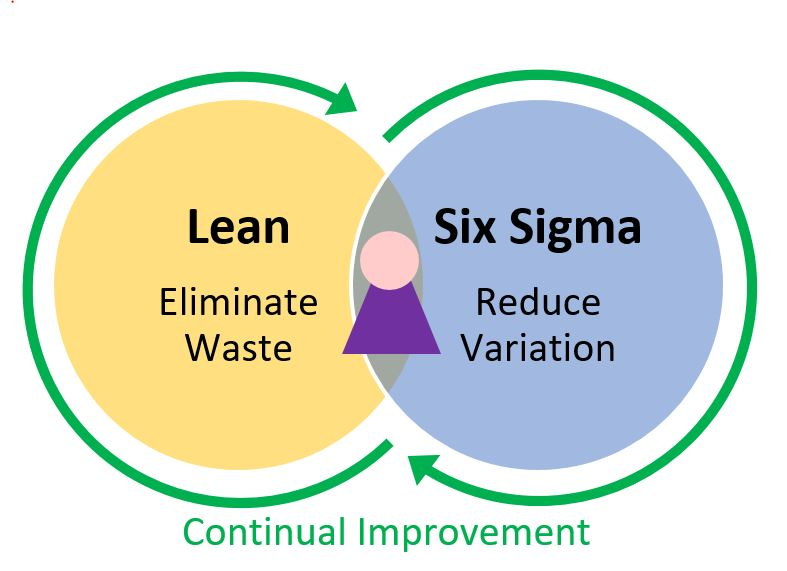
Lean Six Sigma is what happens when these two powerful ideas join forces. It's a method for improving performance by systematically removing waste while also reducing variation. The goal is simple: deliver high-quality products and services to customers, faster and more efficiently.
Lean and Six Sigma are two different concepts. By combining the two philosophies, you can achieve incredible results.
A Quick History
The story begins with two separate journeys. The principles of Lean manufacturing trace back to the Toyota Production System, which was developed in Japan after World War II. Toyota revolutionized car manufacturing by focusing relentlessly on eliminating waste, ensuring a smooth workflow, and empowering employees to improve processes.
Decades later, in the 1980s, an engineer at Motorola named Bill Smith developed Six Sigma. The company was struggling with product quality, and they needed a structured, data-driven way to fix it. Six Sigma provided a rigorous framework for identifying and eliminating the causes of defects to achieve near-perfect results.
By the early 2000s, businesses realized the immense potential of blending these two approaches. Lean made processes fast, but didn't have a strong statistical framework for quality control. Six Sigma improved quality, but could sometimes be slow to implement. Combining them meant you could streamline a process and perfect its output at the same time.
Why It Matters
Lean Six Sigma isn't just for car factories or tech giants. Its principles are universal and have been adopted by countless industries, from healthcare and finance to logistics and government. Why? Because the benefits are tangible and address common business challenges.
| Benefit | What It Means for a Business |
|---|---|
| Increased Profit | Less waste and fewer errors mean lower costs. |
| Improved Quality | Delivers a better, more reliable product or service. |
| Customer Loyalty | Happy customers who get what they want are more likely to return. |
| Employee Engagement | Involves teams in problem-solving, boosting morale and ownership. |
| Efficient Processes | Things get done faster and with fewer resources. |
In a hospital, it might mean reducing patient wait times and preventing administrative errors. In a bank, it could be streamlining the loan application process to give customers faster decisions. For a software company, it might involve finding and fixing bugs more efficiently while also speeding up the development cycle.
At its core, Lean Six Sigma provides a roadmap for creating a culture of continuous improvement, where every person in an organization is empowered to make things better.
Time to check what you've learned about the fundamentals of Lean Six Sigma.
What is the primary goal of the Lean methodology?
The Six Sigma approach is primarily focused on which of the following?
By blending Lean's focus on speed with Six Sigma's focus on quality, this methodology provides a powerful and adaptable framework for making any process the best it can be.