Mastering Korean Hangul
Introduction to Hangul
A King's Gift
Before the 15th century, writing in Korean was a difficult task. Koreans used classical Chinese characters, which took years of dedicated study to master. This meant that literacy was a privilege reserved for the elite, leaving most of the population unable to read or write.
King Sejong the Great, the fourth king of the Joseon Dynasty, believed this was wrong. He wanted a writing system that anyone could learn, regardless of their social status. So, in 1443, he and a group of scholars created a new alphabet. They called it Hunminjeongeum (훈민정음), which means "The Proper Sounds for the Instruction of the People."
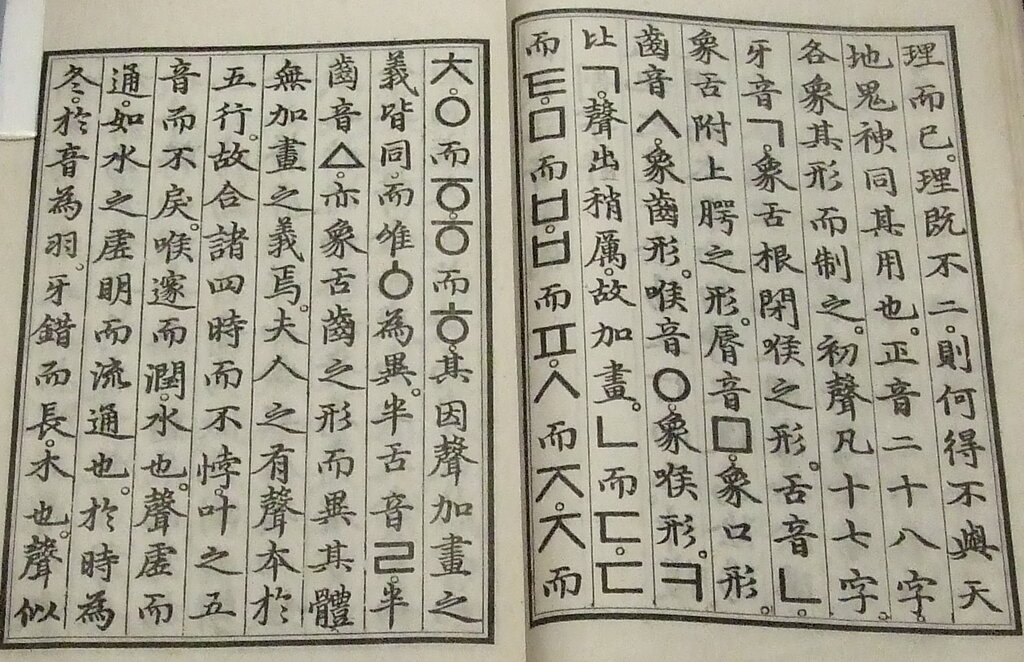
This new script, now known as Hangul (한글), was revolutionary. It was designed to be simple, logical, and easy to learn. King Sejong's goal was to empower his people through literacy, and Hangul was his gift to them.
A Scientific Alphabet
Hangul is often called one of the most scientific writing systems in the world. Its genius lies in its design. The shapes of the letters aren't random; they are based on the shapes our mouths make when we produce sounds.
Let's look at the basic consonants. Each one mimics the position of the tongue, lips, or throat.
| Character | Sound | Shape of... |
|---|---|---|
| ㄱ | g/k | The tongue root blocking the throat |
| ㄴ | n | The tongue tip touching the upper gums |
| ㅁ | m | The lips when closed |
| ㅅ | s | The teeth |
| ㅇ | ng / silent | The throat |
Other consonants are created by adding strokes to these basic shapes. For example, adding a stroke to ㄱ (g) creates ㅋ (k), representing a stronger, aspirated sound.
The vowels were designed with a different philosophy in mind. They are based on three elements: a dot for the Sun (•, now a short line), a horizontal line for the Earth (ㅡ), and a vertical line for humanity (ㅣ).
All other vowels are just combinations of these three simple components. For instance, combining ㅣ (humanity) and • (sun) creates ㅏ (a) or ㅓ (eo).
Building with Blocks
Unlike English, where letters are written in a straight line, Hangul letters are grouped into syllabic blocks. Each block represents one syllable and always contains at least one consonant and one vowel.
A syllable block is always structured in one of a few ways. It starts with an initial consonant, followed by a vowel, and sometimes ends with a final consonant. The letters are arranged to fit neatly into a square shape.
The simplicity of Hangul can be attributed to its format of syllabic blocks: rather than written linearly, vowels and consonants are grouped into syllables that consist of letters arranged in a square block.
Let's see how this works. The word Hangul itself is made of two syllabic blocks: 한 (han) and 글 (geul).
The first block, 한, combines the initial consonant ㅎ (h), the vowel ㅏ (a), and the final consonant ㄴ (n).
The second block, 글, combines the initial consonant ㄱ (g), the vowel ㅡ (eu), and the final consonant ㄹ (l).
Here are the common block structures:
This block system makes the language visually organized and compact. Once you learn the individual letters, you can start combining them to read and write any Korean syllable.
Ready to test what you've learned? Let's check your understanding.
What was the primary motivation for King Sejong the Great to create the Hangul alphabet?
The design of Hangul's basic consonants is based on what?
This elegant and logical system is a cornerstone of Korean culture. With just a handful of letters, you have the building blocks for an entire language.