Mastering K-pop Dance Techniques
K-pop Technical Foundations
The K-pop Standard
In many dance styles, flow and momentum are key. In K-pop, the top priority is 'cleanliness'. This isn't about hygiene; it's a specific aesthetic of precision and power. Every movement, from a simple head turn to a complex jump, must be executed with absolute clarity. Think of it as the difference between a brushstroke and a pixel. Both can create an image, but one is defined by its sharp, distinct edges.
This sharpness is achieved through intense muscle engagement. K-pop choreography is famous for its 'stop-and-start' dynamic. Dancers explode with high energy, only to halt instantly on a beat, completely still, without any lingering vibration or wobble. This requires dancers to treat their muscles like a switch, turning them on to full power and then off in a fraction of a second. It's this control that creates the signature crisp, almost superhuman look of idol choreography.
Mastering the 'Stop'
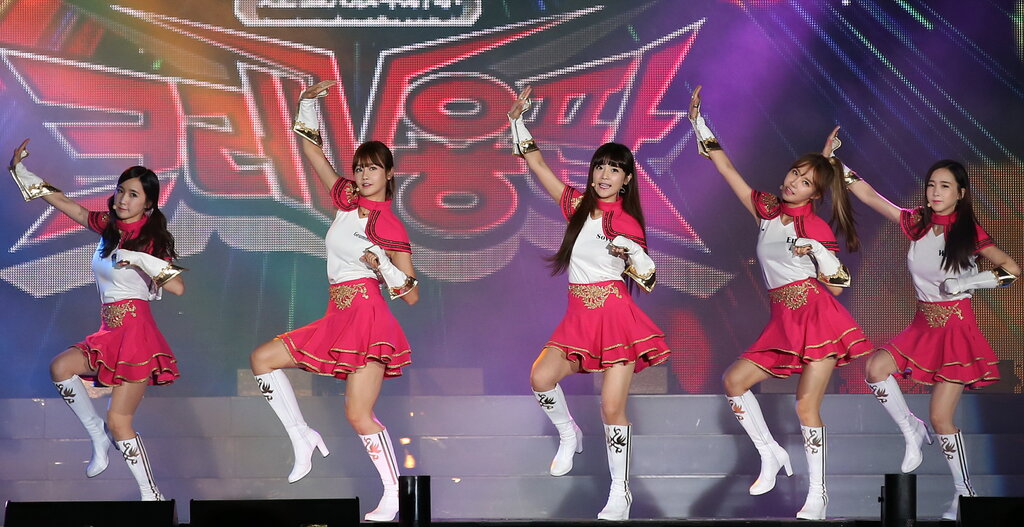
The most fundamental skill in achieving K-pop cleanliness is the 'clean finish'. Imagine extending your arm for a dramatic point. In many styles, you might let the energy flow through the movement. In K-pop, you must slam on the brakes. The goal is to stop the motion so abruptly that the pose looks like a single frame from a video, perfectly locked on the beat.
To practice this, try a simple arm extension. As you move, tense every muscle from your shoulder to your fingertips. When you reach the target pose, increase that tension, creating a rigid lock. It should feel like your entire arm has momentarily turned to stone. The key is to stop the movement without any shaking. This power control is physically demanding but is the foundation of the K-pop look.
Isolations and Texture
K-pop dance isn't just robotic. It thrives on the contrast between sharp, hard-hitting moves and fluid, wavy textures. A dancer might execute a series of machine-like pops, then smoothly roll their chest in a wave-like motion. The transition between these textures must be seamless and deliberate.
To master this, dancers drill isolations relentlessly. The challenge is to move one part of the body with explosive force while keeping everything else perfectly still. A core drill involves executing isolated neck, shoulder, and chest pops while the hips and legs remain locked in place. Stand in a solid stance, feet shoulder-width apart, and try to 'pop' your chest forward and back without letting your shoulders or hips move. This trains the muscle groups to work independently, allowing for complex, layered choreography.
This skill allows idols to perform choreography where their legs are doing one rhythm while their upper body follows a completely different one. It’s a signature of complex K-pop routines and a clear sign of a technically proficient dancer.
Shifting Your Centre
The final piece of the puzzle is managing your centre of gravity differently. In traditional hip-hop, dancers often have a lower, more grounded centre of gravity, which gives movements a certain weight and groove. K-pop dancers, however, often keep their centre slightly higher and more neutral.
Why? Speed. A higher, more mobile centre of gravity allows for quicker, more nimble transitions and directional changes. Idols need to switch from facing front to back, drop to the floor, and leap up again in fractions of a second. By not sinking deep into movements, they remain light on their feet, ready to shift their weight and explode into the next move instantly. It’s a subtle adjustment that has a massive impact on the speed and agility required for elite K-pop performance.
Now let's test what you've learned about these core technical skills.
What is the top priority and defining aesthetic in K-pop choreography, distinguishing it from styles that prioritise flow?
How do K-pop dancers achieve the signature 'stop-and-start' dynamic and a 'clean finish' to their movements?
Mastering these techniques of tension, isolation, and weight distribution is what separates casual dancing from the precise, powerful performance style that defines K-pop.