Mastering Jazz Evolution and Improvisation
Swing to Bebop Transition
The End of an Era
In the 1930s and early 1940s, Swing was king. Big bands, with their powerful brass and reed sections, played infectious, danceable music for huge audiences across America. These orchestras, led by figures like Duke Ellington and Count Basie, relied on written arrangements that left some room for solos but were primarily designed to get people moving.
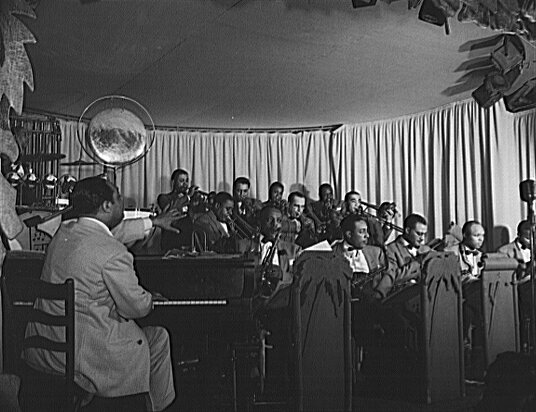
But a perfect storm of events brought this era to a close. During World War II, a cabaret tax was introduced, making it more expensive for venues to hire large bands for dancing. At the same time, the American Federation of Musicians called a recording ban from 1942 to 1944 over royalty disputes. With no new records being made and live gigs becoming pricier, the economic model for big bands began to crumble. The stage was set for something new, smaller, and more nimble.
A New Sound in Small Rooms
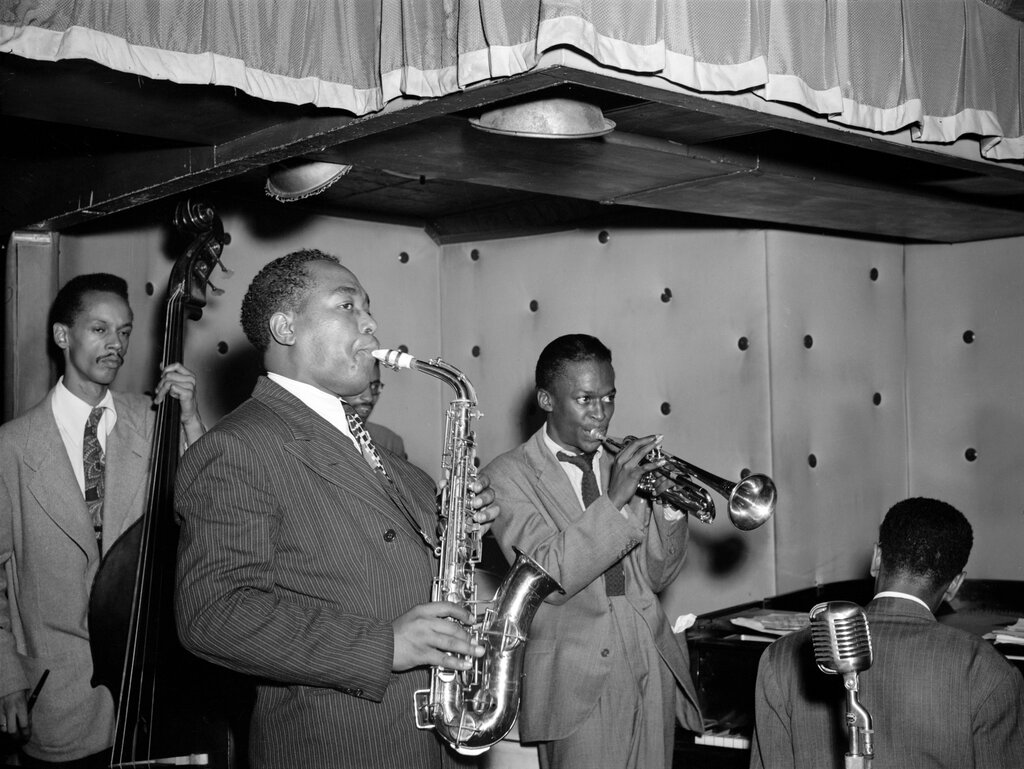
As the big bands faltered, a new style of jazz began to bubble up in the small, late-night clubs of New York City. This was Bebop. It was a radical departure from Swing. Instead of large ensembles, Bebop was played by small combos, typically a quintet with a saxophone, trumpet, piano, bass, and drums. The focus shifted dramatically from collective, dance-oriented arrangements to the brilliance of the individual soloist.
Bebop marked a shift towards music that was more artistically challenging and less dance-oriented.
The music was fast, complex, and demanded incredible technical skill. Musicians took the familiar chord progressions of popular songs and used them as a launching pad for daring, high-speed improvisations. The audience changed, too. People no longer went to jazz clubs primarily to dance; they went to listen, to witness the breathtaking creativity unfolding on the bandstand.
The Pioneers of Bebop
At the heart of this revolution were two visionary musicians: alto saxophonist Charlie Parker, nicknamed "Bird," and trumpeter Dizzy Gillespie. Parker's blistering speed, advanced harmonic ideas, and rhythmic sophistication redefined what was possible on his instrument. Gillespie, with his virtuosic technique and harmonic knowledge, was his perfect counterpart.
Much of this innovation was honed in after-hours jam sessions, particularly at a club in Harlem called Minton's Playhouse. It became a laboratory where musicians like Parker, Gillespie, pianist Thelonious Monk, and drummer Kenny Clarke could experiment freely, pushing the boundaries of jazz away from the commercial pressures of the Swing mainstream.
The rhythm section in Bebop also evolved. Drummers began to use the bass drum for irregular accents, a technique known as "dropping bombs," which added a new layer of conversational energy to the music. The result was a sound that was unpredictable and thrilling, with asymmetrical phrases that darted and weaved in unexpected directions.
Dropping Bombs
noun
A drumming technique in Bebop where the bass drum is played for irregular, accented beats, adding punctuation and surprise rather than keeping a steady pulse.
Bebop was more than just a musical evolution; it was a social one. For its creators, it was a conscious move to elevate jazz from popular entertainment to a serious art form, demanding respect for its complexity and the genius of its performers.
Ready to check your understanding of this pivotal moment in jazz history?
What were the primary economic factors mentioned that contributed to the decline of the Swing era's big bands?
The focus of Bebop music shifted dramatically from Swing. What was this new focus?
This shift from Swing to Bebop laid the groundwork for almost all modern jazz that followed, cementing the role of the improvising soloist as the central figure in the music.