Mastering JavaScript Deployment and Hosting
Hosting Model Tradeoffs
Static vs. Server-Side
When your application is ready to leave your local machine, the first big decision is choosing its architecture. This choice fundamentally dictates how your app is delivered to users and what it can do. The two primary models are static hosting and server-side hosting.
Static hosting is like handing out pre-printed flyers. All the content is prepared in advance. Server-side hosting is like having a conversation where you generate responses on the spot.
Static hosting serves pre-built HTML, CSS, and JavaScript files directly to the user. This model is perfect for applications where the content doesn't change based on the user or real-time data. Think of a simple React app that fetches data after it loads in the browser (Client-Side Rendering, or CSR) or a site built with a Static Site Generator (SSG) like Astro or Gatsby.
The key advantage is speed. Since the files are already built, they can be distributed globally across a Content Delivery Network (CDN), making them incredibly fast to load for users anywhere in the world. This approach is also generally cheaper and simpler to manage.
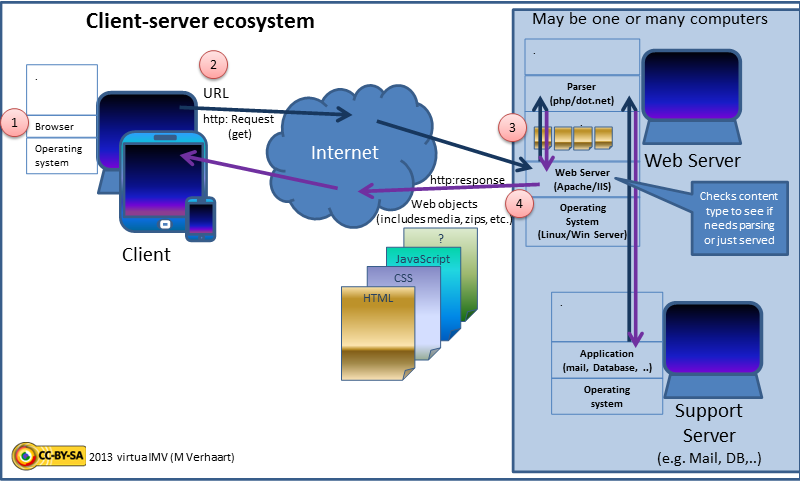
Server-side hosting involves a running server, typically a Node.js environment, that executes code to build an HTML page for each user request. This is the home of Server-Side Rendering (SSR). When a user visits a page, your server fetches the necessary data, renders the React components into an HTML string, and sends that complete page to the browser.
This is crucial for SEO, as search engine crawlers receive a fully-formed HTML page. It also improves the perceived performance for users, as they see content immediately instead of a blank screen while the JavaScript loads. The downside is increased complexity and cost, as you now have a server to maintain and run.
One of the core reasons developers choose Next.js for SEO optimization is its support for server-side rendering (SSR) and static site generation (SSG).
Here's how the architectural needs compare:
| Feature | Client-Side Rendering (CSR) | Server-Side Rendering (SSR) |
|---|---|---|
| Initial Load | Sends minimal HTML and a large JS bundle. Renders in the browser. | Sends a fully-rendered HTML page. Renders on the server. |
| Hosting | Simple static file hosting (e.g., S3, Netlify). | Requires a running Node.js server environment. |
| Data Fetching | Happens on the client after the JS bundle loads. | Happens on the server before the page is sent to the client. |
| SEO | Can be poor without pre-rendering, as crawlers may see a blank page. | Excellent, as crawlers receive complete HTML content. |
| Complexity | Lower initial setup complexity. | Higher; involves managing a server environment and data fetching logic. |
Platform vs. Server
Once you decide you need a server, the next question is where it should run. This decision boils down to how much control and responsibility you want over your infrastructure. Your main choices are a Platform as a Service (PaaS) or a Virtual Private Server (VPS).
PaaS
noun
Platform as a Service. A cloud computing model where a third-party provider delivers hardware and software tools to users over the internet. The provider hosts the hardware and software on its own infrastructure.
PaaS providers like Vercel, Netlify, Render, and Railway offer a managed environment. You connect your Git repository, and they handle the rest: provisioning servers, deploying your code, managing networking, and scaling. This model is built for developer convenience.
-
Vercel & Netlify: These platforms excel at hosting modern JavaScript frontends. They are tightly integrated with frameworks like Next.js and offer powerful features like serverless functions and a global edge network. They are fantastic for projects that blend static, server-rendered, and serverless API routes.
-
Render & Railway: These are more general-purpose PaaS solutions. They can host a Next.js app, but also a separate Node.js/Express API, a database, a Redis cache, or a background worker process. They provide the building blocks to assemble a more complex backend architecture without managing individual servers.
A Virtual Private Server (VPS) from a provider like DigitalOcean, Linode, or AWS gives you a blank slate. You get a virtual machine with an operating system, and you are responsible for everything else. You must install Node.js, set up a web server like Nginx to act as a reverse proxy, configure a process manager like PM2 to keep your app running, manage firewalls, and apply security updates.
This path offers maximum control and can be more cost-effective at scale, but it comes with significant operational overhead. It's a good choice if you have specific, non-standard infrastructure needs or enjoy server administration.
| Aspect | PaaS (Vercel, Render) | VPS (DigitalOcean, AWS) |
|---|---|---|
| Management | Mostly automated. Provider manages OS, security, scaling. | Fully manual. You manage everything from the OS up. |
| Deployment | Simple git push workflow. | Manual setup of CI/CD pipelines or ssh and git pull. |
| Scalability | Often built-in and automatic. | Manual configuration of load balancers and new servers. |
| Control | Limited to what the platform exposes. | Complete control over the entire software stack. |
| Cost | Can be higher, scales with usage. Predictable at the start. | Can be lower for a given amount of resources, but requires time investment. |
Ultimately, the right choice depends on your project's needs. A content-heavy blog or marketing site benefits from an SSG on a platform like Vercel. A complex SaaS application with a database and background workers might be better suited for a general PaaS like Render. A project with unusual dependencies or a team with deep DevOps experience might opt for the control of a VPS.
What is the primary advantage of static hosting for a web application?
A developer needs to host a complex application that includes a Next.js frontend, a separate Node.js API, a PostgreSQL database, and a background worker. Which type of platform would be most suitable for managing all these components together with minimal server administration?
Choosing the right hosting model is a crucial architectural decision that impacts your application's performance, scalability, and your team's workflow.