Mastering Japanese Fluency
Japanese Writing Systems
The Three Scripts
The Japanese writing system might seem complex at first because it uses three different sets of characters: Hiragana (ひらがな), Katakana (カタカナ), and Kanji (漢字). Think of them not as three separate languages, but as different tools used together in a single sentence. Each one has a specific job.
The Japanese writing system consists of three main scripts: Hiragana, Katakana, and Kanji.
Mastering the first two, Hiragana and Katakana, is the essential first step. They are phonetic scripts, meaning each character represents a sound, much like letters in the English alphabet. Together, they are called kana. Let's start with Hiragana.
Hiragana The Foundation
Hiragana is the backbone of written Japanese. Its characters have a curvy, flowing appearance. You'll use it for grammatical particles, verb endings, and native Japanese words that don't have a Kanji representation. Essentially, it connects the other parts of a sentence together.
There are 46 basic Hiragana characters, each representing a distinct syllable. Learning these is non-negotiable; they unlock your ability to read and write anything in Japanese.
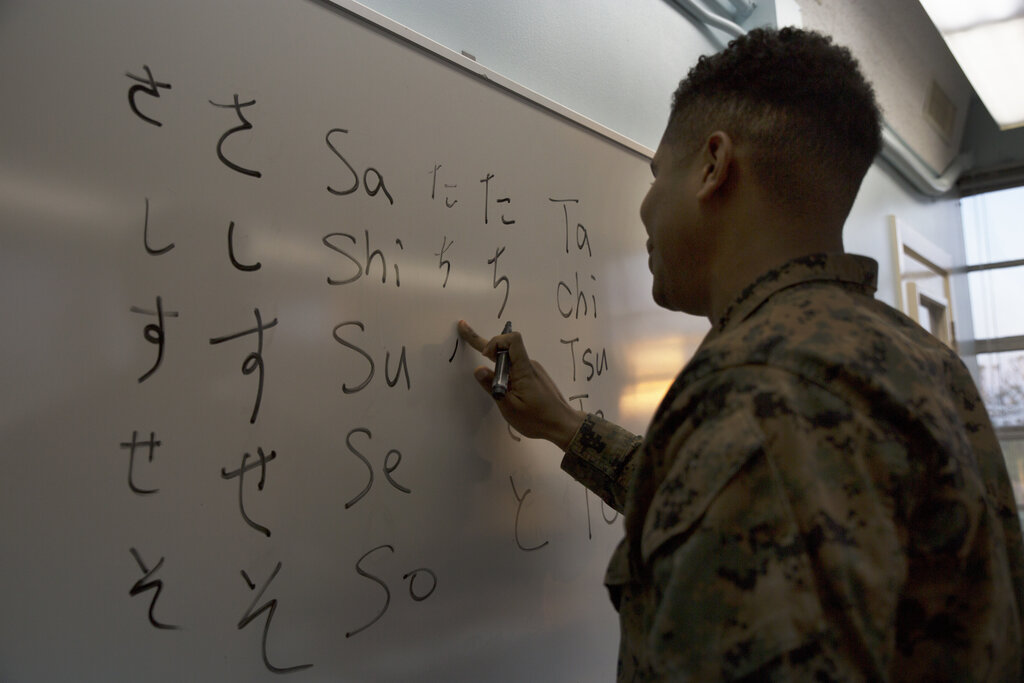
Here are the five main vowels, which form the basis for most other sounds.
| Hiragana | Pronunciation (Romaji) |
|---|---|
| あ | a |
| い | i |
| う | u |
| え | e |
| お | o |
Most other Hiragana characters are formed by combining a consonant sound with one of these five vowels, like ka, ki, ku, ke, ko.
Every Japanese learner begins with Hiragana. Its smooth, rounded shapes are used for the grammatical glue of the language.
Katakana For Foreign Words
Katakana represents the exact same sounds as Hiragana. The difference is its appearance and usage. Katakana characters are sharp and angular, and they're used primarily for words borrowed from other languages.
For example, the word for "computer" is コンピューター (konpyūtā), and "America" is アメリカ (Amerika). You'll also see Katakana used for emphasis, like italics in English, and for onomatopoeia (sound words).
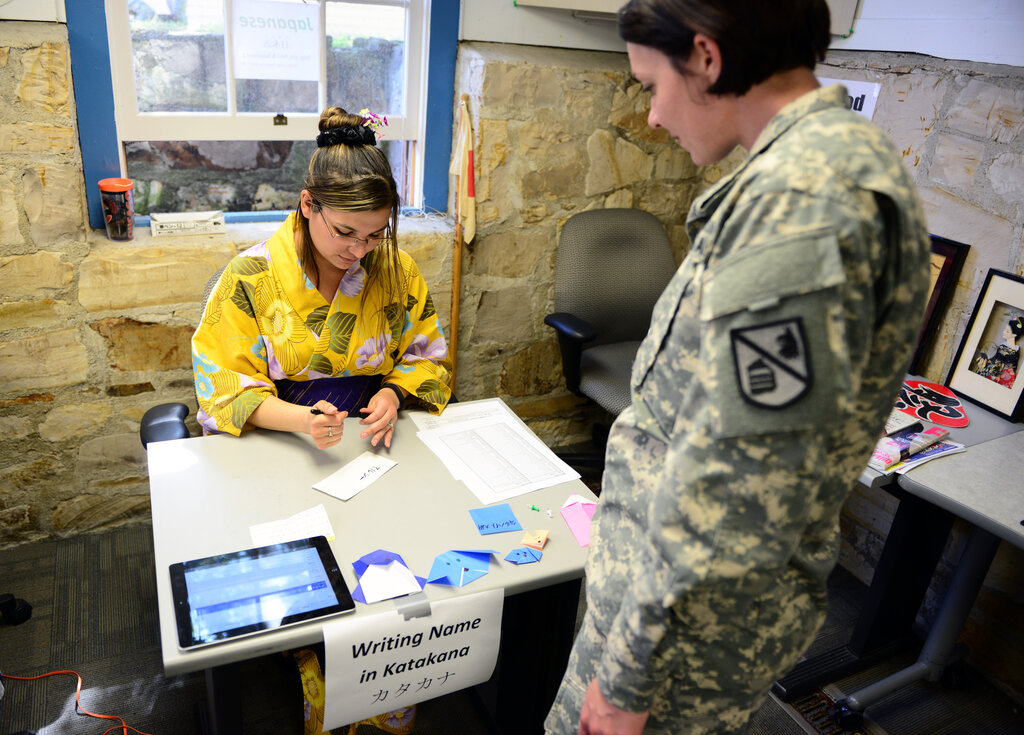
Let's look at the same five vowel sounds, this time in Katakana.
| Katakana | Pronunciation (Romaji) |
|---|---|
| ア | a |
| イ | i |
| ウ | u |
| エ | e |
| オ | o |
Notice how they correspond directly to the Hiragana sounds (あ, い, う, え, お). You are learning a new way to write sounds you already know.
Kanji The Meaningful Characters
Kanji are characters borrowed from Chinese. Unlike kana, which represent sounds, Kanji represent ideas or entire words. A single Kanji can mean "water" (水), "fire" (火), or "person" (人).
There are thousands of Kanji in use, which can seem intimidating. But learners start with the most common and build from there. Many Kanji are pictographs that originally looked like the thing they represent.
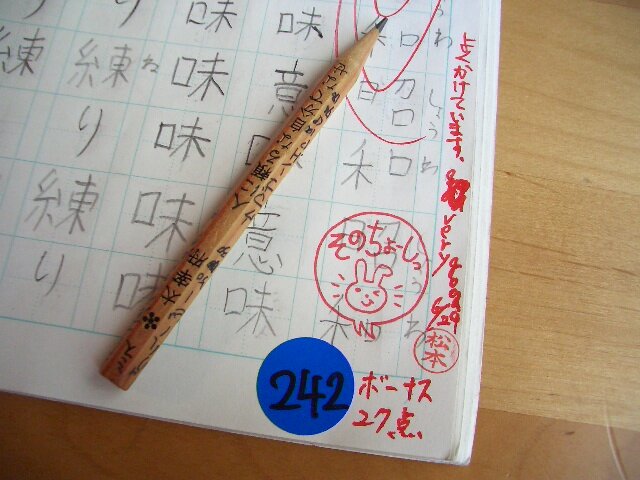
Kanji are used for the core meaning of a sentence, such as nouns and the stems of verbs and adjectives. Here are a few basic examples.
| Kanji | Reading (Kana) | Meaning |
|---|---|---|
| 日 | ひ / にち | Sun, Day |
| 月 | つき / げつ | Moon, Month |
| 人 | ひと / じん | Person |
| 山 | やま | Mountain |
| 川 | かわ | River |
As you can see, a single Kanji can have multiple readings depending on the context. This is something you'll get used to over time.
Putting It All Together
So how do these three scripts work in a single sentence? Let's look at an example:
私はアメリカ人です。 Watashi wa Amerikajin desu. (I am an American.)
私 (watashi) is a Kanji for "I". は (wa) is a Hiragana particle. アメリカ (Amerika) is Katakana for "America". 人 (jin) is a Kanji for "person". です (desu) is Hiragana for "is/am".
Each script plays its role perfectly. The Kanji provide the core concepts (I, person), Katakana handles the foreign word (America), and Hiragana connects everything grammatically. Learning to distinguish and use these three scripts is the true foundation of Japanese literacy.
Ready to test your knowledge?
What is the primary role of the Katakana script in Japanese writing?
In the sentence 「私はアメリカ人です。」 (Watashi wa Amerikajin desu), why is the word for 'America' written as アメリカ?
By starting with Hiragana and Katakana, then gradually adding Kanji, you build a solid foundation for reading and writing Japanese.