Mastering Intuitive Coding for All Levels
Introduction to Programming
What is Programming?
Think of a computer as an incredibly powerful, fast, and obedient assistant. There's just one catch: it's extremely literal. It does exactly what you tell it to do, nothing more and nothing less. It doesn't understand hints, context, or sarcasm. Programming is simply the art of giving this assistant a set of clear, step-by-step instructions to accomplish a task.
These instructions, called code, can be used to solve problems, automate repetitive tasks, build websites, create video games, or analyze huge amounts of data. At its core, programming is a creative process for telling a computer how to be useful.
How Computers Understand Us
You can't just write instructions for a computer in English. Computers have their own native language, known as machine code, which is just a series of ones and zeros. Trying to write in machine code directly would be incredibly slow and difficult for humans.
This is where programming languages come in. They act as a bridge, allowing us to write instructions in a way that is much closer to human language. A special program, called a compiler or an interpreter, then translates our code into the machine code the computer can execute.
Think of it like this: you write a recipe in English (the programming language), and the translator reads it out loud in a language the chef (the computer) understands.
Your First Program
We will be learning a language called Python. It's known for being readable and relatively simple for beginners. One of the oldest traditions in programming is to make your first program display the text "Hello, World!" on the screen. It's a simple way to test that your setup is working correctly.
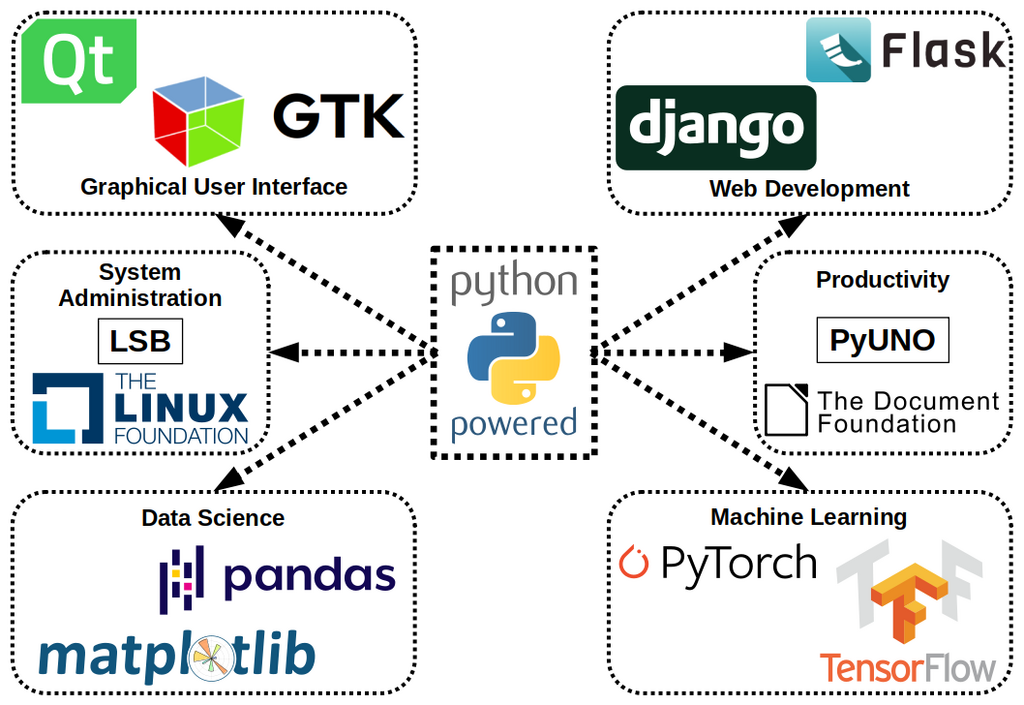
In Python, this classic first step takes just a single line of code.
print("Hello, World!")
Let's break that down.
printis a built-in Python command, or function, that tells the computer to display something on the screen.- The parentheses
()are used to give input to the function. - The text inside the quotation marks,
"Hello, World!", is called a string. It's a piece of text data that we want theprintfunction to show.
When you run this code, the computer follows the instruction and simply displays: Hello, World!
And that's it. You've just seen the fundamental process of programming: writing a command in a specific language that a computer can interpret and execute to produce a result.
Now, let's review these core ideas.
Why can't we just give instructions to a computer in plain English?
In the analogy of writing a recipe (programming language) for a chef (the computer), what does the "translator" represent?
By understanding these basic concepts, you've built the foundation needed to start exploring the world of programming in more detail.