Mastering Interview English for Tamil Speakers
Understanding Interview Dynamics
The Interview Journey
A job interview isn't an interrogation. It’s a structured conversation where both you and the employer decide if you're a good fit for each other. You're evaluating the company just as much as they're evaluating you. Understanding the typical flow helps you navigate this conversation with confidence.
Most interviews follow this path. It starts with light conversation to build rapport, moves into formal introductions, then dives into the main discussion. The interviewer will ask about your skills and experience, but crucially, you will also get a chance to ask about the role and company. The interview ends with a wrap-up and discussion of next steps.
First Impressions and Body Language
The first few minutes of an interview are critical. Your punctuality, appearance, and initial greeting create a lasting impression. Whether the interview is online or in person, dressing professionally shows respect for the opportunity. A simple smile and a confident greeting set a positive tone right away.
How you carry yourself is just as important as what you say. Your body language communicates your confidence and engagement level.
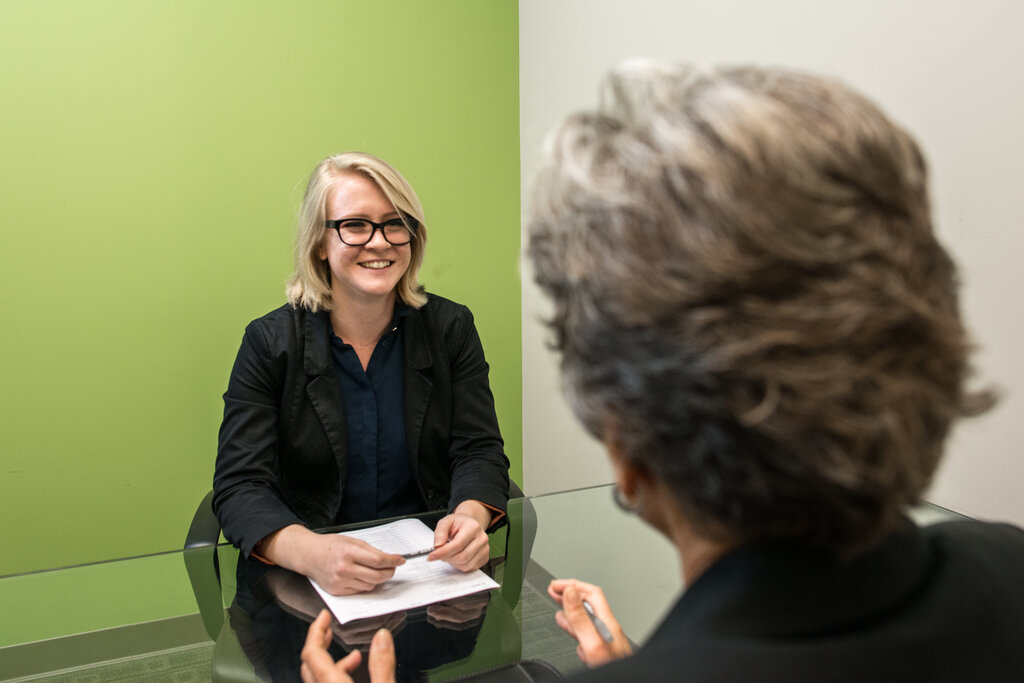
Maintain natural eye contact to show you're listening and engaged. Sit up straight with your shoulders back to project confidence; avoid slouching, which can be interpreted as disinterest. Use hand gestures to emphasize points, but keep them controlled and natural. Fidgeting can be distracting, so try to keep your hands relaxed.
Your body language often speaks before you do. Confident posture and steady eye contact signal that you are present, engaged, and self-assured.
Understanding Roles and Culture
In an interview, you and the interviewer have distinct but complementary roles.
The Interviewer's Role: Their job is to assess your qualifications, experience, and personality to see if you align with the job requirements and company culture. They guide the conversation, ask questions, and provide information about the role and organization.
Your Role: As the interviewee, your goal is to clearly communicate your skills and demonstrate your enthusiasm for the position. You need to provide relevant examples from your experience and also ask thoughtful questions to determine if the company is the right place for you.
Cultural norms in English-speaking workplaces heavily influence interview dynamics. Generally, direct and clear communication is valued. It’s expected that you will speak confidently about your achievements. This isn't seen as bragging, but as providing evidence of your abilities.
Politeness is also key. Using phrases like "thank you" and actively listening are important. While the atmosphere is professional, there's often an expectation of friendliness and building a personal connection through small talk. Striking a balance between being professional and being personable is the goal.
What is the primary purpose of a job interview from the candidate's perspective?
Which of the following best describes the role of body language in an interview?
Knowing these dynamics helps you understand the unspoken rules of the interview, allowing you to focus on what matters most: showing why you're the best person for the job.