Mastering Interpersonal Dynamics
Foundations of Negotiation
What is Negotiation?
Negotiation isn't just for corporate boardrooms or international summits. It's a fundamental part of daily life. You negotiate when you decide with a friend which movie to see, when you discuss a project deadline with your team, or when you arrange a new contract for your phone.
At its core, negotiation is a dialogue between two or more parties intended to reach a beneficial outcome. It’s about communication and problem-solving. The goal is to resolve points of difference, to gain an advantage for an individual or collective, or to craft outcomes to satisfy various interests.
At its core, negotiation is about understanding people, solving problems and finding common ground.
Thinking of negotiation as a skill helps you move from accidental success to consistent, positive results. It allows you to build better relationships and create more value in your interactions.
Two Key Approaches
While every negotiation is unique, most strategies fall into two main categories: distributive and integrative. Understanding the difference is key to choosing the right approach.
Distributive Negotiation is often called the "fixed-pie" approach. The parties see the resources as limited, and the goal is to claim as much of that pie as possible. It's a competitive, win-lose situation. Think of haggling at a market. For every dollar the seller comes down, the buyer saves a dollar. One person's gain is the other's loss.
Integrative Negotiation, on the other hand, is a collaborative, win-win approach. Instead of fighting over a fixed pie, the parties work together to make the pie bigger. This strategy focuses on finding solutions that satisfy the underlying needs of everyone involved. For example, two departments might need the same conference room. Instead of arguing over who gets it, they might discover that one needs it for a quiet morning workshop and the other for a loud afternoon celebration. By coordinating, both can use the room and achieve their goals.
| Feature | Distributive Negotiation | Integrative Negotiation |
|---|---|---|
| Goal | Claiming value | Creating value |
| Motivation | Win-Lose | Win-Win |
| Relationship | Short-term, adversarial | Long-term, collaborative |
| Outcome | One party wins | Mutual gains |
Neither approach is inherently better. The right one depends on the situation. A one-time purchase might call for a distributive approach, while a negotiation with a long-term business partner is better suited for an integrative strategy.
The Building Blocks
Successful negotiation rests on a few core components. Mastering these basics provides a solid foundation for any discussion.
Strong negotiations begin with deliberate preparation.
Preparation: This is the most crucial phase. Before you even start talking, you need to understand your own goals. What is your ideal outcome? What is the minimum you will accept? What is your alternative if no agreement is reached? Thinking through these questions gives you clarity and confidence.
Communication: Effective negotiation is impossible without clear communication. This means more than just talking; it means listening actively to understand the other party's perspective, needs, and constraints. It involves asking good questions and clearly articulating your own position.
Interests vs. Positions: This is a vital distinction. A position is what someone says they want. An interest is why they want it. People often cling to their positions, leading to a stalemate.
Focusing on underlying interests, rather than stated positions, unlocks creative solutions.
Imagine two siblings arguing over the last orange. Their position is, "I want the orange." A simple distributive solution would be to cut it in half. But if you ask why they want it, you might find their interests are different. One wants the peel to bake a cake, and the other wants the juice to drink. By understanding their interests, you find a solution where both get 100% of what they really wanted.
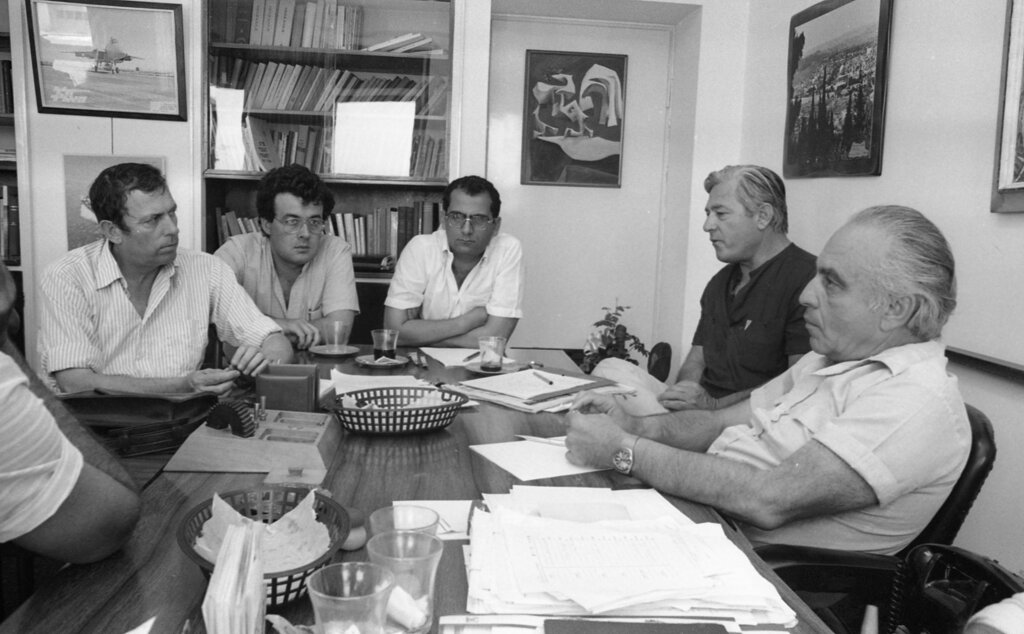
By preparing thoroughly, communicating clearly, and looking past positions to uncover interests, you set the stage for a productive negotiation that can benefit everyone involved.
Which of the following situations would NOT be considered a negotiation?
A car salesperson and a buyer are haggling over the price of a vehicle. For every dollar the buyer saves, the salesperson's commission decreases by a corresponding amount. This scenario is a classic example of: