Mastering International Marketing
Introduction to International Marketing
What Is International Marketing?
International marketing is the process of planning and conducting business activities across national borders. It's about taking the core principles of marketing—creating, communicating, delivering, and exchanging offerings that have value—and applying them in more than one country.
Think of it this way: a local bakery that sells bread to its neighborhood is engaged in domestic marketing. But when that bakery starts exporting its products or opens a café in another country, it steps into the world of international marketing.
The goal isn't just to sell products abroad. It's to build relationships with customers in entirely new environments, understanding their unique needs and creating value for them, just as you would for customers at home.
Beyond Your Backyard
Marketing within your own country—domestic marketing—has its challenges, but you have a home-field advantage. You understand the language, the culture, and the rules of business. You know what your customers value and how to reach them.
International marketing is a different ballgame. The fundamental principles are the same, but the context changes dramatically. Each new country is a new playing field with its own set of rules.
| Feature | Domestic Marketing | International Marketing |
|---|---|---|
| Scope | Single nation | Multiple nations |
| Environment | Familiar culture, stable politics | Diverse cultures, varied political and economic systems |
| Complexity | Relatively simple, single currency | High, involves tariffs, currency fluctuations, legal differences |
| Research | Focused on one market | Broader and more complex, requiring deep local insights |
| Risk | Lower and more predictable | Higher due to political, economic, and cultural unknowns |
The biggest shift is moving from a single, familiar environment to navigating multiple, unfamiliar ones at the same time. This complexity is the central challenge of taking a business global.
A Smaller, More Connected World
Globalization—the increasing interconnectedness of economies, cultures, and populations—has transformed marketing. Driven by advances in technology, transportation, and communication, the world has effectively shrunk. A small business in Ohio can now sell its products to customers in Japan with a few clicks.
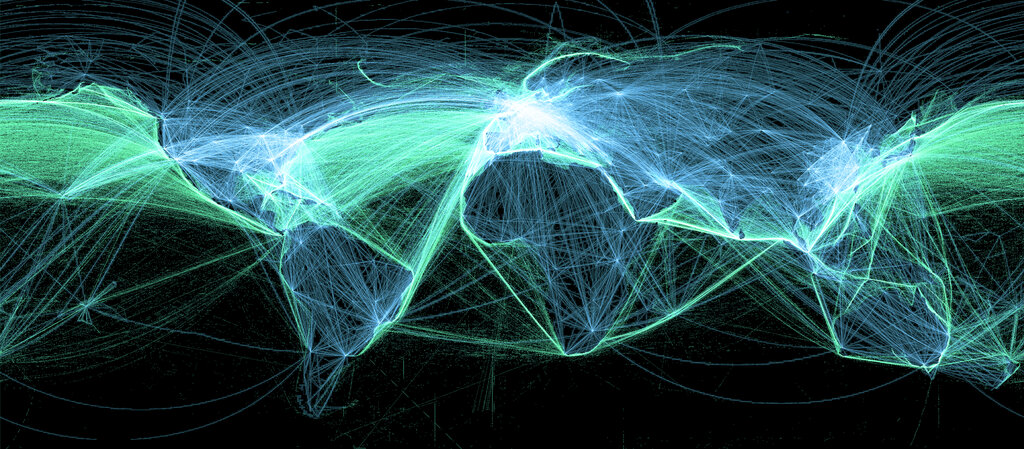
This has two major effects. First, it opens up enormous opportunities. Companies are no longer limited to their home market. Second, it dramatically increases competition. That local bakery now competes not just with other local shops, but potentially with bakeries from France or Italy.
Globalization means businesses must think globally, even if they only act locally. Your customers have access to a world of options, so you need to understand your place in a much larger marketplace.
Adapting to New Rules
Success in international marketing hinges on one key skill: adaptation. A marketing strategy that works perfectly in one country can fail spectacularly in another if it isn't adapted to the local environment. Let's look at the key factors.
Cultural Factors: This includes language, values, customs, and social norms. A marketing message that's persuasive in North America might be seen as rude in East Asia. Colors have different meanings—white is for weddings in many Western cultures but is associated with funerals in parts of Asia.
Political and Legal Factors: Every country has its own laws on product standards, advertising, and competition. Political stability, trade barriers, and tariffs can also have a massive impact on a company's ability to do business.
Economic Factors: The economic development of a country, its currency stability, and the average income of its citizens all determine what products people can afford and what they value. A luxury car brand might target a wide audience in a wealthy country but focus on a tiny, elite segment in a developing one.
Ignoring these differences is a recipe for failure. Effective international marketers do their homework. They invest time in understanding each new market and are willing to change their product, pricing, and promotion strategies to fit local needs and expectations.
Ready to check your understanding?
What is the primary difference between domestic and international marketing?
According to the text, what is the single most crucial skill for success in international marketing?
Understanding these core ideas is the first step. International marketing is a complex but rewarding field that opens up a world of opportunity for businesses willing to learn and adapt.