Mastering Intermediate Japanese
Conditional Markers
Four Ways to Say 'If'
In Japanese, expressing 'if' isn't a one-size-fits-all situation. You likely already know a basic way to form a conditional sentence, but mastering the language means understanding the subtle differences between its four main conditional forms. These are と (to), ば (ba), たら (tara), and なら (nara). Each one carries a specific nuance, and choosing the right one makes your speech sound much more natural and precise. It's the difference between saying 'if' and meaning 'when,' 'assuming that,' or 'in the event that.'
Natural Consequences with と
Let's start with the most straightforward conditional: と (to). Use this when one action or event leads to an inevitable, natural, or predictable result. Think of it as expressing a universal truth or a direct cause-and-effect relationship. It's the 'if' of science, mechanics, and giving directions.
If you press this button, the machine starts. このボタンを押すと、機械が動きます。 (Kono botan o osu to, kikai ga ugokimasu.)
Pressing the button always results in the machine starting. There's no room for opinion or other outcomes. This is also why と is perfect for giving directions, where one turn inevitably leads to the next landmark.
If you turn right at that corner, you'll see the station. その角を右に曲がると、駅があります。 (Sono kado o migi ni magaru to, eki ga arimasu.)
Because と implies an automatic result, you can't follow it with a personal intention, command, suggestion, or request. The result clause must be a statement of fact.
Hypotheticals and Sequences
This is where things get more interesting. Both ば (ba) and たら (tara) are used for hypothetical situations, but they have key differences in focus and usage. Getting them right is a big step towards fluency.
Conjugation
noun
The variation of the form of a verb in an inflected language such as Japanese, by which the voice, mood, tense, number, and person are identified.
First, let's look at ば (ba). This form places emphasis on the condition itself as a necessary prerequisite for the result. It's often used in more formal writing and speech. To conjugate, you change the final '-u' of a verb to '-eba'. For example, 行く (iku) becomes 行けば (ikeba).
ば (ba) is excellent for general hypotheticals where the condition is the main point.
If you go to Japan, you should eat sushi. 日本に行けば、寿司を食べるべきです。 (Nihon ni ikeba, sushi o taberu beki desu.)
Now for たら (tara). This is arguably the most versatile and common conditional in everyday conversation. It's formed by adding ら (ra) to the past tense (ta-form) of a verb. For example, 食べた (tabeta) becomes 食べたら (tabetara). Unlike ば, which focuses on the condition, たら focuses on the sequence of events. It implies 'if/when this first thing happens, then the second thing will follow.' It feels more personal and less formal.
When you get home, please call me. 家に着いたら、電話してください。 (Ie ni tsuitara, denwa shite kudasai.)
This example shows the sequential nature of たら. The call happens after arriving home. This is a key distinction. While ば can sometimes be used hypothetically, たら is better for one-off situations and when the result is a command, request, or expression of personal will. If you can rephrase the sentence with 'after', たら is almost always the right choice.
| Feature | ば (ba) | たら (tara) |
|---|---|---|
| Focus | The condition itself | The result after the condition is met |
| Formality | More formal, common in writing | More casual, common in speech |
| Usage | General hypotheticals, prerequisites | Specific situations, sequential actions |
| Result Clause | Cannot be a command/request | Can be a command/request/intention |
Giving Contextual Advice with なら
Finally, we have なら (nara). This conditional is unique because it's based on context provided by the speaker or the situation. It means something like, 'If that's the case...' or 'Speaking of X...'. You use it to give advice or make a suggestion based on what was just mentioned. It attaches directly to nouns or the plain form of verbs and adjectives.
Imagine a conversation:
A: I want to go to Japan. 日本に行きたいです。 (Nihon ni ikitai desu.)
B: If you're going to Japan, you should visit Kyoto. 日本に行くなら、京都に行ったほうがいいですよ。 (Nihon ni iku nara, Kyōto ni itta hō ga ii desu yo.)
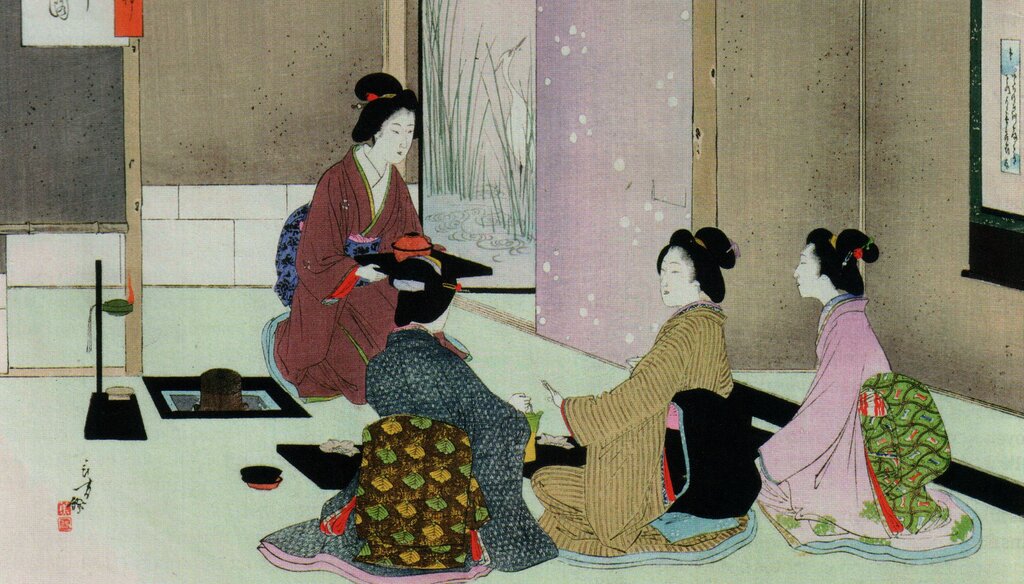
Speaker B's advice is offered in direct response to Speaker A's statement. なら signals that the recommendation is based on the premise of 'going to Japan.' Unlike the other conditionals, the condition mentioned with can happen after the result. In the example above, visiting Kyoto happens during the trip to Japan, not before it. This makes なら ideal for giving suggestions about a topic that's already on the table.
To wrap up, think about what you're trying to communicate. Is it an inevitable result? Use と. Is it a general hypothetical or prerequisite? Use ば. Is it a specific sequence of events or a personal plan? Use たら. Are you giving advice based on what someone just said? Use なら.
Now, let's test your understanding of these nuances.
Which Japanese conditional is used to express an inevitable, natural, or predictable result, such as a scientific fact or giving directions?
Choose the most natural particle for the blank: 春に___、花が咲く。(Haru ni ___, hana ga saku.) (If/When it becomes spring, the flowers bloom.)
Mastering these forms will add significant depth and precision to your Japanese.