Mastering Intermediate English Fluency
Advanced Sentence Structure
Beyond the Basics
Simple sentences get the job done. "The cat sat on the mat." It's clear, correct, and completely understandable. But to express more nuanced ideas, show relationships between thoughts, and make your writing more engaging, you need to connect these simple statements. This is where compound and complex sentences come in.
A compound sentence joins two complete thoughts (independent clauses), while a complex sentence combines a complete thought with a dependent one that can't stand on its own.
Compound Sentences
Think of compound sentences as a way to link two equally important ideas. The tool for this job is the coordinating conjunction. These are short words that create a smooth connection between two independent clauses. A helpful way to remember them is the acronym FANBOYS
| Conjunction | Meaning | Example |
|---|---|---|
| For | Because / The reason why | I am tired, for I worked all night. |
| And | In addition to | She went to the shop, and she bought some milk. |
| Nor | And not | He doesn't like tea, nor does he like coffee. |
| But | However / In contrast | The film was good, but it was very long. |
| Or | Either / An alternative | We can go to the park, or we can stay home. |
| Yet | But / Nevertheless | It was sunny, yet it was cold. |
| So | Therefore / As a result | He was hungry, so he made a sandwich. |
Notice how each clause could be a standalone sentence. "He was hungry." and "He made a sandwich." both work on their own. The conjunction 'so' simply links them to show a cause-and-effect relationship.
Complex Sentences
Complex sentences create a different dynamic. They join an independent clause with a dependent (or subordinate) clause. The dependent clause adds extra information but can't be a sentence by itself. The link between them is a subordinating conjunction.
These conjunctions signal a relationship, such as time, cause, or condition. For example:
- Simple: The meeting started. I arrived.
- Complex: The meeting started after I arrived.
Here, "after I arrived" is the dependent clause. It tells us when the meeting started. It relies on the main clause, "The meeting started," to make sense.
Common subordinating conjunctions include although, because, since, while, if, when, and unless. The placement of the dependent clause can change the emphasis of the sentence.
- Although it was raining, we went for a walk. (Emphasises the walk)
- We went for a walk although it was raining. (Emphasises the rain)
Adding Detail with Relative Clauses
A is a special type of dependent clause that acts like an adjective. It describes a noun and starts with a relative pronoun like who, which, or that. They are essential for adding specific details without starting a new sentence.
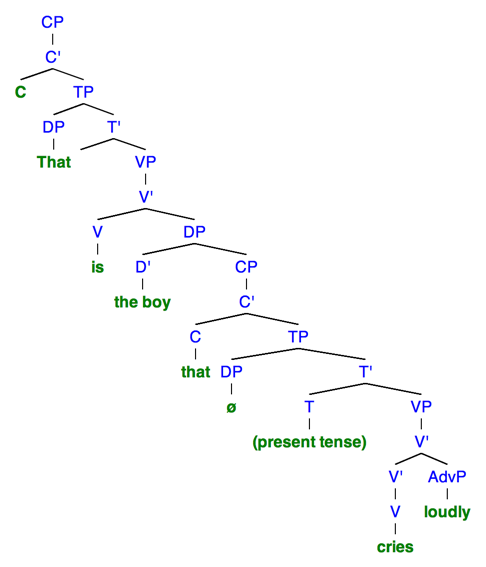
The choice of pronoun is simple:
- Who: For people. "The woman who lives next door is a teacher."
- Which: For things and animals. "I read the book which you recommended."
- That: For people, things, and animals (often used in informal speech and writing). "The car that is parked outside is mine."
Using these clauses allows you to weave information together smoothly, creating a more sophisticated and descriptive style.
Putting It All Together
Good writing isn't about using only long, complex sentences. It's about variety. Mixing simple, compound, and complex sentences makes your text more rhythmic and easier to read. A short, simple sentence can have a powerful impact after a long, descriptive one.
Look at this example:
- "She launched the company in her garage. She had little money. She had a powerful idea. She worked tirelessly, and her business grew quickly. Soon, she had an office in the city, although she never forgot her humble beginnings."
The passage starts with short, punchy sentences, then moves to a compound sentence, and finishes with a complex one. This variety creates a compelling flow, guiding the reader through the story effectively.
What is the primary function of a compound sentence?
Identify the type of sentence: "The meeting started after I arrived."