Mastering Intermediate English
Complex Sentence Structures
Building with Clauses
A complex sentence isn't just a long sentence. It's a sentence with a specific structure: one independent clause combined with at least one dependent clause. The independent clause can stand on its own as a complete thought, while the dependent clause adds extra information but can't stand by itself.
Think of the independent clause as the foundation of a house. The dependent clauses are the rooms you add to it, each serving a specific purpose and making the structure more interesting and detailed.
Independent Clause: The team celebrated. Dependent Clause: after they won the championship Complex Sentence: The team celebrated after they won the championship.
The magic ingredient is the subordinating conjunction. This is the word that connects the dependent clause to the independent one. Words like although, because, since, while, if, and when signal that a clause is dependent. They explain the relationship between the two parts of the sentence, such as cause, time, or contrast.
| Conjunction Type | Examples |
|---|---|
| Time | when, while, after, before, since |
| Cause & Effect | because, since, as, so that |
| Contrast | although, though, even though, whereas |
| Condition | if, unless, provided that |
Adding Detail with Relative Clauses
A relative clause is a special type of dependent clause that acts like an adjective. It modifies a noun or pronoun, giving us more information about it. These clauses are introduced by relative pronouns like who, whom, whose, which, and that.
Using a relative clause is a clean way to combine two simple ideas into one sophisticated sentence.
For example, instead of saying: The scientist made a discovery. She won a Nobel Prize.
You can connect them like this: The scientist who made a discovery won a Nobel Prize.
In this sentence, the relative clause "who made a discovery" tells us more about "the scientist." It specifies which scientist we're talking about.
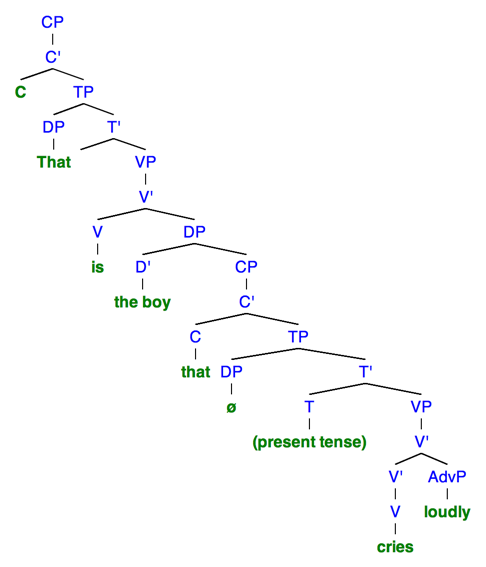
Here’s another example:
This is the phone that I bought yesterday.
The clause "that I bought yesterday" modifies the noun "phone," clarifying which one it is.
Expressing Conditions
Conditional sentences are another powerful type of complex sentence. They explore outcomes based on specific conditions, usually using the word if. They consist of a condition (the if-clause) and a result (the main clause).
Conditionals let us talk about possibilities, hypothetical situations, and past regrets. The verb tenses you use change the meaning.
If it rains, the game will be canceled. This expresses a likely future possibility. The condition is "if it rains," and the result is "the game will be canceled."
We can also use them to imagine things that are not true in the present or are impossible.
If I had wings, I would fly to the mountains.
This is a hypothetical situation. The verb tense shifts to show that this is contrary to reality. The main clause uses would to describe the imagined result.
Finally, conditionals can look back at the past to explore different outcomes.
If she had studied harder, she would have passed the test.
Here, we're talking about a past situation that didn't happen. The condition ("if she had studied harder") is a past unreal event, and the result ("she would have passed the test") is the unreal outcome.
Now that you've seen how to build complex sentences, let's test your understanding.
What is the essential structure of a complex sentence?
Which of the following is a complex sentence?
Mastering these structures will add precision and variety to your communication, allowing you to express more nuanced ideas.