Mastering Interior Design
Design Principles
The Building Blocks of Design
Think of interior design principles as the grammar of a language. They are the underlying rules that help you arrange different elements into a cohesive and pleasing whole. While breaking the rules can sometimes lead to exciting results, you need to know them first. Mastering these five core principles—balance, harmony, rhythm, emphasis, and contrast—will give you the confidence to create spaces that feel just right.
Finding Balance
Balance is about distributing the visual weight of objects in a space to create a feeling of stability. It’s not just about the physical weight of an item, but its visual impact, which is influenced by size, color, and texture. An imbalanced room can feel unsettled and chaotic. There are three main ways to achieve balance.
Symmetrical balance is created by arranging identical objects as mirror images on either side of a central point. Think of two nightstands flanking a bed. This type of balance creates a sense of formality, order, and tranquility.
Asymmetrical balance is more casual and dynamic. It involves balancing dissimilar objects that have equal visual weight. For instance, you could balance a large sofa on one side of a room with two smaller armchairs and a floor lamp on the other. It's trickier to achieve but often results in a more interesting space.
Radial balance involves arranging items around a central point, like the spokes of a wheel. A round dining table with chairs arranged around it is a classic example. This approach naturally draws the eye to the center and creates a strong focal point.
Harmony and Unity
Harmony is the feeling that all the elements in a room belong together. It’s achieved when the components of your design—the colors, textures, furniture, and accessories—share a common thread. This creates a sense of unity and makes a space feel complete and restful.
You can create harmony by using a consistent color palette, repeating a particular shape, or sticking to a specific style, like mid-century modern or coastal. The goal isn't to make everything match perfectly. Instead, it's about selecting a variety of elements that complement each other and contribute to a unified theme.
A harmonious room feels cohesive, where the sum of its parts creates a calm, unified whole.
Rhythm and Emphasis
Rhythm and emphasis work together to guide your eyes through a space and highlight what's important. Just like in music, rhythm in design is about creating patterns of repetition and contrast that create visual interest.
rhythm
noun
The use of recurring elements to create a sense of organized movement, leading the eye from one part of a design to another.
You can create rhythm through:
- Repetition: Using the same element more than once. This could be a color, a pattern, a texture, or even a specific shape.
- Progression: Taking an element and changing it gradually. A group of candles arranged from shortest to tallest is an example of progression.
- Transition: Using a continuous line to move the eye around the room, such as a curved archway or a pattern on a rug that leads from one area to another.
Rhythm helps create emphasis, which is the room’s focal point. Every room needs a star—something that captures your attention as soon as you walk in. This could be a dramatic fireplace, a bold piece of art, a feature wall painted in a striking color, or a window with a stunning view. All other items in the room should play a supporting role to this focal point.
Creating Interest with Contrast
While harmony creates unity, contrast is what prevents a room from feeling boring. Contrast is simply the juxtaposition of two different elements. It adds drama and excitement to a space. You can introduce contrast in many ways:
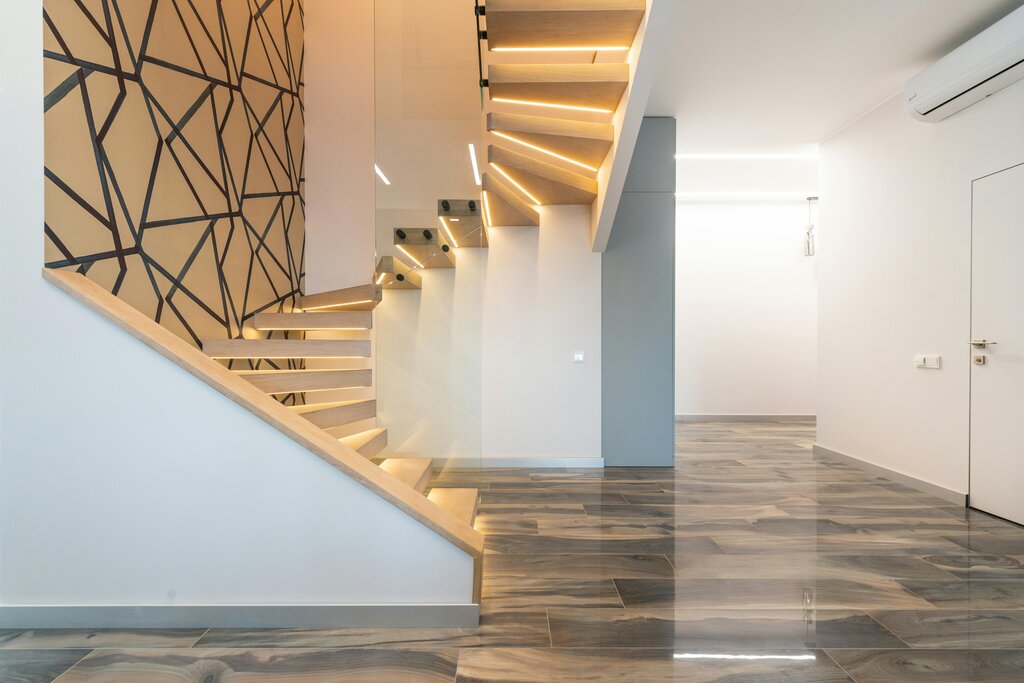
- Color: The most common way to create contrast. Think of black and white, or pairing a warm color like orange with a cool color like blue.
- Shape: Placing a round mirror above a rectangular console table, or pairing a curvy sofa with a square coffee table.
- Texture: Combining different surfaces adds depth. Imagine a rough, nubby wool blanket on a smooth leather sofa, or a sleek metal lamp on a rustic wood table.
The key is to use contrast thoughtfully. Too little, and the room is bland. Too much, and it can feel chaotic and jarring. By balancing these five principles, you can create interiors that are both beautiful and functional.
Time to test your knowledge of these core concepts.
Placing a large, dark-colored sofa on one side of a room and balancing it with two smaller, lighter-colored armchairs and a floor lamp on the opposite side is an example of which type of balance?
What is the primary goal of achieving 'harmony' in an interior design scheme?
Understanding these principles is the first major step toward thinking like a designer. They provide a framework for making decisions that turn a simple room into a thoughtfully designed space.