Mastering Intellectual Dieting
Understanding Information Overload
The Information Deluge
We live in an age of incredible access to information. With a few taps, we can learn about nearly anything. But there's a downside to this constant stream of data: information overload. It happens when the amount of input we receive exceeds our ability to process it. This isn't a new problem. Centuries ago, scholars worried that the printing press was creating too many books to read. But the scale and speed of information today are unprecedented.
The term "information overload" was popularized by the writer Alvin Toffler in his 1970 book, Future Shock. He predicted a future where people would suffer from a kind of mental paralysis due to the sheer volume of information and the rapid pace of change. His prediction has largely come true.
Digital Age Triggers
What's causing this modern flood? The primary culprit is technology. The internet, smartphones, and social media have created a world where information is always on and always available.
Think about your daily routine. News alerts, work emails, social media feeds, and endless notifications compete for your attention. Each piece of information, no matter how small, requires mental energy to evaluate, process, and either store or discard. Unlike a library, the internet has no closing time, leading to a 24/7 cycle of consumption that our brains weren't built to handle.
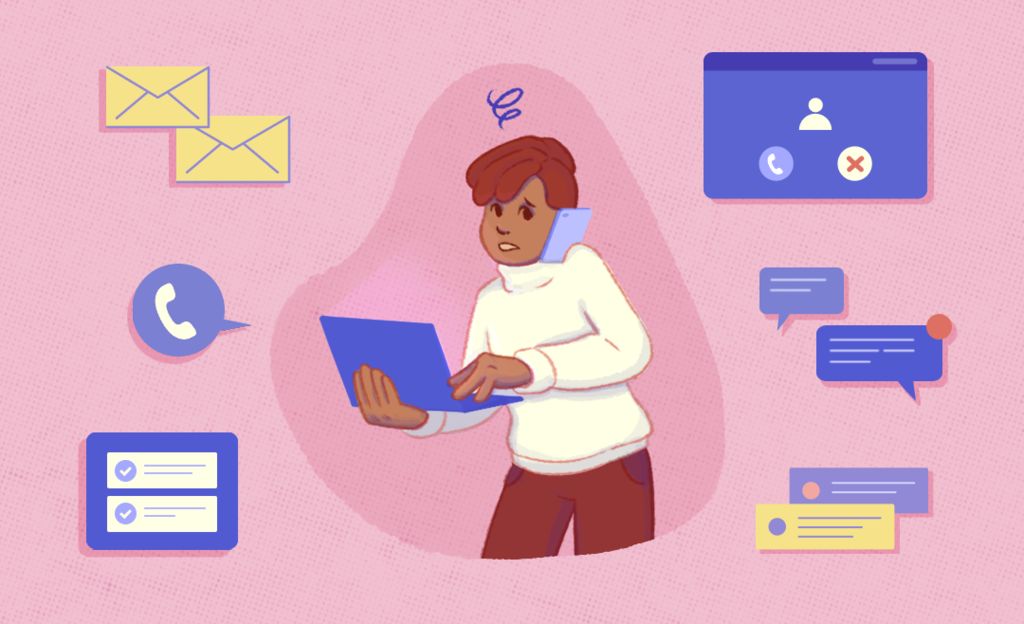
This constant flow doesn't just come from one place. We're bombarded by data from multiple sources at once, a phenomenon often called media multitasking. Trying to absorb a podcast while scrolling through social media and responding to texts fragments our attention and makes it harder to deeply process any single piece of information.
Psychological Effects
When our brains are consistently overwhelmed, our cognitive abilities start to suffer. The key concept here is cognitive load, which refers to the total amount of mental effort being used in our working memory. When the cognitive load is too high for too long, our mental performance declines.
You might notice your attention span seems shorter or that you struggle to focus on a single task. This is a direct consequence of a brain trying to cope with too many inputs. It adapts by scanning for keywords and jumping from one thing to the next, rather than engaging in deep, concentrated thought.
When cognitive load exceeds the brain’s capacity to process information, learning can become inefficient or even detrimental.
Decision-making is another major casualty. You might assume that more information leads to better choices, but there's a tipping point. When faced with too many options or too much data, we can experience "decision paralysis." The sheer volume of information makes it impossible to weigh every factor, so we either delay making a choice or make a poor one based on incomplete or superficial analysis.
This leads to a feeling of being less in control, even though we have more information at our fingertips than ever before.
The constant pressure to keep up can also have a significant impact on mental well-being. It can lead to feelings of anxiety, stress, and even burnout. The "fear of missing out," or FOMO, is a common side effect, driving people to stay connected even when they feel overwhelmed.
This cycle of stress and information-seeking creates a feedback loop that is difficult to break. Our brains become wired to crave the next notification, the next update, the next piece of news, leaving little room for rest and quiet reflection.
According to the text, which of the following is a primary cause of modern information overload?
The mental fatigue and difficulty in making choices that result from too much data is known as _______.
Understanding information overload is the first step. It's not about rejecting technology, but recognizing the cognitive and emotional toll it can take when left unchecked.