Mastering Insulin Resistance
Molecular Insulin Signaling
The Molecular Handshake
When insulin arrives at a cell, it doesn't just barge in. It first needs to communicate its presence from the outside. This is done through a specific protein embedded in the cell membrane called the insulin receptor (IR). Think of it as a highly specialised satellite dish waiting for a single, specific signal.
The receptor is a complex made of four parts: two alpha subunits that sit entirely outside the cell, and two beta subunits that pass through the membrane and extend into the cell's interior. The alpha subunits are the 'landing pad' for insulin. When an insulin molecule binds, it's like a key fitting into a lock. This binding action causes a physical change in the receptor's shape.
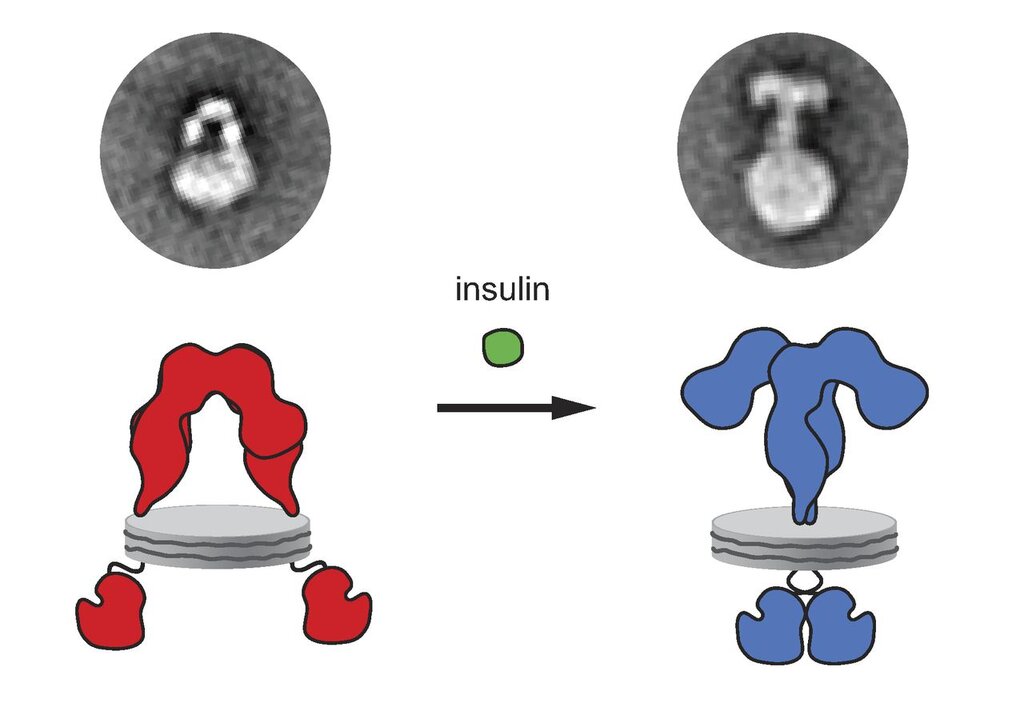
This shape change is transmitted through the membrane to the beta subunits inside the cell. This is the critical first step of signal transduction. The intracellular parts of the beta subunits contain a tyrosine kinase domain. The activation of this domain is like flicking a switch. Each beta subunit adds phosphate groups to its partner subunit—a process called autophosphorylation. These newly added phosphate groups act as docking sites, turning the receptor into a beacon for other proteins inside the cell.
The Signal Splits
Once the insulin receptor is activated and phosphorylated, it doesn't carry out the work itself. Instead, it recruits intermediary proteins to pass the message along. The most important of these are the Insulin Receptor Substrates (IRS), primarily IRS-1 and IRS-2. These large proteins bind to the phosphorylated sites on the receptor.
Upon binding, the IRS proteins themselves become phosphorylated by the receptor's kinase activity. This turns them into large, mobile platforms with multiple docking sites of their own. From here, the signal splits and travels down two main roads, each with a different destination.
Insulin activates the insulin receptor tyrosine kinase (IR), which phosphorylates and recruits different substrate adaptors such as the IRS family of proteins.
The Metabolic Highway
The first and most well-known path is the PI3K/Akt pathway, which primarily handles insulin's metabolic effects. When an IRS protein is activated, it recruits and activates an enzyme called Phosphoinositide 3-kinase (PI3K). PI3K then generates a lipid-based second messenger in the cell membrane, which in turn activates another crucial kinase called Akt (also known as Protein Kinase B).
Akt is a major hub in the cell, and its activation by insulin sets off a cascade of events. Most famously, it orchestrates the movement of glucose transporters to the cell surface. In muscle and fat cells, most glucose transporters, known as GLUT4, are stored in vesicles inside the cell. Activated Akt signals these vesicles to fuse with the cell membrane, effectively creating new doorways for glucose to enter the cell from the bloodstream. This rapid uptake lowers blood sugar levels.
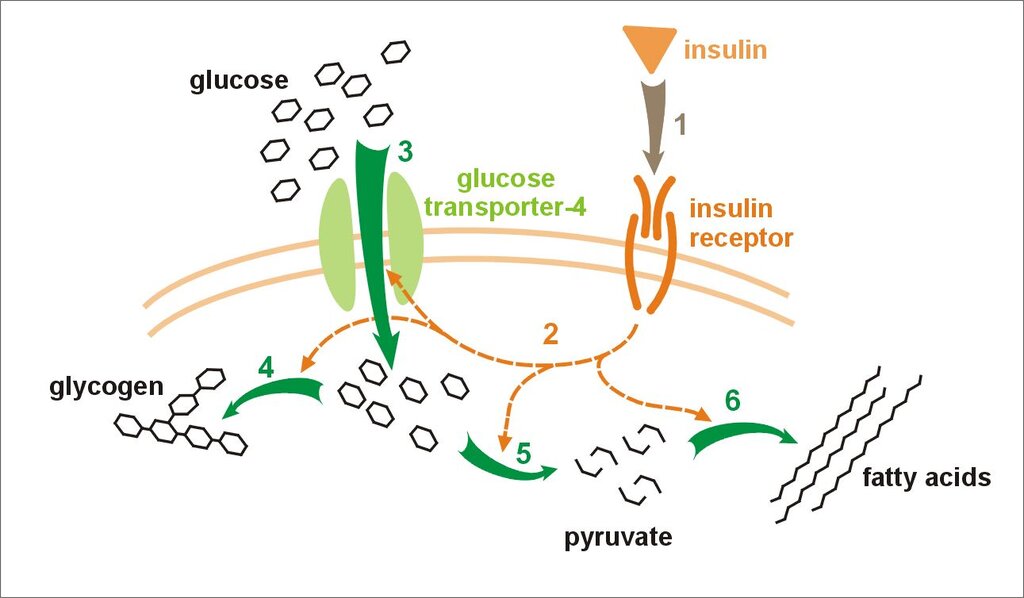
Beyond glucose uptake, Akt also promotes the storage of energy. It activates enzymes that build glycogen (a storage form of glucose) in the liver and muscles, and it encourages the synthesis of fats in adipose tissue. At the same time, it inhibits processes that would release stored energy, like the breakdown of glycogen and the production of new glucose in the liver (gluconeogenesis).
The Growth and Expression Route
The second major branch activated by the IRS proteins is the Ras/MAPK pathway. This pathway is less about immediate metabolic adjustments and more about longer-term changes in cell growth, proliferation, and gene expression. These are often called insulin's 'mitogenic' effects.
After IRS is activated, it recruits another set of adapter proteins that ultimately switch on a small protein called Ras. Ras, in turn, initiates a phosphorylation cascade known as the Mitogen-Activated Protein Kinase (MAPK) pathway. The final kinases in this chain move into the nucleus and phosphorylate transcription factors. These are proteins that control which genes are turned on or off. By influencing gene expression, insulin can direct the cell to produce proteins needed for growth and division.
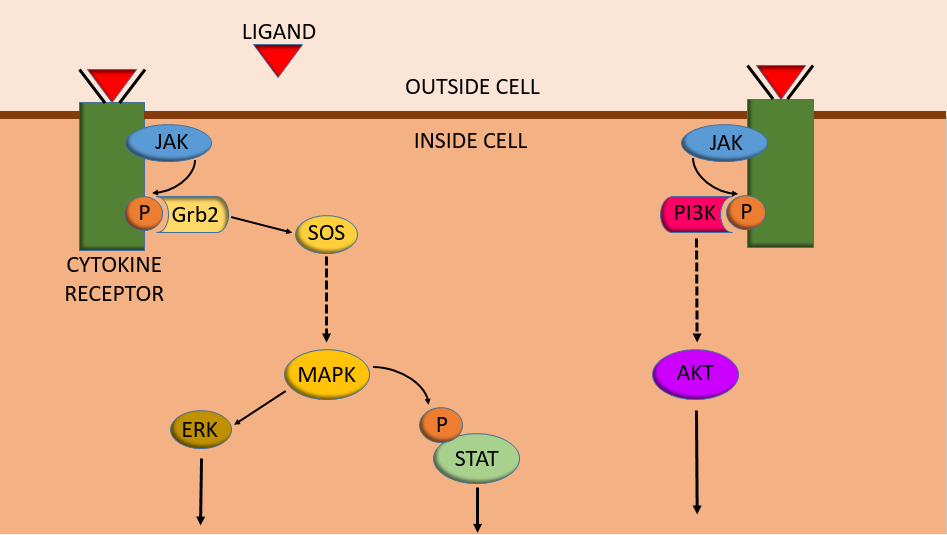
These two distinct pathways—PI3K/Akt for metabolism and Ras/MAPK for growth—allow insulin to act as both a short-term metabolic regulator and a long-term growth factor. Understanding these separate but interconnected roads is key to figuring out what goes wrong in conditions like insulin resistance, where the metabolic highway can become blocked while the growth route may remain open.
What is the immediate consequence of insulin binding to the alpha subunits of its receptor?
The activation of the insulin receptor's internal kinase domain leads to a process where the beta subunits add phosphate groups to each other. What is this process called?