Mastering Industrial Iron Casting
Graphite Morphology and Microstructure
Graphite's Hidden Influence
The mechanical properties of cast iron—its strength, brittleness, and flexibility—are not defined by the iron itself, but by the shape of the carbon within it. In most cast irons, this carbon takes the form of graphite. By controlling the size and shape of these graphite structures at a microscopic level, we can engineer vastly different materials from a nearly identical chemical recipe.
Gray Iron: The Flake Effect
In gray cast iron, the most common type, carbon solidifies into interconnected, flake-like structures embedded in the metallic matrix. You can think of these graphite flakes as microscopic, sharp-edged cracks.
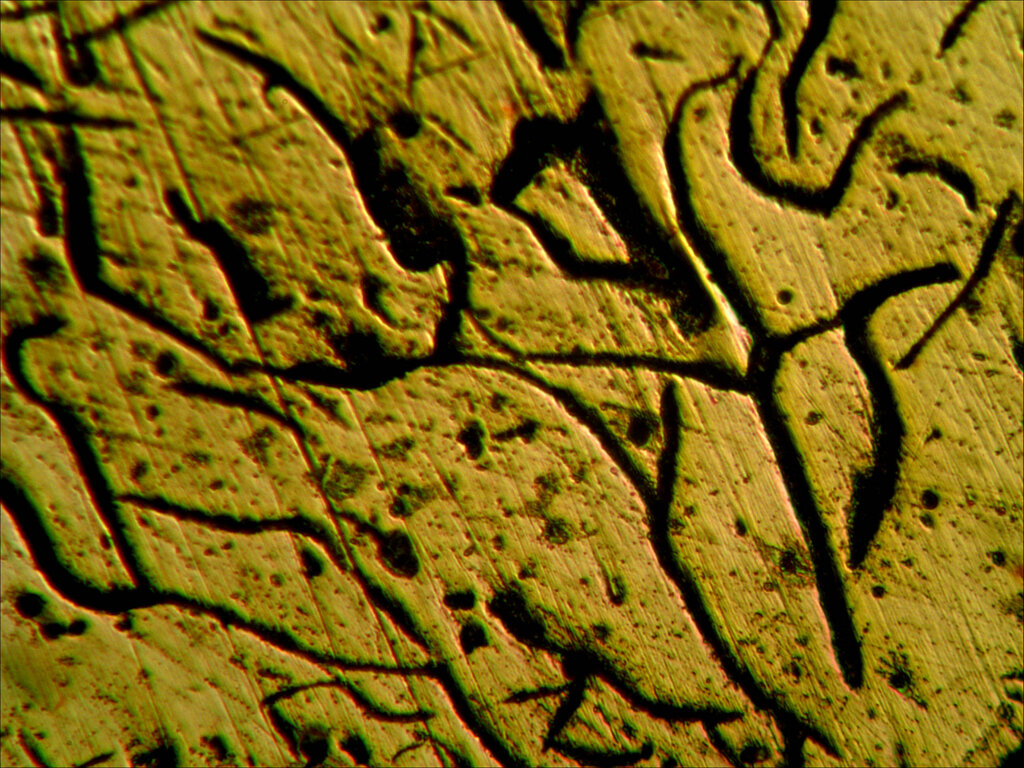
When a load is applied, the sharp tips of these flakes act as points of stress concentration, magnifying the force in that tiny area. This is similar to how a small nick in a piece of paper makes it much easier to tear. The stress focuses at the tip of the nick, initiating a tear that propagates easily. In gray iron, this effect means cracks can form and spread with little resistance, making the material brittle.
The very structure that makes gray iron brittle also gives it an excellent damping capacity. The graphite flakes absorb and dissipate vibrational energy, making it ideal for machine bases and engine blocks.
Ductile Iron: Rounding the Edges
Ductile iron, also known as nodular iron, solves the brittleness problem of gray iron with a simple geometric trick: it changes the graphite from sharp flakes to rounded spheres or nodules. This is achieved by adding small amounts of magnesium or cerium to the molten iron just before casting.
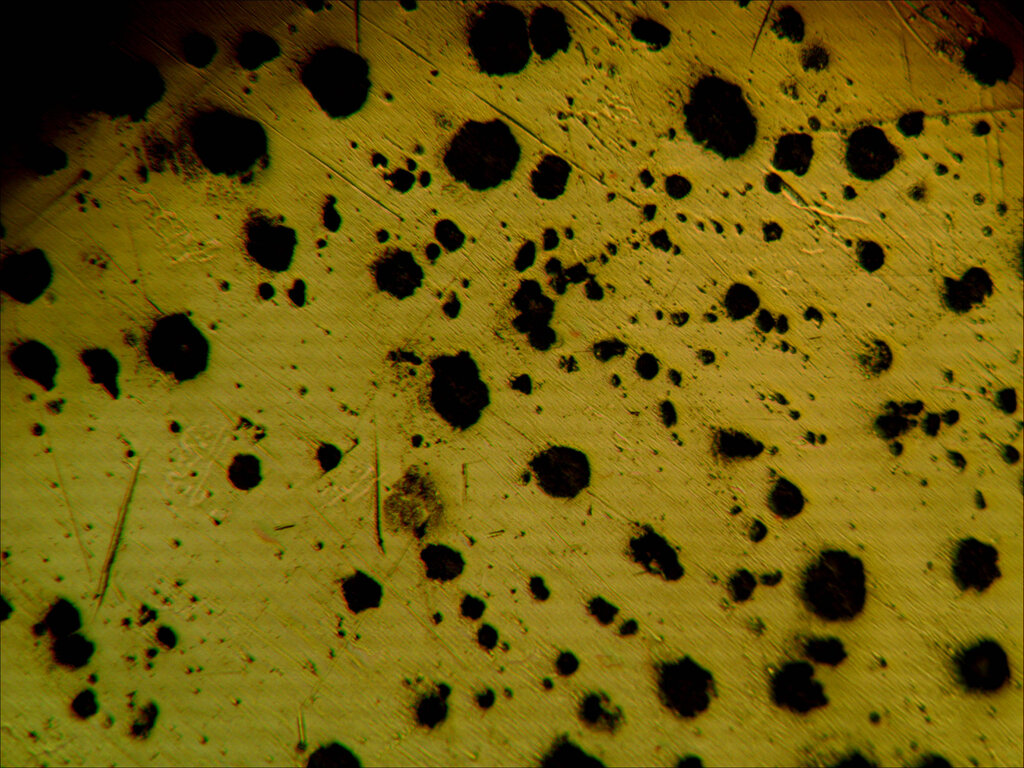
These smooth, spherical nodules do not create the same intense stress concentrations as sharp flakes. When a crack begins to form in the metal matrix, its path is interrupted by a graphite sphere. The crack must expend significant energy to travel around the smooth obstacle, effectively blunting and arresting its propagation. This mechanism gives ductile iron far greater tensile strength and elongation (ductility) than gray iron, allowing it to bend and deform without fracturing.
Ductile iron’s unique properties distinguish it from other forms of cast iron, such as gray iron, making it especially suitable for applications requiring both strength and flexibility.
White and Malleable Iron
What if you prevent carbon from forming graphite at all? By cooling the molten iron very rapidly, carbon is trapped in a chemical compound with iron called iron carbide, or cementite (). This results in white cast iron, named for the bright, silvery appearance of its fracture surface. There are no graphite flakes to weaken the structure, but the abundance of hard, brittle cementite makes white iron extremely abrasion-resistant but also very difficult to machine.
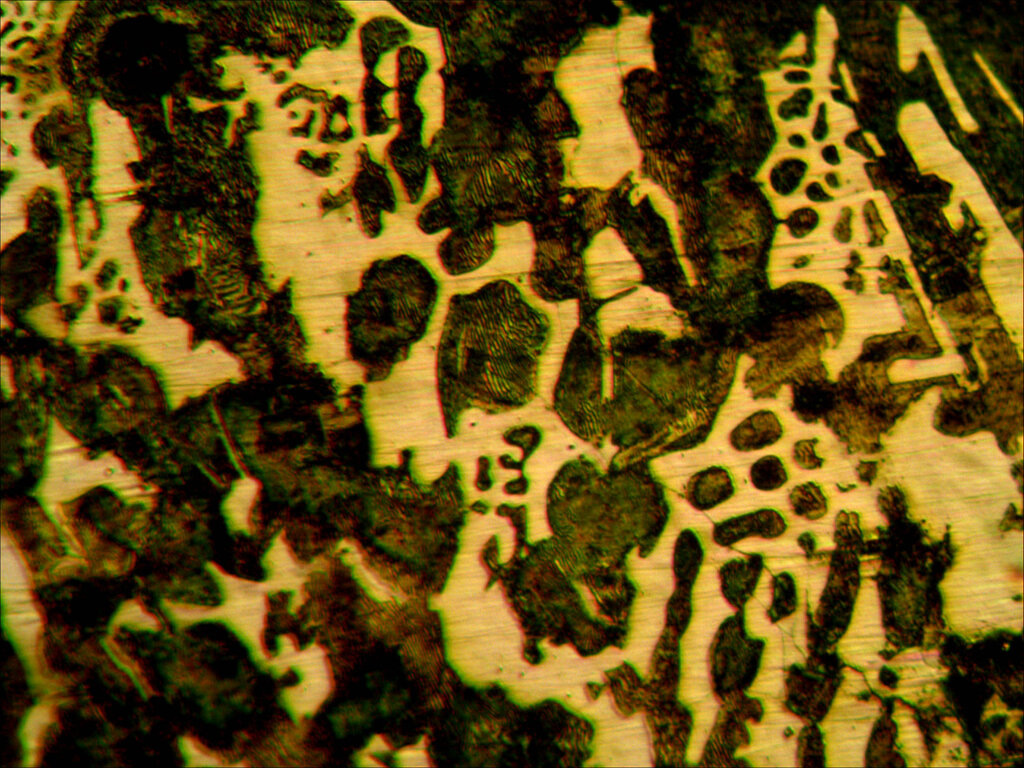
White iron is often a stepping stone to another material: malleable iron. By taking a white iron casting and subjecting it to a prolonged heat treatment (annealing), the cementite decomposes. The carbon atoms migrate and clump together, forming irregular, rounded clusters called .
The resulting malleable iron has properties that sit between gray and ductile iron. The temper carbon clusters are less disruptive than flakes but not as perfectly rounded as the nodules in ductile iron. This gives it good ductility and toughness.
| Cast Iron Type | Graphite Shape | Key Property | Fracture Appearance |
|---|---|---|---|
| Gray Iron | Flakes | High Damping | Gray, dull |
| Ductile Iron | Nodules/Spheres | High Ductility | Gray, dull |
| White Iron | None (Cementite) | High Hardness | White, bright |
| Malleable Iron | Temper Clusters | Good Toughness | Gray, dull |
The appearance of a fresh fracture surface is a classic way to identify these materials. Gray, ductile, and malleable irons all break along the graphite structures, revealing a dull, gray surface. White iron, lacking graphite, fractures through the metallic grains and cementite, creating a bright, crystalline surface that gives it its name.
Time to check your understanding of these microstructures.
In gray cast iron, why do the sharp graphite flakes lead to brittleness?
An engineer needs a material that can bend and deform without fracturing, but it must be a type of cast iron. Which type should they choose and why?
Understanding how these microscopic shapes dictate macroscopic behavior is the key to selecting the right cast iron for any engineering application.