Mastering Immersive Pedagogy with Interactive VR
Pedagogical Immersion Models
Beyond Presence
We often talk about 'presence' in virtual reality—that powerful feeling of being transported to another place. While presence is the foundation of any immersive experience, it's not the end goal for learning. A student can feel fully present in a virtual world and still learn very little. Effective instructional design moves beyond simply creating a sense of being there; it focuses on creating a sense of doing there.
To bridge the gap between VR technology and genuine learning, we can use a framework called the Cognitive Affective Model of Immersive Learning, or CAMIL. This model helps us understand how the technical aspects of VR, like its visual realism and interactivity, trigger specific psychological responses that are crucial for learning.
The model shows a clear path. Technology choices influence the psychological experience, which in turn shapes the cognitive and emotional state of the learner, ultimately determining what they learn.
Psychological Levers
CAMIL highlights three key psychological affordances that VR offers: presence, agency, and embodiment.
Presence is the baseline—the feeling of being physically inside the virtual space. But the real magic for learning happens with the other two.
Agency is the learner's ability to act and see the consequences of their actions. It's the difference between watching a pre-recorded video of a chemistry experiment and actually picking up virtual beakers, mixing chemicals, and causing a (safe) virtual explosion. High agency turns a passive observer into an active participant, which is critical for building procedural knowledge—the 'how-to' of a skill.
Embodiment is the feeling that a virtual avatar is your own body. When you look down and see virtual hands that move as you move your own, your brain starts to accept them. This connection deepens the experience, making actions feel more significant and memories of those actions more lasting.
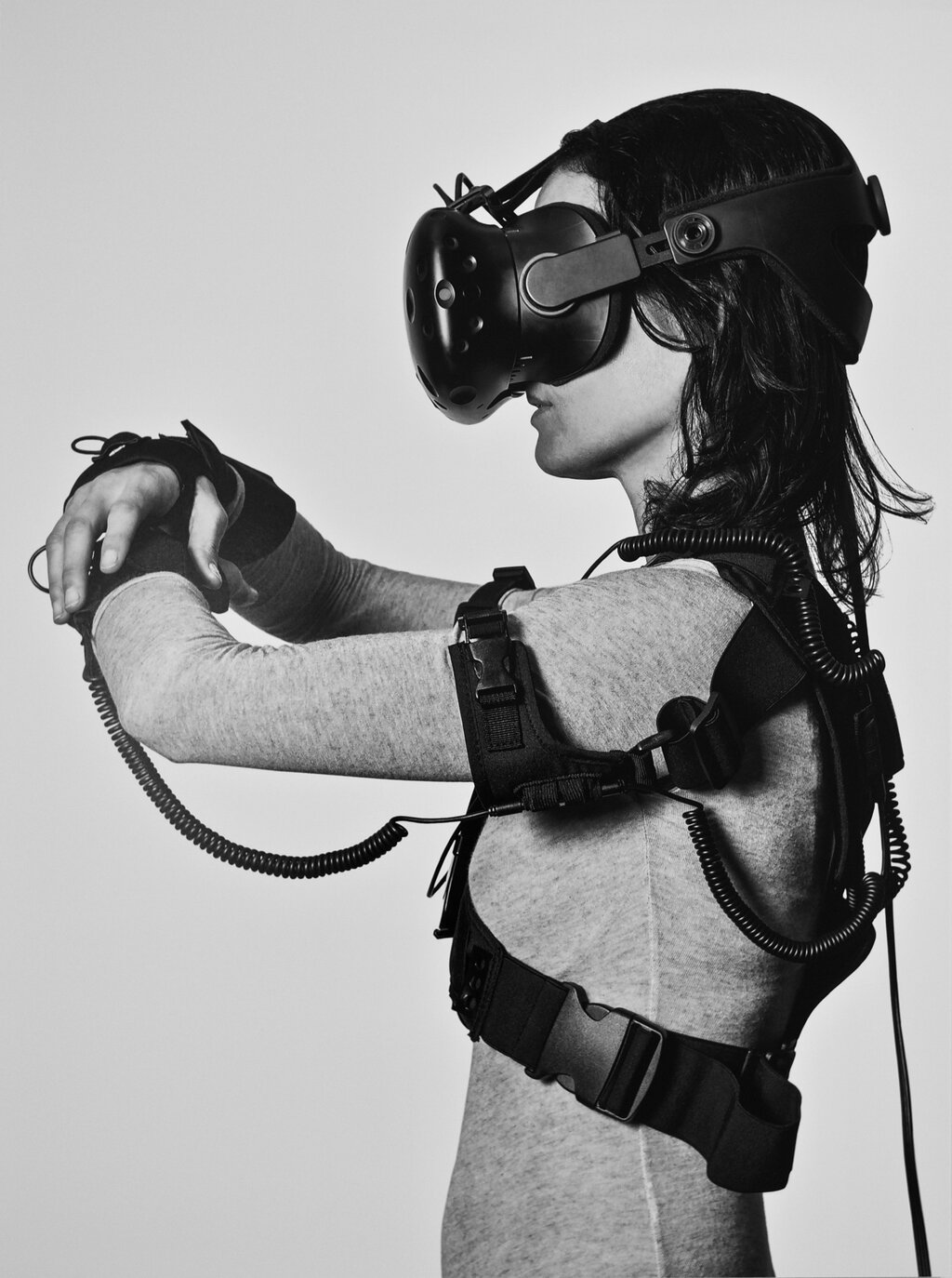
When learners feel they have control (agency) and are physically part of the world (embodiment), their engagement shifts from intellectual to experiential. They're not just learning about a concept; they're living it.
Balancing the Mind
A strong sense of agency and embodiment directly impacts a learner's mindset. CAMIL splits this into two categories: affective (emotional) and cognitive (thinking) factors.
The affective factors are interest, motivation, and self-efficacy. Interest might get a learner to put on the headset, but it's self-efficacy—the belief in one's ability to succeed—that keeps them going when things get tough. A well-designed VR scenario builds this belief by letting learners practice in a safe space where mistakes are learning opportunities, not failures.
For example, a student training to be a paramedic can practice a high-stress trauma scenario. Failing in VR has no real-world consequences, which lowers anxiety and builds the confidence needed to perform under pressure.
VR is a tool that, used alongside good pedagogy, can enhance understanding and recall
On the cognitive side, we have self-regulation and the crucial factor of cognitive load. Self-regulation is the learner's ability to manage their own learning process—setting goals, monitoring progress, and adjusting strategies. VR can support this by providing instant feedback and clear objectives.
However, the immersive nature of VR can be a double-edged sword. A highly detailed, complex environment can overwhelm the brain's working memory. This is known as excessive cognitive load. When cognitive load is too high, learning stops. The learner's mental resources are spent just trying to process the environment, with nothing left over for actual learning.
Managing cognitive load is one of the most important jobs of an instructional designer in VR. It's not about creating the most realistic simulation possible, but the most effective one. This might mean simplifying the visual environment to draw focus to the key elements of a task, or breaking a complex procedure into smaller, manageable steps.
The goal is to leverage VR's ability to create realistic scenarios without overloading the learner's brain. By carefully balancing fidelity and complexity, we can use agency and embodiment to boost motivation and self-efficacy, leading to real knowledge transfer.
According to the CAMIL framework, what is the primary role of 'presence' in a VR learning experience?
A developer creates a VR simulation for training firefighters. To make it effective, they allow trainees to freely choose their tools, operate a fire hose, and see the immediate effect of their actions on the fire. Which psychological affordance is most directly being leveraged here?
By understanding the components of the CAMIL framework, we can move from creating novel VR experiences to designing powerful, evidence-based learning environments.