Mastering IELTS Reading and Writing
Assess Current IELTS Level
Find Your Starting Point
Before you start preparing for the IELTS, you need to know where you stand. Taking a practice test to get a baseline score is the most important first step. It turns a huge goal, “get a good IELTS score,” into a specific one, like “improve my Reading score from a 6.5 to a 7.5.”
This initial assessment shows you exactly what to focus on. Maybe you’re great with multiple-choice questions but struggle with matching headings. Perhaps your Task 2 essays are strong, but your Task 1 reports lack precise vocabulary. Knowing this saves you time and helps you study smarter, not just harder.
Assess Your Current Level: Take a diagnostic test or sample exam to identify strengths and weaknesses.
The goal is to get an accurate picture of your current abilities under exam-like conditions.
Simulate the Real Test
To get a reliable baseline, you must use official IELTS practice materials. These tests use the same question formats and difficulty levels as the real exam. You can find them in the Cambridge IELTS series of books or on official IELTS websites.
Simulating test conditions is just as important as using the right materials. This means:
Find a quiet space, set a timer, and complete the entire section without interruptions. For the Reading test, give yourself exactly 60 minutes. For the Writing test, allocate 20 minutes for Task 1 and 40 minutes for Task 2. No extra time, no dictionary, no distractions.
This isn't just about answering questions; it's about training yourself to perform under pressure.
Analyze Your Results
Once you've finished, it's time to dig into the results. Don't just count how many you got right or wrong. Look for patterns.
For the Reading section, create a simple error log. This helps you see beyond the raw score and identify specific weaknesses.
| Question Type | My Answer | Correct Answer | Reason for Error |
|---|---|---|---|
| True/False/Not Given | Not Given | False | Misunderstood a key phrase. |
| Matching Headings | Paragraph C: iv | Paragraph C: ii | The main idea was in the last sentence, not the first. |
| Multiple Choice | A | C | I didn't read all the options carefully enough. |
Analyzing your writing is more subjective, but you can still do it effectively. Grade your own work using the official IELTS band descriptors. These are the public criteria that examiners use to score your essays. They focus on four key areas:
- Task Achievement (for Task 1) or Task Response (for Task 2): Did you answer all parts of the question? Is your position clear?
- Coherence and Cohesion: Is your writing easy to follow? Are your ideas logically organized and linked together?
- Lexical Resource: Do you use a good range of vocabulary accurately and effectively?
- Grammatical Range and Accuracy: Do you use a variety of sentence structures with few errors?
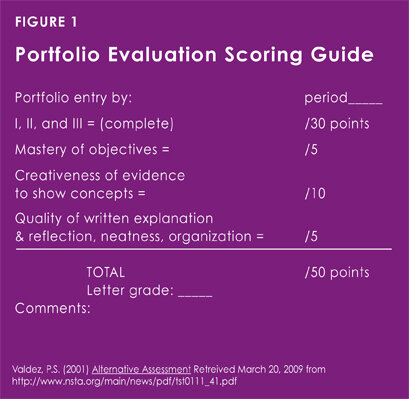
Be honest with yourself. Read your essays and compare them against the descriptions for each band. This process will highlight if you need to work on, for example, developing your arguments more fully or using more complex sentence structures.
IELTS Band Descriptors
The band descriptors are your roadmap to a higher score. They tell you exactly what an examiner is looking for. While the Reading score is calculated by the number of correct answers, the Writing score is based on your performance across the four criteria mentioned above.
Here’s how the Reading bands generally correspond to correct answers (out of 40), followed by a simplified look at what's needed for a Band 7 in Writing.
| Band Score | Correct Answers (Academic Reading) |
|---|---|
| 9 | 39-40 |
| 8 | 35-36 |
| 7 | 30-32 |
| 6 | 23-26 |
| 5 | 15-18 |
For Writing, achieving a Band 7 requires meeting specific criteria.
| Writing Criterion | What a Band 7 Looks Like (Simplified) |
|---|---|
| Task Achievement / Response | Addresses all parts of the prompt with a clear and consistent position. |
| Coherence and Cohesion | Logically organizes information; uses a range of linking words well. |
| Lexical Resource | Uses a sufficient range of vocabulary with some awareness of style and collocation. |
| Grammatical Range & Accuracy | Uses a variety of complex structures; produces frequent error-free sentences. |
After this detailed analysis, you'll have a clear, actionable study plan. You’ll know whether to focus on practicing 'True/False/Not Given' questions or on improving your use of cohesive devices in your essays. This targeted approach is the key to improving your score efficiently.